
Sunday, 19/10/2025 16:05
(GMT+7)
Off-pump coronary artery bypass surgery
HNN.VN - On October 18, Hue Central Hospital organized a specialized workshop titled “Off-pump coronary artery bypass (OPCAB) surgery”. The event aimed to exchange, update professional knowledge, and share practical experience regarding the technique of coronary artery bypass surgery on a beating heart - a modern method that helps reduce complications and shorten the recovery time for patients.
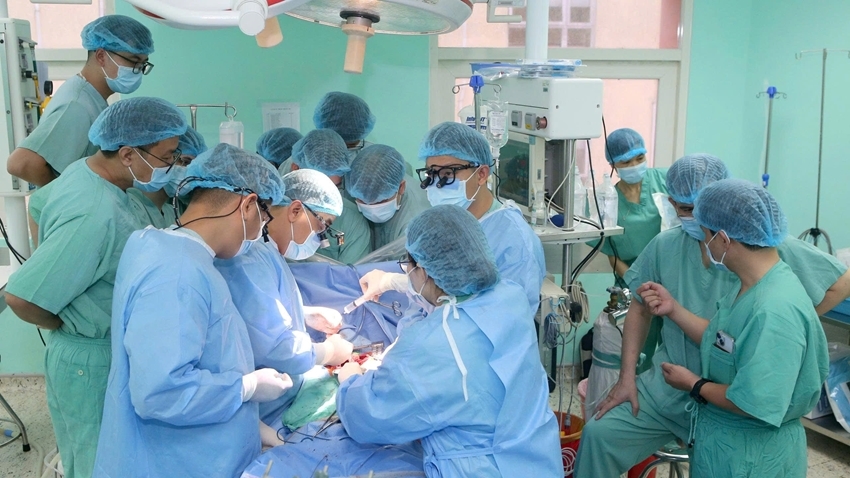 |
| Live surgery being performed in the operating room of Cardiovascular Center, Hue Central Hospital. Photo: T.Hien |
The workshop attracted over 50 delegates, including doctors and technicians from many hospitals across the country, such as Hanoi Heart Hospital, Military Hospital 103, and healthcare facilities in the Central - Central Highlands region. The event was an opportunity for experts to learn, exchange experiences, and expand cooperation in the field of cardiovascular surgery.
In his opening speech, Prof. Dr. Pham Nhu Hiep, Director of Hue Central Hospital, and Vice President of Vietnam Association of Surgery and Endoscopic Surgery, emphasized: “In the context of cardiac surgery undergoing a strong shift towards less invasiveness and greater safety for patients, OPCAB surgery has been affirming its important role in treating complex coronary artery disease. Hue Central Hospital is not only a pioneer in applying this technique, but also a leading training and technology transfer center nationwide.”
The program consisted of two parts: a theoretical session, and a practical session. The topics focused on indications, aortic preservation techniques, and anesthesia-resuscitation strategies in OPCAB surgery. Notably, the practical session included two live surgeries performed in the operating room of the Cardiovascular Center, Hue Central Hospital, allowing delegates to observe and exchange practical experiences. OPCAB surgery offers many benefits to patients, particularly reducing the risk of neurological complications, bleeding, and disorders related to extracorporeal circulation. This technique requires close coordination among surgical specialists, anesthesiologists-resuscitation specialists, and technicians, as well as specialized training to achieve optimal results.
By THANH HUONG