The decision marks a significant milestone, paving the way for the hospital to accelerate its development in clinical excellence, advanced medical technology, education, and scientific research. Following this landmark approval, our reporter had a conversation with Assoc. Prof. Dr. Nguyen Khoa Hung, Director of Hue University of Medicine and Pharmacy Hospital, to discuss the hospital’s strategic priorities and vision for the years ahead.
 |
|
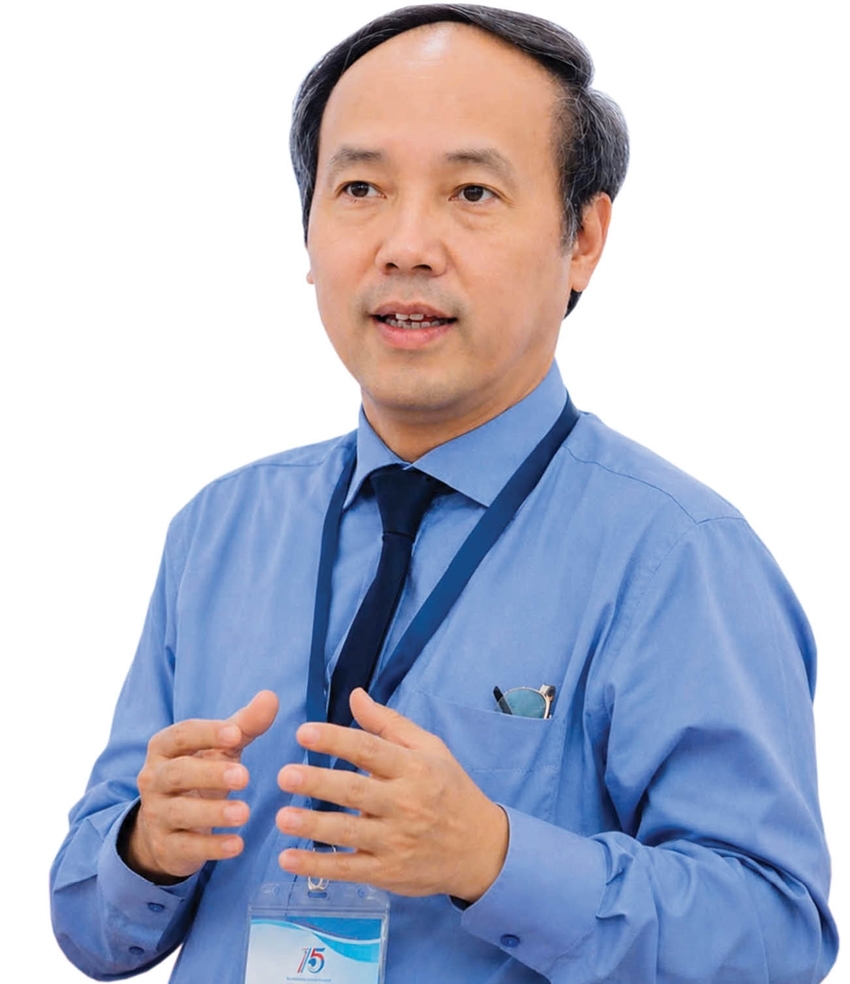
Assoc. Prof. Dr. Nguyen Khoa Hung
|
How do you assess the significance of this decision for the hospital’s development in the coming years?
This decision marks a significant milestone for Hue University of Medicine and Pharmacy and Hue University of Medicine & Pharmacy Hospital. First of all, it demonstrates the Government’s strong support and confidence in the university hospital model, which brings together three core pillars: healthcare services, education and training, and scientific research.
More importantly, the project establishes a solid legal foundation and a long-term strategic roadmap for the hospital to develop toward regional and international standards. Beyond enhancing its clinical expertise, governance, and quality of healthcare services, it will empower the hospital to strengthen further its role as the hub of the university-hospital ecosystem, advancing education and training, scientific research, and innovation.
What will be the hospital’s key objectives as it progressively moves toward meeting advanced regional standards?
By 2030, the hospital will prioritize several strategic objectives. The foremost priority is to comprehensively improve the quality of healthcare services while strengthening key specialties and advanced clinical capabilities, particularly in surgery, oncology, cardiology, emergency and critical care, diagnostic imaging, diagnostic and interventional endoscopy, regenerative medicine, and precision medicine.
Furthermore, the hospital will develop a model of a smart hospital by advancing digital transformation and integrating artificial intelligence, electronic medical records, clinical decision support systems, and data-driven hospital governance.
Another key priority is the establishment of a High-Quality Medical Center in the hospital’s seven-story building, which was built with official development assistance (ODA) from the Italian Government. The center is expected to provide a modern, patient-centered healthcare environment while meeting the growing healthcare needs of both domestic and international patients.
What areas will the hospital prioritize for investment and innovation as it works toward meeting international standards in healthcare?
Our development strategy is built on 3 key pillars. The first is modern healthcare infrastructure. The hospital will continue to expand its capacity and enhance its infrastructure, including the High-Quality Medical Center in Italian ODA-funded buildings. It also plans to establish specialized centers of excellence in the future.
The second pillar focuses on advanced medical technologies. The hospital plans to invest in advanced diagnostic imaging systems, smart operating theaters, modern intensive care units, automated laboratory systems, and platforms serving precision medicine.
The third pillar is comprehensive digital transformation. Our goal is to build a fully digital hospital featuring a comprehensive electronic medical record system, real-time hospital management, and the effective use of big data to support healthcare services. We aim to officially transition to electronic medical records, fully replacing paper-based records, from January 1, 2027.
What opportunities and advantages will the project create to enhance the quality of medical workforce training, scientific research, and technology transfer?
The greatest strength of a university hospital lies in the close integration of students, lecturers, and patients within a common academic environment. With the implementation of the project, medical students, postgraduate trainees, and resident physicians will have access to a more advanced clinical learning environment, gain hands-on experience with new medical technologies and techniques, and participate directly in research based on clinical data from the hospital information system (HIS) and electronic medical records.
The project will also provide a strong foundation for developing leading research groups and specialized research centers, while fostering international publications, clinical trials, and technology transfer. We expect the university-hospital model to become an innovative ecosystem that advances medical research, education, and healthcare.
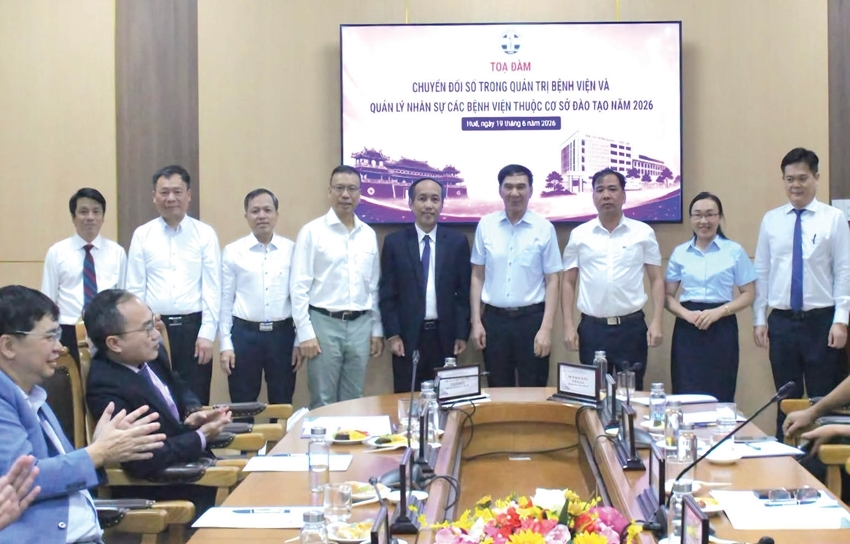 |
| Delegates attending a discussion on digital transformation in hospital governance at teaching hospitals in 2026 |
How does the hospital plan to strengthen international cooperation on its path toward achieving regional and international standards?
International cooperation is a key strategic pillar of the hospital’s long-term development. Backed by Hue University of Medicine and Pharmacy, the hospital will further expand its global network of partnerships with university hospitals, medical schools, and leading healthcare institutions in the areas of education and training, scientific research, technology transfer, and hospital governance.
We will continue to strengthen and expand our partnerships with international organizations, including Global Care (South Korea), Operation International (the United States), the German-Vietnamese Cardiology Association, Arpan Global (the United States), Help2Smile (the Netherlands), Surgical Volunteers International (the United States), and many other partners. Through these collaborative programs, the hospital will not only enhance its professional capacity but also gain valuable experience in implementing patient safety standards and protocols.
Our goal is not only to adopt advanced knowledge but also to integrate more deeply into regional and global academic medicine networks.
What tangible benefits will patients and the community gain from the implementation of the project?
The greatest beneficiaries will be the patients and the wider community. People across the Central and Central Highlands regions will have access to advanced medical technologies, high-quality healthcare services, and cutting-edge treatment options in Hue without coming to major medical centers elsewhere for specialized care.
Thanks to digital transformation and the optimization of clinical workflows, waiting times will be reduced, while the quality of treatment and patient safety will be enhanced in line with international standards. In the long term, the project will improve the quality of the regional healthcare workforce, promote equitable access to high-quality healthcare services, and make a meaningful contribution to protecting and improving public health.
What is your vision for Hue University of Medicine and Pharmacy Hospital through 2030?
Our vision is to build a modern university hospital where scientific knowledge is transformed into meaningful values for patients, the community, and the advancement of healthcare and medical science in Vietnam.
Beyond building a larger hospital, we also aim to develop it as a leading academic medical center that trains highly qualified healthcare professionals, generates new knowledge, and provides the highest-quality healthcare services to people in the Central and Central Highlands in particular and across the country in general.
Thank you for the conversation!