 |
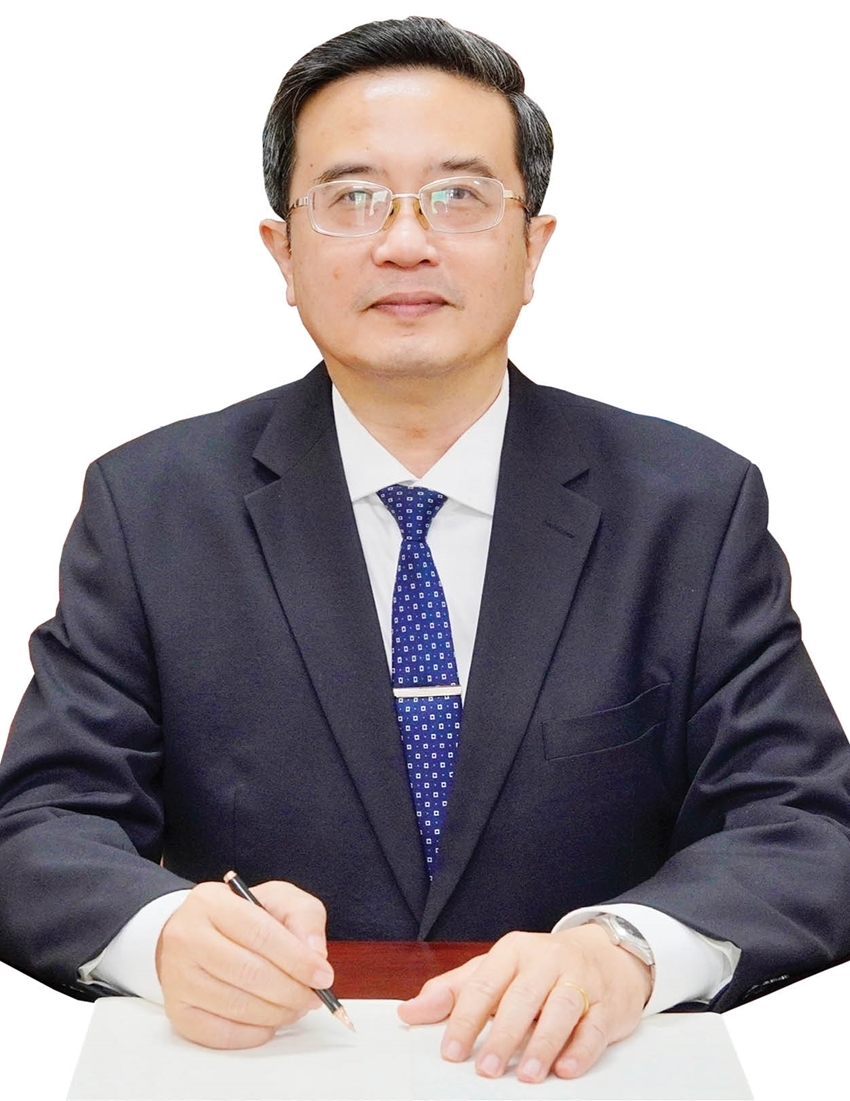
| Prof. Dr. Nguyen Vu Quoc Huy, Acting President of Hue University |
As you take on the role of Acting President of Hue University, what is the foremost priority that you and the leadership team are focusing on at this stage, sir?
Being entrusted with the role of Acting President of Hue University is both a great honor and a heavy responsibility. I am deeply aware of my responsibility to the staff, lecturers, employees, students, and trainees, as well as the historic role of a key higher education institution with decades of development.
The foremost priority now is to work with the leadership team to establish a strategic vision and create new growth momentum to develop Hue University into an excellent university. This requires promoting the financial autonomy of member units while maintaining the unity of the multidisciplinary and multi-sector university model, and effectively transforming intellectual and scientific resources into practical contributions to socio-economic development, while raising Hue University’s academic standing on the international stage.
On the journey toward becoming an excellent university, and ultimately a National University, what difficulties or bottlenecks does Hue University need to focus on resolving?
Hue University is currently facing three groups of issues that need to be fundamentally addressed. The first is that the governance model and financial autonomy mechanism are not yet fully synchronized. Within the two-tier university structure, decentralization and delegation of authority in certain areas remain inadequate, affecting the effectiveness of implementing strategic decisions.
The second is the challenge of high-quality human resources. The migration of talent to major urban centers or the private sector makes it difficult to attract and retain leading scientists. In addition, the development of academic staff remains uneven across different disciplines.
The third is that scientific research and technology transfer activities are not yet commensurate with the university’s potential. Revenue for higher education institutions still depends heavily on tuition fees and the state budget, while revenue from research and technology transfer remains modest, and the ecosystem connecting research with businesses has yet to be fully developed.
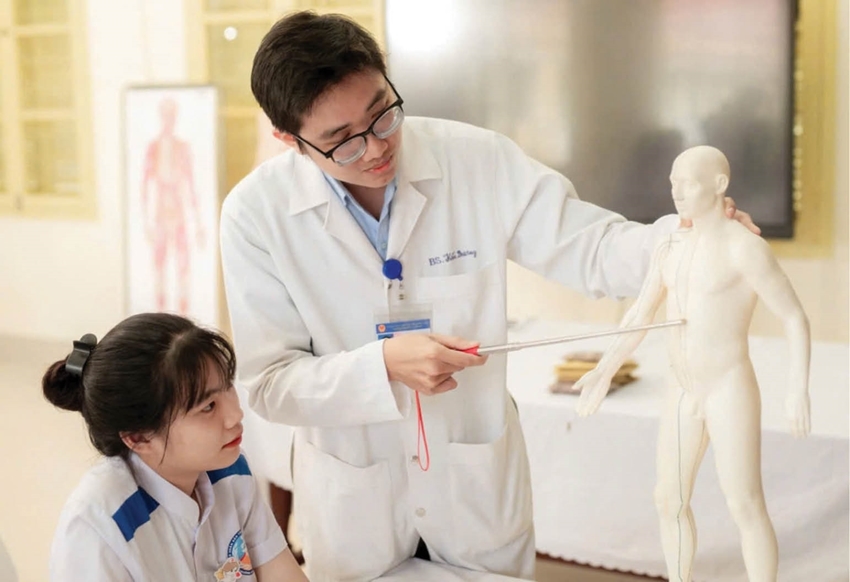 |
| A practical training session conducted by lecturers and students at the University of Medicine and Pharmacy, Hue University |
To realize the goal of becoming a National University before 2030, what conditions and key solutions does Hue University need to bring together?
First and foremost, Hue University needs a development strategy that aligns closely with the Party’s and the State’s policies, as well as the Higher Education Development Strategy for 2026 - 2035, with a vision toward 2045. The development of Hue University must stay connected to the development of Hue City, and the Central and Central Highlands regions, affirming its role as one of the region’s leading growth poles.
To achieve this goal, Hue University needs to continue receiving attention from the Government, the Ministry of Education and Training, as well as other ministries, sectors, and localities through investment mechanisms and specific policies.
At the same time, the university will restructure its system, optimize resources, and accelerate the construction of Hue University Village. Attracting, training, and developing highly qualified lecturers and scientists will remain a top priority. Hue University will also invest in key laboratories and strengthen collaboration among the State, the university, and enterprises to improve the effectiveness of research and technology transfer.
Another important solution is to standardize training quality in line with domestic, regional, and international standards; promote accreditation of training programs; and improve the quality of scientific publications, patents, and positions in prestigious world university rankings.
Digital transformation, financial autonomy, and internationalization are seen as inevitable trends in higher education. What steps will Hue University take to make its mark in these areas?
These are three strategic pillars that are decisive for the development in the new period. Regarding digital transformation, the goal is not only to digitize management processes but also to build a comprehensive digital university ecosystem. Hue University will develop a modern governance system, shared databases, and open learning resources, while strongly applying artificial intelligence and big data to governance, teaching, and learning.
Regarding university financial autonomy, we will continue to promote decentralization and delegation of authority to member units in academic affairs, organizational structure, personnel, and finance, while strengthening internal supervision and control mechanisms to ensure transparency and accountability.
Regarding internationalization, Hue University will expand cooperation with the world’s leading universities, develop English-taught training programs, joint and dual-degree programs; attract international lecturers and students; and participate more deeply in global scientific research networks.
As a major training and research center in the region, how will Hue University contribute to the development of Hue City and the Central and Central Highlands regions?
Hue University is identified as one of the key drivers of development for Hue City and the Central and Central Highlands regions. This role will be reflected in three main areas.
First, training high-quality human resources to serve the socio-economic development. In addition to meeting current workforce demands, Hue University will focus on developing fields with high growth potential, including information technology, semiconductors, automation, advanced materials, biomedicine, high-quality tourism, heritage management, and the circular economy.
Second, becoming a research and technology transfer center that helps address issues specific to the locality and the region, such as climate change, lagoon ecology, heritage urban planning, high-tech agriculture, healthcare, and community health.
Third, building an innovation and startup ecosystem. Hue University will serve as a bridge connecting the State, the university, and enterprises; promote the establishment of incubation centers; support the commercialization of research results; and contribute to creating technology enterprises and added value for the locality.
With nearly seven decades of building and development, together with a strong determination for innovation, Hue University aims to become a key higher education institution, an excellent university, before becoming a National University, a leading center for training, research, and innovation in the region and the country; actively contributing to the sustainable development of Hue City, the Central and Central Highlands regions, and Vietnam in the new period.
Thank you for the interview. We wish Hue University every success in achieving its strategic goal!