Purchasing power increases
In some markets located in the central wards of Hue City, such as Truong An, Ben Ngu, Dong Ba, An Cuu, and Cho Cong markets..., trading activities have become vibrant again. The supply of many essential items is ensured for people.
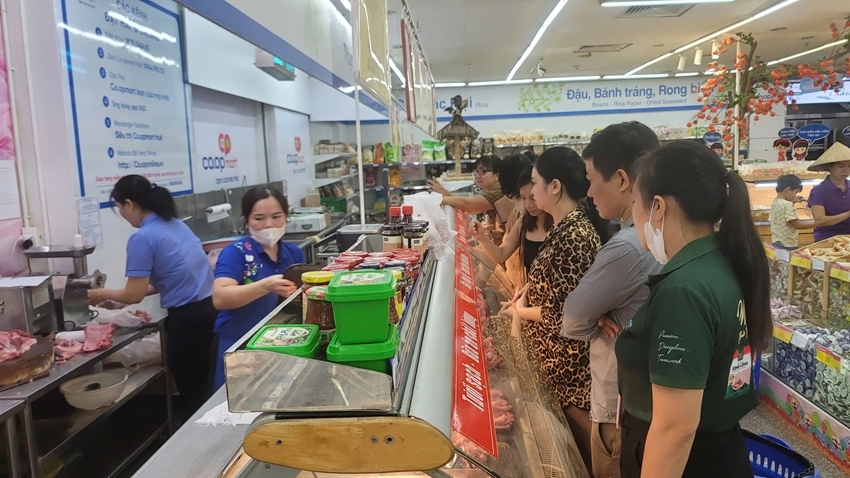 |
| People bought some fresh and essential goods at Co.opMart supermarket after the flood receded |
Ms. Hoang Ngoc Lanh, from My Thuong Ward, said that on the morning of November 4, when I saw the flood receding, I walked to Cong market to buy food. Fish, meat, and dry goods were plentiful, and the prices were the same as usual. Only vegetables and fruits, which were mainly brought in from Da Lat, were still scarce and not as diverse as normal days. The price for these items was almost double, like cabbages, leafy greens, beans, and eggplants, etc. Grass-fed ducks, which usually cost 170 thousand VND/bird, now increased to 210 thousand VND/bird.
According to the Department of Industry and Trade, since November 3, as the flood gradually receded, the goods distribution system, from supermarkets and convenience stores to traditional markets…, has resumed operation. Large retail businesses like Co.opMart Hue, Go! Hue, Bach Hoa Xanh, and WinMart, etc., quickly re-supplied goods from transit warehouses, prioritizing food, groceries, bottled water, gas, gasoline, and dry goods.
Ms. Bui Thi Thu Hang, Head of Dong Ba Market Management Board, said that on the morning of November 4, when the flood had receded to a safe level, and the market had power restored, most main stalls and street vendors reopened for business.
In the low-lying areas of Phong Dinh, Quang Dien, and Phu Vang..., some local markets are still partially submerged, but traders have returned to business. Many traders and business households proactively stockpiled food in advance, so there was no shortage of goods or abnormal price increases.
The Market Management Force has intensified inspections at sales points and warehouses, promptly detecting and handling acts of hoarding and price gouging. During the peak days of the floods, this force coordinated with local authorities to organize mobile sales at isolated residential areas, ensuring that people did not lack essential necessities.
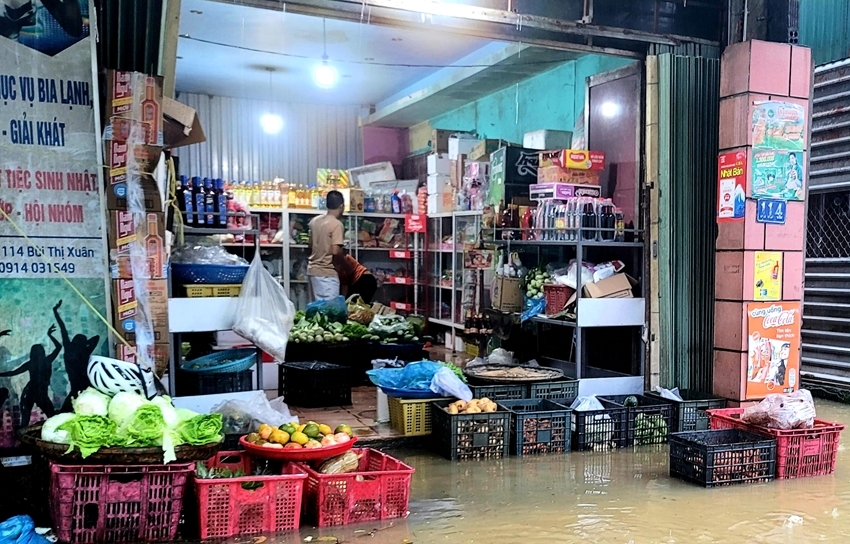 |
| Many flexible business locations served customers during and after the floods |
After the floods, the shopping psychology of Hue people has gradually stabilized. At markets like Dong Ba, An Cuu, and Phu Bai, though the number of shoppers has not returned to pre-flood levels, it has significantly increased compared to the flooding days. The prices for fresh vegetables, meat, and fish have slightly increased by 5 - 10% due to the insufficient supply; but overall, prices remain under control.
Vegetables and fruits from highlands such as Huong Thuy, Huong Tra, Nam Dong, and A Luoi have been mobilized and brought to the city, contributing to market stabilization.
Market gradually normalizes
Up to now, the rapid restoration of electricity, water, and telecommunications has created favorable conditions for small-scale production and business establishments to resume operations. Many supermarkets and convenience stores are implementing promotions to stimulate demand, offering discounts on fresh food, dry goods, and household items, helping people easily access safe goods at reasonable prices.
A representative from Co.opMart Hue supermarket stated that the supermarket’s inventory remains high, sufficient to meet consumer demand for at least the next 2 - 3 weeks; they are also ready to transfer goods from other provinces if the market fluctuates.
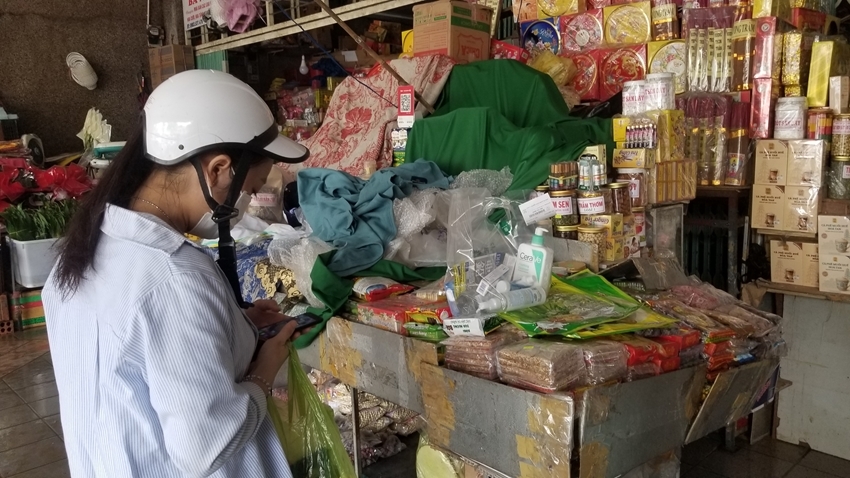 |
| Trading activities at Dong Ba market returned to normal |
From October 29 to November 4, 2025, the Department of Industry and Trade disbursed reserved goods to support localities and people in overcoming the consequences of the floods, with a total value of over 9.79 billion VND. Specifically, they provided 31,800 cartons of instant noodles, 15,600 cartons of milk (including 3,803 cartons of nutritional milk and 11,797 cartons of sterilized fresh milk), 16,200 liters of gasoline, and 4,200 liters of oil. The goods were distributed promptly to deeply flooded areas, helping people quickly stabilize their lives.
According to the Department of Industry and Trade, one notable point during this flooding event is the improved response capability of the goods distribution system. Large businesses have on-site reserve plans, and have organized the flow of goods by area; local authorities have pre-arranged transit points and supported transport teams.
The city is also reviewing goods warehouses in low-lying areas to calculate relocation plans, ensuring safety during the rainy and stormy season. In the long term, the Industry and Trade sector aims to form a “disaster response goods supply network”, connecting businesses, cooperatives, and State reserve forces. Additionally, encouraging businesses to digitize warehouse management, link supply chains, and build safe and disaster-friendly sales points, will be a sustainable direction.
After the difficult days caused by the floods, the rhythm of the market life in Hue is gradually returning to normal. The efforts of the authorities, functional sectors, and businesses to ensure the supply of essential goods have not only helped stabilize people's lives, but have also demonstrated the risk management capacity and flexible adaptation of the local economy in the face of increasingly extreme climate change.