 |
|
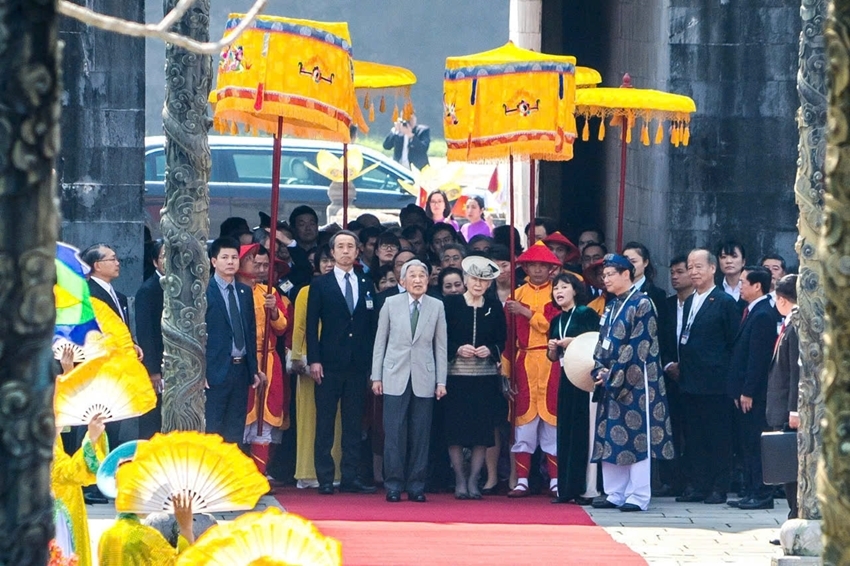
Japan’s Emperor Akihito and Empress Michiko visited Hue Imperial Citadel in March 2017
|
Hue heritage - the foundation of modern development
Hue has long been known as one of the Vietnam’s cities with the most distinctive cultural identity. Despite many historical changes, the city has managed to preserve a harmonious rhythm of life between people, nature, and heritage. This is clearly reflected in the major mission entrusted by the Party and the State: Developing Hue into a centrally-governed municipality based on the preservation and promotion of the values of the Ancient Capital, and growing along the pillars of culture, heritage, ecology, landscape, environment, and smart urban development.
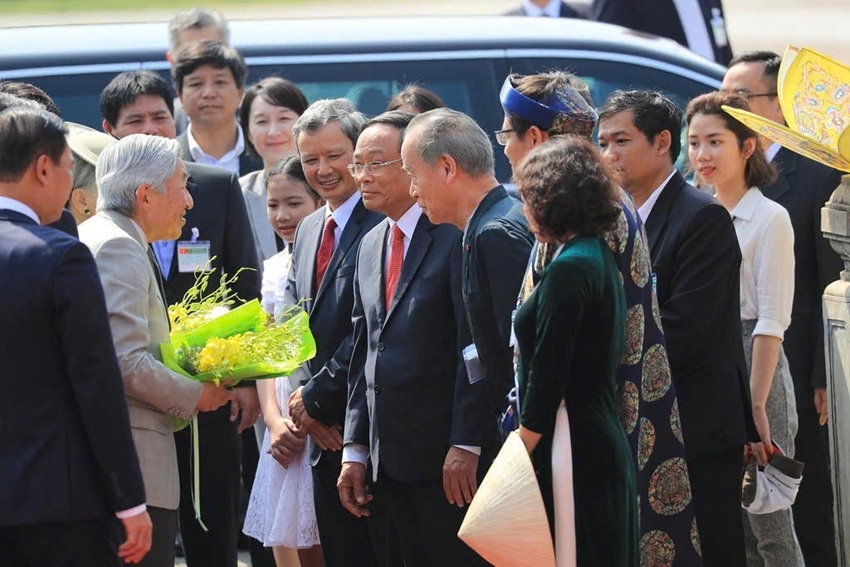 |
| Provincial leaders (now city leaders) welcoming and presenting flowers to congratulate the visit of Japan’s Emperor Akihito and Empress Michiko |
With its immensely rich cultural heritage, including 8 world heritages, the city not only preserves its heritage in a traditional way but also boldly revitalizes, innovates, and transforms it into a driving resource for the development of cultural and creative industries. The four-season Hue Festival, the “Hue - Capital of Ao Dai” initiative, the “Hue - Capital of Gastronomy” initiative, and the city’s application to join the UNESCO Creative Cities Network have all contributed to shaping the image of a dynamic city imbued with a deep heritage spirit.
Hue is proving that preservation is not immobility, but a driving force for shaping the future.
The journey of Vietnam-Japan cultural cooperation from sustainable values
For decades, Japan has remained one of Hue’s most important strategic partners. Built on mutual respect and the shared harmony of East Asian cultural values, the two sides have carried out numerous extensive and effective cooperation programs.
Hue has signed important cooperation agreements with the prefectures of Kyoto, Gifu, and Nara, and participated in tourism and trade promotion activities in Kyushu. Notably, the city has also taken part in cultural and tourism promotion at EXPO OSAKA 2025. Furthermore, the city has also collaborated in organizing the Autumn Festival - Hue Matsuri 2023, engaged in exchanges at the Kyoto Student Festival 2024, held the “Japanese Dolls” exhibition, and established cultural display corners between the two localities.
Additionally, heritage conservation cooperation activities, notably the restoration of Ngo Mon Gate, the main entrance of the Imperial Citadel; Minh Lau, Ta Tung Tu (Minh Mang Mausoleum), Long Duc Palace, and Chieu Kinh Palace (in Thai Mieu area)… as well as the longstanding program on research, conservation, and training in traditional Hue architecture between Waseda University and Hue Monuments of Conservation Center, have become exemplary symbols of Vietnam-Japan scientific and cultural exchange.
Furthermore, Japanese organizations such as JICA have supported Hue in developing community-based tourism in Phuoc Tich ancient village; Japanese art troupes regularly perform at the Hue Festival, alongside numerous youth exchange activities and traditional sports events between Hue and Katsuragi (Nara).
It can be said that culture is creating a “soft bridge”, yet an extremely enduring one, between Hue and Japan.
Three strategic cooperation orientations in the new phase
Entering a new phase of development, Hue aims to elevate its cooperation with Japanese partners to a higher level – more practical, effective, and sustainable. The city proposes 3 suggestions of priority, including:
1. Strengthening promotion and people exchanges
Both sides will continue to cooperate in promoting cultural and tourism images; maintain exhibitions of cultural publications and handicraft products at the Hue City Library and Gifu Prefectural Library; and review and implement the cooperation agreements signed with five Japanese localities: Shizuoka, Kyoto, Sasayama, Saijo, and Takayama.
2. Fostering cultural-sports exchange events
Hue hopes to organize festivals, culinary programs, music and traditional art performances, as well as student, artist, and scholar exchanges, particularly during the Hue International Festival and specialized festivals on sports and culture.
3. Promoting sustainable development cooperation linked with environmental culture
The city proposes that Japan participate in the project “Developing a Model of Community Waste Management Linked to Environmental Culture Education”, a model aimed at promoting a green, clean, and sustainable lifestyle in heritage areas and local communities.
Sparking friendship, paving the way for the future
With its status as a centrally-governed municipality and on its journey to becoming a major cultural and tourism hub of Vietnam and Southeast Asia, Hue identifies culture as the main axis of development. Every citizen should be able to experience the “happiness of a heritage city”, where the past and the future meet in harmony.
Japan’s valuable experiences in urban governance, heritage conservation, cultural industry development, sustainable tourism, and community education will continue to serve as a major source of inspiration for Hue.
Today, as Hue and Japan continue to expand new areas of cooperation, it is not merely economic and cultural development, but also a meaningful journey of encounter, further sparking friendship between the two peoples.
This relationship will grow even closer, contributing to Hue’s development into a cultural, creative, humane, and sustainable city both regionally and globally.
Mr. Nguyen Thanh Binh
Permanent Vice Chairman of Hue City People’s Committee