For Hue, while high expectations for revenue may not yet be realistic, allowing the streets themselves to “tell stories” will certainly add charm to this land of the Huong River and Ngu Mountain.
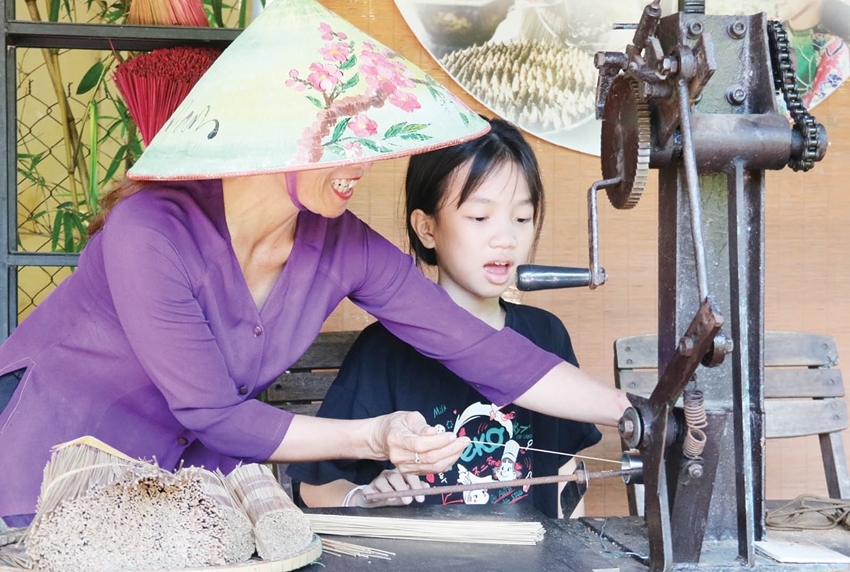 |
| Experiencing traditional crafts when visiting Hue |
From visitors’ ideas
On a 2-day-1-night trip to Hue, Ngo Duy Khang and his friends from Ninh Binh chose the Western Quarter for their one-night experience in the city. Duy Khang shared excitedly: “In Hue, besides visiting monuments and scenic spots, the Western Quarter gave me a different, lively experience in an otherwise peaceful city.”
Most visitors come to Hue to explore heritage and culture, but that is not their only desire. The goal of any experiential journey is to discover as much as possible, from landscapes and culture to people and the local way of life. In such a place, if the streets themselves can “tell stories” and offer visitors distinctive impressions, they would become immensely attractive elements.
Mr. Nguyen Phan Linh (56 years old, tourist from Hanoi) shared that he once explored the old streets of Gia Hoi and Bao Vinh and felt the unique spirit and ancient soul of Hue. Unfortunately, efforts to promote the tourism value of these streets are still limited and not yet compelling. Hue should leverage its old quarters and nostalgic streets, helping tourists feel like they are turning back time and walking into a traditional atmosphere.
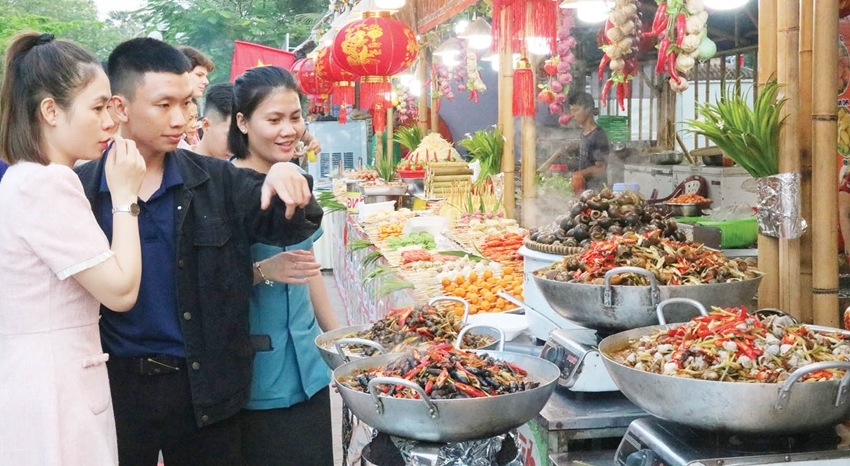 |
| Culinary experiences create strong impressions for tourists visiting Hue |
According to many visitors who love the ancient capital, with its cultural richness and unique culinary value, Hue could certainly attract tourists from all over if it learns how to develop its streets and let them “tell stories” of tourism. Mr. Linh suggested: “Putting ourselves in tourists’ shoes, it’s a pity that Hue’s tourism products don’t yet match their potential. Hue doesn’t have true food or shopping streets. The city is known for its 1,300 unique dishes, yet if you ask a local to name 100, they might struggle. If there were a food street with an impressive atmosphere selling only Hue dishes, perhaps divided into areas for royal cuisine and folk cuisine, where visitors could eat and even try making Hue food, I believe such night streets would attract many tourists.”
Another point often mentioned is that Hue has yet to focus on developing shopping streets offering specialties, souvenirs, and handicrafts. According to some tourists, traditional markets remain the primary shopping venues. Additionally, those wishing to visit and buy handicrafts often have to travel far to craft villages, something not every visitor has time for. Creating streets dedicated to these products would add a new tourism highlight to Hue.
Making the streets attractive to tourists
Sharing the visitors' ideas with tourism professionals, many agree that Hue still lacks fully developed culinary and shopping streets with diverse offerings for tourists.
Mr. Vu Van Chuong, Vice President of Hue Travel Association and Director of Tu Hao Vietnam Travel Co., Ltd., shared that such streets are not only needed by tourists but also by travel companies to build products, attract, and retain visitors. “Walking streets functioning like ‘beer-and-grill’ alleys aren’t special and don’t last long. But a street showcasing traditional crafts, Hue specialties, or diverse Hue dishes could become a compelling highlight. These streets need state guidance and support to ensure effective and long-term operation.”
In fact, many countries have shown that tourism is closely tied to shopping and dining. Culinary and shopping experiences drive tourism and vice versa. In Thailand, one key contributor to its massive tourism revenue is its tourist streets. A typical example is Asiatique The Riverfront, a shopping paradise with over 1,500 shops and 40 restaurants. This area opens from around 5 p.m. until late at night, allowing visitors to shop, dine, and enjoy the scenery.
To make the streets “tell stories” of tourism, it’s essential to connect them with the cultural identity of the land. A representative from the Department of Tourism suggested that Hue could develop following the model of Kyoto, Japan’s ancient capital with over 1,000 years of history, which preserves and revives cultural heritage through refined, unique experiences. Inspired by Kyoto, Hue can build traditional Vietnamese, style pedestrian streets that recreate historical roads where court arts and local handicrafts are showcased in harmony, preserving identity while attracting
Hue could also establish garment streets specializing in tailoring traditional Ao Dai. Many tourists still wish to take home a souvenir Ao Dai made right in this historic land. Creating such streets would also help affirm Hue’s brand identity: Hue - The capital of Ao Dai.