
Saturday, 25/04/2026 14:16
(GMT+7)
Integrating gender equality into socio-economic development planning
HNN.VN - On the morning of April 24th, the city’s Women’s Union, in coordination with the Rosa Luxemburg Foundation (Federal Republic of Germany), organized a workshop titled “Integrating Gender Equality into Commune Level Socio-Economic Development Planning”.
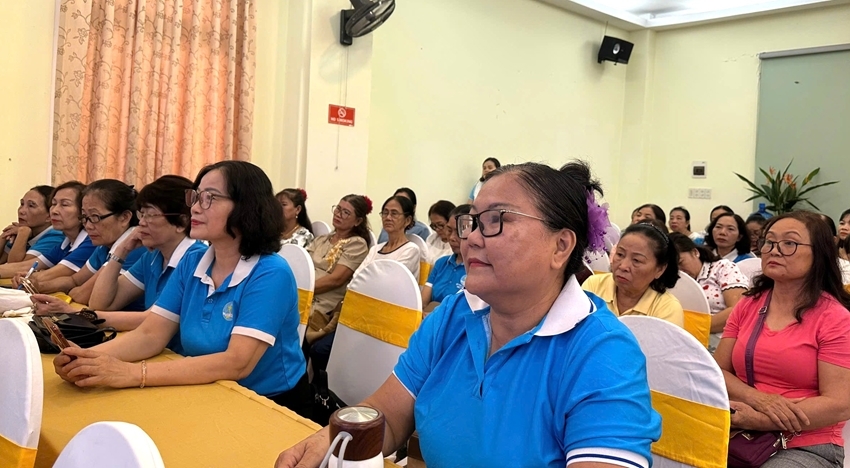 |
| Female officials and members participating in the workshop |
The workshop aimed to raise awareness of gender equality and the importance of integrating gender considerations into the formulation and implementation of socio-economic development plans at the grassroots level. It also served as a forum to share experiences in supporting women’s economic development, as well as the advisory role of Women’s Union organizations at various levels in incorporating gender factors into policymaking processes.
Integrating gender perspectives into processes ranging from planning and budget allocation to monitoring and evaluation not only contributes to the effective implementation of legal regulations but also represents a key solution for optimizing human resources and promoting sustainable economic growth. Despite the progress achieved, gender equality efforts still face several limitations. In the economic sphere, women continue to account for a high proportion of the informal workforce and have limited access to key productive resources such as capital, technology, and digital skills training. In the social sphere, gender stereotypes regarding roles such as “homemaker” and “breadwinner” remain invisible barriers, affecting women’s career development opportunities and their participation in politics and management.
 |
| Female officials and members listening to presentations and knowledge sharing on gender equality |
Through the workshop, female members from localities were introduced to perspectives on integrating gender equality into commune-level socio-economic development plans, as well as the Party and State’s policies on ensuring gender equality, particularly in ethnic minority areas. Delegates also discussed opportunities and challenges in gender integration, while sharing practical experiences and effective models in supporting women’s economic development, enhancing empowerment, and creating sustainable livelihoods.
Representatives of local Women’s Unions shared a range of concrete experiences in integrating gender considerations into socio-economic development planning, and introduced effective approaches to supporting women’s entrepreneurship, job creation, and income generation, thereby contributing to improving women’s status within the family and society.
By THAO VY