ClockTuesday, 02/07/2024 16:41

The Ao dai in Hue life

HNN.VN - Throughout the S-shaped strip of the land of Vietnam, Ao dai can be found in every region. Specifically, in Hue, Ao dai has become a part of the cultural identity and unique beauty of the people here. An important milestone in Hue Ao dai costume was in 1744, after Lord Nguyen Phuc Khoat ascended the throne in Phu Xuan, he promulgated many policies and mentioned the modification of costumes. Thereafter, during the Nguyen Dynasty, the court issued an order, creating an opportunity for Hue women in particular and Vietnamese women in general to wear Ao dai regularly. Accordingly, the tradition of wearing Ao dai gradually entered the daily life of people.

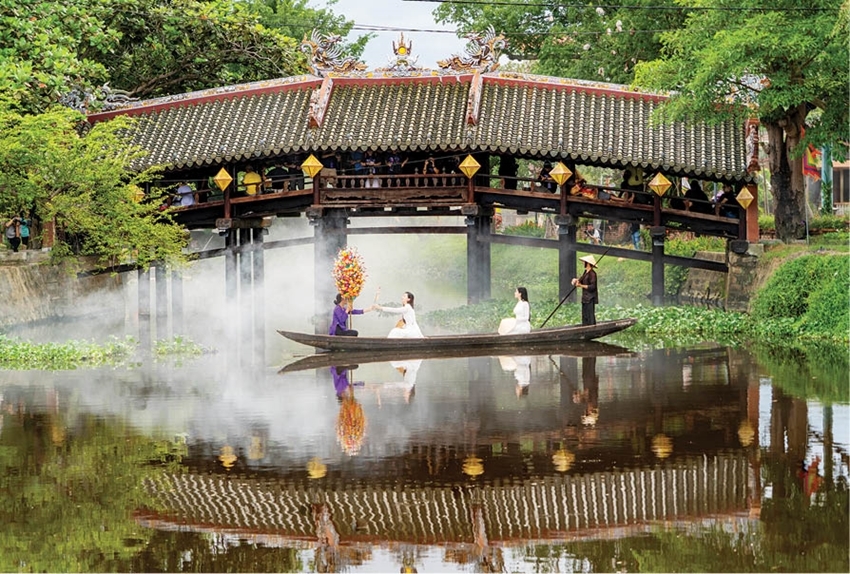
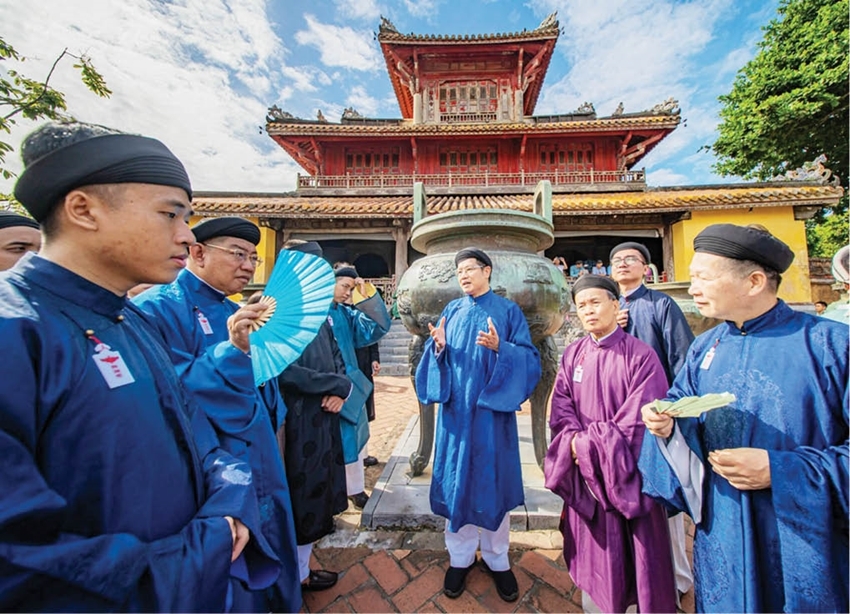
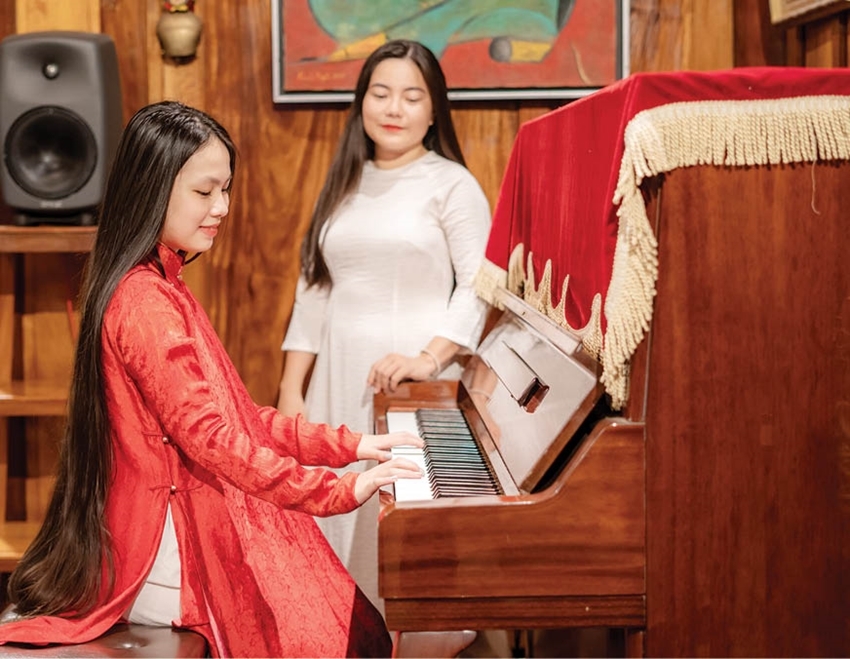
“Checking-in” the Imperial Citadel with ancient costumesCharming Hue conical hatsAo dai performance on the Huong River

Nowadays, in the daily life of Hue people, Ao dai is an indispensable outfit for grandmothers, mothers, and sisters on every happy occasion, holidays, or Tet holiday, and at the workplace. Along with that, the Ao dai ngu than (the five-panel Ao dai) of Hue men is no longer limited to the affairs of villages and families, but has become increasingly familiar and more diverse in holidays, Tet holiday, as well as cultural and artistic activities.

Through the camera angle of Bao Minh, the photographer, Thua Thien Hue Weekly would like to spread the close-up and familiar images of Hue Ao dai, in response to Hue Community Ao dai Week 2024 (June 24 - 30). If you have time, you are invited to participate in the Week featuring many meaningful activities such as experimenting with Ao dai tailoring; admiring an art space themed “The Beauty of Hue Ao dai”; and admiring the “Contemporary Ao dai of three regions converging” through a photo exhibition, etc.
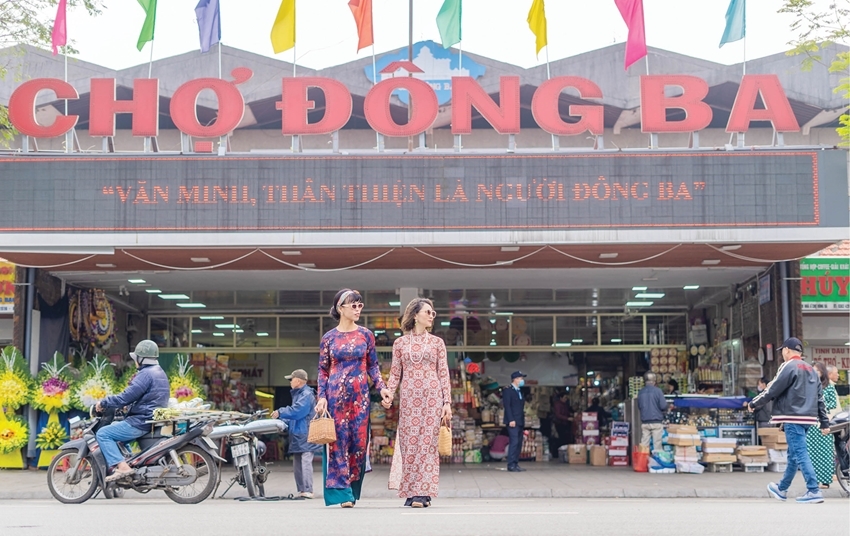
 Beauty of Hue in Ao dai
 The graceful Ao dai by Thanh Toan tiled-roof bridge
 
 Hue five-panel Ao dai
 
 Being tender
By Thua Thien Hue Weekly
RATING
Be the first to review this post!
  Comment

YOU MAY CARE ABOUT

“Once I happened to hear about my old native land…”

In 2000, in the short piece entitled “Hue Diary,” written when he returned for the first Hue Festival, musician Trinh Cong Son wrote, “When you have a place to return, or to visit from time to time, you are very fortunate. There, you have a river, a mountain, and you can find again your old friends whose hair used to be black has now turned grey. You might suddenly meet a Hue girl on the street and ask her, ‘Is there anything new in Hue now?’ And immediately, or perhaps by chance, she will recite the two lines from a poem by Bui Giang: “Da thua xu Hue bay gio/ Van con nui Ngu ben bo song Huong” (“Yes, sir, Hue now/ Still has Ngu Mount by the Huong river…”)

“Once I happened to hear about my old native land…”
Women Contribute to Building “Hue - The Capital of Ao dai”

Amid the rhythm of modern life, as fashion becomes increasingly diverse and is constantly changing, the traditional ao-dai continues to remain a lasting presence in the lives of women in the former imperial capital. In Hue, the graceful image of women’s association members wearing Ao-dai is not only a symbol of beauty but also a way of preserving and spreading the traditional cultural values of their homeland.

Women Contribute to Building “Hue - The Capital of Ao dai”
From community heritage to a maritime vision

Within the cultural complex of Hue, if the system of palaces and royal tombs defines the face of an Imperial capital, the villages along the lagoon and coastline preserve the depth of community life. There, heritage does not lie dormant in the past but lives on in every festival season, every daily custom, and every belief tied to the natural environment. The Cau Ngu Festival of Thai Duong village, held once every three years in January at the Thuan An seaport, is precisely such a heritage - a vibrant cultural practice where community memory, maritime knowledge, and the will to survive have woven together into an enduring whole across hundreds of years.

From community heritage to a maritime vision

LASTEST NEWS

Return to top