 |
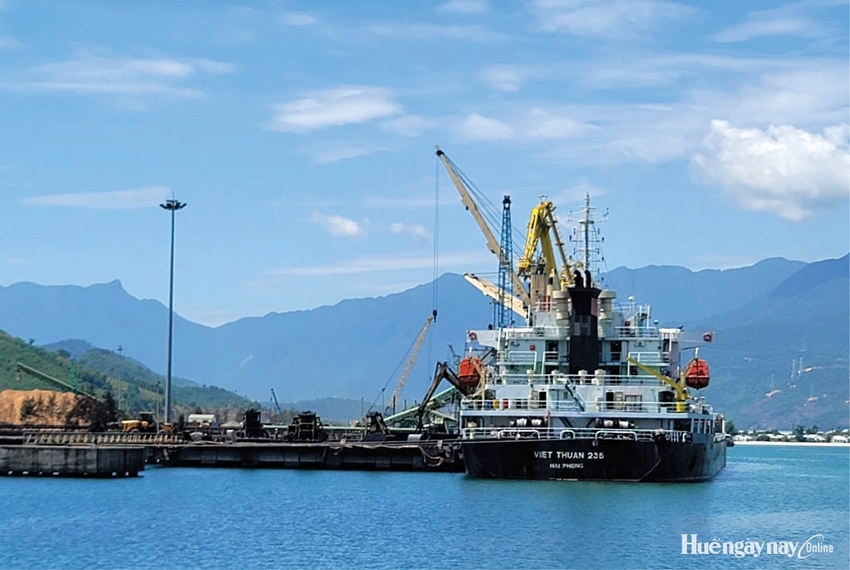
| Chan May Port facilitates the arrival of large vessels for cargo handling. Photo: M. Van |
Chan May - Lang Co possesses a rare combination of advantages. According to information released by the Ministry of Construction during its appraisal of the adjusted planning scheme in 2024, the economic zone covers 27,108 hectares and is envisioned as a national and international transport hub, a gateway to the sea, and an urban development area along the Hue - Da Nang corridor. The value of this location lies in its ability to connect flows of goods, tourists, investment capital, and human resources, thereby creating a larger market for Hue.
However, advantages do not automatically translate into strength. The Resolution directly addresses existing shortcomings: fragmented urban development with no clearly defined core area; weak links between seaports, industry, logistics, tourism, and urban services; inadequate infrastructure; and delays in implementing several projects. This assessment highlights the urgent need to reorganize available resources into an efficiently functioning system.
The goal of meeting Grade III urban classification standards and progressing toward the establishment of wards before 2030 should therefore be understood as a process of improving development quality. The targets of achieving average annual growth of more than 12% in gross regional domestic product, annual growth of more than 17% in realized investment capital, and an average annual income of VND 120–150 million per person by 2030 reflect high expectations. Realizing these ambitions will require the creation of high-productivity jobs, quality services, and an attractive living environment.
Chan May Port needs to become a connecting hub between production, transportation, and markets. When industry lacks logistics services, the port lacks a stable cargo base, and the urban area lacks housing and amenities, the effectiveness of investment becomes fragmented. Priority should therefore be given to infrastructure linking the port with industrial parks, logistics centers, and major transport corridors, while developing support services, vocational training, and housing for workers. A port city must be capable of retaining its workforce.
The deeper potential of this new development space also lies in the harmony between the sea, lagoons, and mountains and forests. Lang Co was named one of the world's most beautiful bays in 2009. Together with An Cu Lagoon, also known as Lap An Lagoon, and the landscapes of Bach Ma and Hai Van, it offers a valuable foundation for resort tourism, ecotourism, and cultural experiences. These assets can enable Hue to develop complementary products to its heritage tourism offerings, extend visitors’ itineraries, and increase the value generated by each trip.
The environment must genuinely be regarded as a long-term economic asset. Clean seawater, unimpeded lagoon waterways, protected forests, and beaches with sufficient public space will determine the destination’s appeal. Planning must clearly delineate industrial, port, residential, and tourism areas; preserve flood drainage corridors; and control land reclamation, wastewater, and building density. Every project must be assessed in relation to the environmental carrying capacity of the entire region.
Heritage must also become an integral component of the development model. Chan May - Lang Co lies along the Central Vietnam Heritage Road, linking Hue ancient Imperial Capital with Hoi An and My Son. This advantage could be used to develop itineraries combining imperial culture, the Hai Van landscape, beach resorts, and community-based experiences. Local cuisine, traditional crafts, memories of fishing villages, and residents’ everyday ways of life should be preserved and incorporated into tourism products through the active participation of local communities.
 |
| Tourists take photos at Lap An Lagoon (Lang Co). Photo: Ngoc Hoa |
Cooperation with Da Nang is a particularly important avenue for development. The two cities should jointly develop tourism markets, connect transport networks, train human resources, and promote investment. Lang Co can tap into Da Nang's tourist markets, air transport services, and business ecosystem while offering complementary resort destinations, ecological experiences, and the cultural depth of Hue. A collaborative approach should aim to increase the value of the entire visitor journey, allowing each locality to capitalize on its distinctive strengths.
Looking further ahead, Chan May - Lang Co should be integrated into the South Central Coast’s maritime economic network. Connections with industrial centers, seaports, and tourism destinations to the south could expand cargo sources, shipping routes, and supply chains. The key is to define complementary functions and avoid duplicative investment or competition based on unsustainable incentives. Hue should select market segments suited to its strengths, linking seaports with clean industries, high-quality services, and cultural and ecological tourism.
For the resolution to translate into tangible results, it must soon be converted into a concrete list of projects, priority rankings, funding sources, and implementation responsibilities. Public funding should focus on infrastructure that strengthens connectivity and addresses essential social needs. Private investment should be encouraged through transparent planning, readily available land, and streamlined administrative procedures. Resettlement must be accompanied by access to jobs, schools, and healthcare. Local residents must share in the benefits and be able to monitor the transformation process.
A new development space for Hue will truly take shape only when resources are connected and benefits are widely shared. Chan May - Lang Co needs to become a place where the seaport drives growth, the urban environment improves quality of life, nature is protected, and heritage provides a distinctive identity. This will also serve as a measure of Hue's expanding stature: enhancing competitiveness through effective development planning and building a sustainable southern growth pole within the broader network of Central Vietnam.