 |
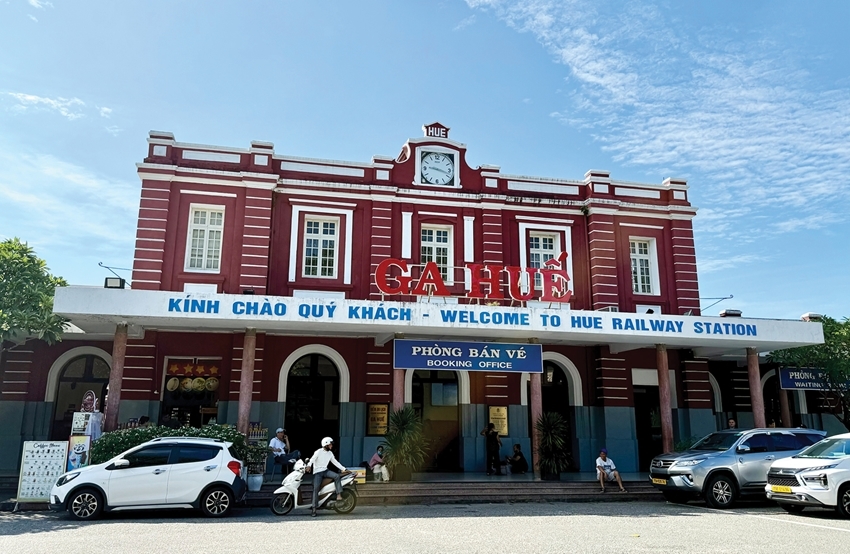
| Hue Railway Station, an integral part of the city’s life. Photo: Phu Quang |
Miniature Trains Awaken Memories of the Past
During my exploration of Mineral Wells, a small city in North Texas, I happened to discover Clark Gardens, a botanical garden spanning over 14 hectares between Mineral Wells and Weatherford. What caught my curiosity was not only its lush green landscape but also its G-Scale model railway system, where miniature trains actually run amid the garden’s natural landscape.
Unlike the model railways commonly found in museums, the railway at Clark Gardens is set outdoors. The miniature trains wind their way beneath the trees, cross bridges, pass through tunnels, run along the ponds, and travel through tiny towns. A simple shift in camera angle is enough to turn the entire garden into a captivating railway world.
For the first time ever, I found myself rushing from one spot to another, trying to capture the perfect shots of the miniature trains. Holding my camera, I looked for the best angles and waited eagerly for the trains to come into view. Watching them chug out of a tunnel, cross a small bridge, and disappear behind the bushes was an indescribable experience. Even more excitedly, with the operator’s permission, I was able to place a small GoPro camera at the front of a locomotive to capture the journey from the train’s point of view.
But what fascinated me most was not just the model-making techniques or the unique footage I captured. The miniature trains unexpectedly awakened memories of a distant past I had long tucked away…
My family used to live next to Hue Railway Station, and my father worked in the railway industry. That is why my childhood was closely associated with Hue Railway Station, with trains arriving and departing, whistles ringing out along the streets, and long lines of carriages stretching along the tracks. Back then, Hue Railway Station was not only a place where long journeys began but also an integral part of the city’s daily rhythm. Some memories seemed to have faded over the years, yet just hearing a train whistle in a place half a world away from home, everything seems to flood back, just as vividly as before.
And the image of Hue Railway Station came to my mind…
Making Hue Railway Station a True Tourism Destination
Drawing on my experience at Clark Gardens, I envision Hue Railway Station, with its more than 120 years of history, becoming a permanent exhibition space dedicated to the history of Vietnam’s railway industry, particularly the imprints that the railway industry has contributed to Hue’s development. There is no need for large-scale structures. A thoughtfully designed exhibition area featuring archival photographs, old train tickets, signal lamps, locomotive models, and stories about railway workers would be enough to make the space appealing to visitors. Retired railway workers, including my father, could serve as ‘living witnesses’ and guides, sharing their firsthand experiences and stories about the station.
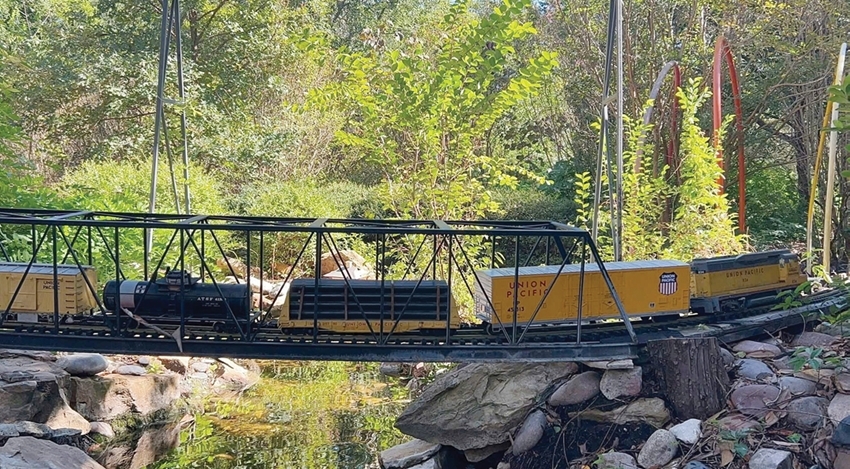 |
| A miniature train at Clark Gardens. Photo: Q. Vinh |
Especially, a miniature railway system recreating Hue Railway Station, Truong Tien Bridge, the Huong River and other familiar landmarks across the city would provide children with an enjoyable experience while offering visitors a deeper insight into Hue’s history and local culture.
The station could also become a place to showcase Hue’s tourism offerings through photo and video exhibitions, interactive maps, and virtual reality (VR) technology. For travelers arriving in the city, it would be a source of inspiration to explore Hue. For those waiting to board a train, it would provide an opportunity to discover more about the destination they have just visited or make plans for a return trip.
I can also picture Hue Railway Station being transformed into a distinctive cultural performance venue. Its historic French-style architecture would make a perfect setting for ao-dai shows, complemented by traditional music and artistic lighting systems. Another strength of the station is its location at the entrance to Le Loi Street, which is home to numerous cultural constructions, museums, and art spaces. Why not create a themed tourism route called the ‘Hue Museum Heritage Trail’, starting from the railway station? From this place, visitors could explore the museums and heritage sites along Le Loi Street, as well as enjoy the scenery along the Huong River, on foot, by bicycle, or by electric vehicles.
Another aspect worth considering is how visitors spend their time while waiting for their trains. Instead of having to carry their luggage around in search of a place to rest, they could make the most of their remaining time in Hue by enjoying local cuisine, shopping for souvenirs, visiting exhibitions or taking part in cultural activities right within the station area.
Even after I left Clark Gardens, the images of the miniature trains remained etched in my mind. Though they traveled only along tiny tracks, they carried viewers on a journey through the most cherished moments of their childhood. That little experience in Texas inspired me to imagine a future for Hue Railway Station, not merely as a place where travelers come and go, but as a destination where people can slow down, immerse themselves in the city’s stories, and take away memories worth treasuring.