 |
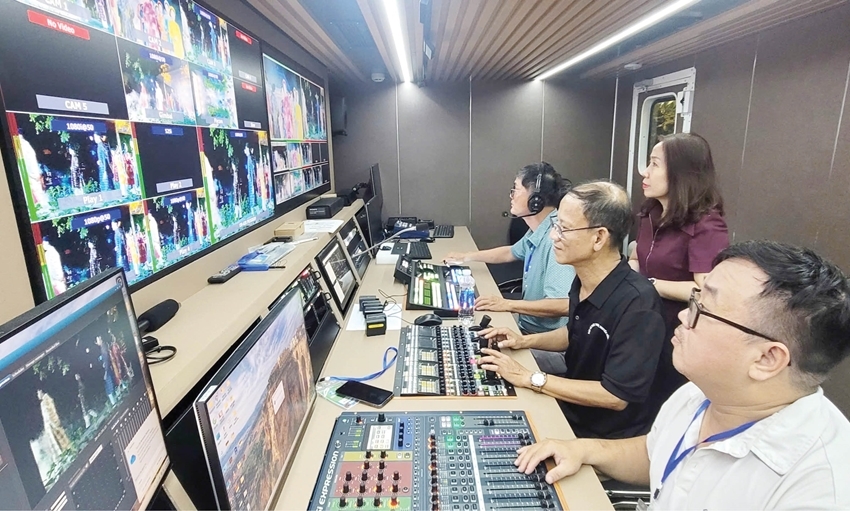
| The editorial team of Hue City Media Center during a live broadcast |
Sir, over the past few years, technology has rapidly transformed how information is produced and received. From the perspective of someone who researches and trains journalists, what do you see as the biggest changes that today’s journalists must adapt to?
In my view, the biggest change lies not only in the tools of journalism but in the entire information ecosystem. In the past, journalists mainly produced content for traditional channels such as printed newspapers, radio, television, and online news. Today, information is produced, distributed, and received across many platforms simultaneously: websites, social media, short videos, podcasts, livestreams, personalized newsletters, and even algorithm-driven content spaces.
This compels journalists to adapt in three dimensions. The first is speed. Audiences no longer wait for news bulletins at fixed time slots as before. They receive information continuously in real time. The second is a form of expression. A journalistic topic today is no longer confined to a single article. It can be transformed into a short video, infographic, podcast, long-form piece, or interactive data visualization. The third is the relationship with the audience. The audience is no longer a passive recipient but simultaneously reacts, comments, shares, and exerts fact-checking pressure on journalism.
Therefore, today’s journalists must both preserve the core qualities of their profession and develop the capacity to adapt to new technologies, platforms, and audience consumption behaviors.
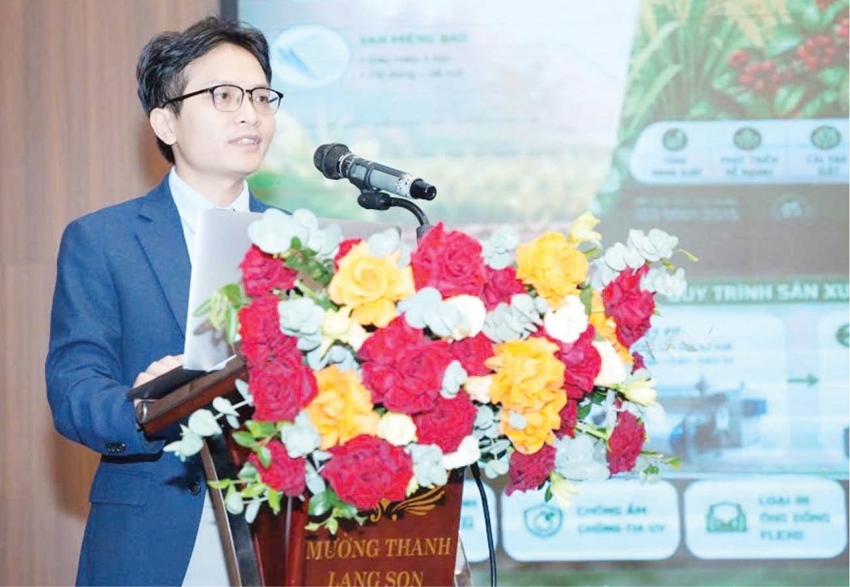 |
| Dr. Luong Dong Son |
Some argue that the greatest challenge facing journalism today lies not in technology, but in the professional mindset. Based on your experience working with many news agencies, what is your view on this?
I agree with that assessment. Technology is a challenge, but it is also an opportunity. It is the professional mindset that ultimately determines whether a news agency can truly transform.
In practice, many agencies now have better equipment, more modern publishing platforms, and know how to use social media, produce videos, and apply AI. If the mindset remains “producing what we have” rather than “serving what audiences need,” or if digital transformation is still seen merely as uploading articles to digital platforms, or if social media is still viewed only as a place to share links, or if the newsroom is still organized in siloed, poorly coordinated ways with no multimedia integration, then it's very difficult for technology to create breakthroughs.
The professional mindset in this new context needs to shift from “channel-based journalism” to “content ecosystem journalism,” from “one-way reporting” to “creating informational value,” from “chasing speed” to “competing through credibility, depth, and identity”. Although technology can help work faster, look better, and reach wider audiences, it can not replace the ability to identify problems, professional ethics, political integrity, social sensitivity, and accountability to the public.
As technology increasingly narrows the gap in content production skills and speed, what will be the factor that defines a journalist’s value in the years ahead?
In the years ahead, a journalist’s value will no longer be measured primarily by who writes faster, edits faster, or publishes faster. The distinctive value of a journalist will lie in capabilities that technology is hard to replace.
First is the ability to identify issues. Given the same phenomenon, a skilled journalist must see the social story, the web of interests, the policy implications, the human fates, and the questions that need to be answered. Second is the ability to verify. In an environment full of misinformation, journalists must become reliable gatekeepers - skilled at confirming sources, cross-referencing data, and distinguishing truth from crowd sentiment. Third is the ability to tell stories with depth. Audiences do not only need to know “what happened,” but also need to understand “why it matters.”
And finally, a journalist’s value lies in professional ethics. The more advanced the technology, the greater the human’s responsibility. Journalists in the age of AI must know how to use tools in the service of the truth - not allow the tools to lead them away from it.
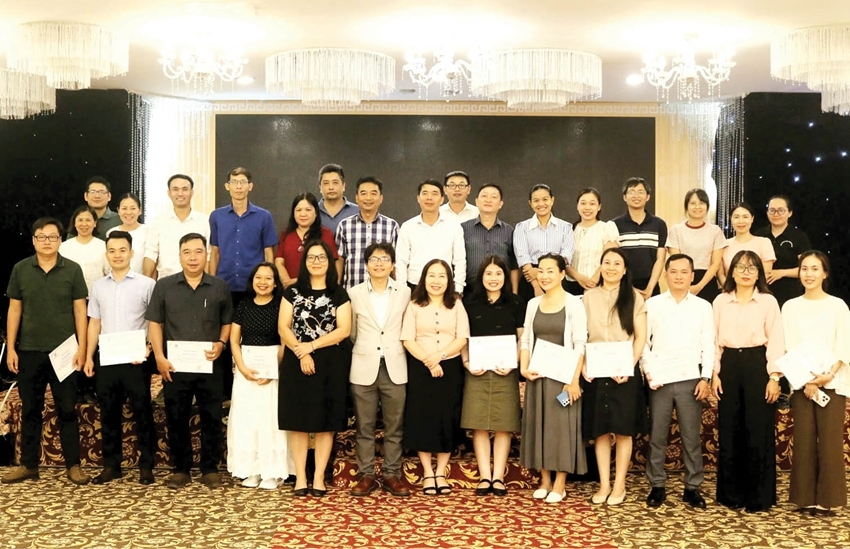 |
| Dr. Luong Dong Son (wearing glasses, center of the front row) with trainees in Hue during his AI Skills Application Training course |
Hue carries the depth of a heritage city while also standing before many new development opportunities. In your view, how should journalists in Hue tell stories that both preserve local identity and appeal to readers outside of Hue?
In my view, journalists in Hue need to tell local stories in a way that is both deep and fresh. “Deep” means not losing what is distinctive, not introducing heritage through simple tourism snippets, not flattening Hue’s culture into a handful of familiar symbols. Meanwhile, “fresh” means knowing how to place Hue within contemporary issues: conservation and development, heritage and livelihoods, urbanization and the environment, traditional culture and the creative industries, local identity and international integration.
To attract readers beyond Hue, journalism must find stories with universal significance drawn from local material. For example, a traditional craft village can carry a story about preserving community memory. A river can tell a story about the environment and urban development. An ordinary person can tell the story of Hue’s qualities in modern life. When identity is told through the language of modern journalism, Hue will not only be a story for the people of Hue. It can become a story that resonates with a much wider audience.
Looking ahead a few years, what do you envision a journalist who adapts well to the AI era will look like?
I envision such a journalist as someone possessing three clusters of competencies. The first is a solid professional foundation. No matter how technology evolves, journalists must firmly hold to core principles: truth, verification, fairness, humanity, social responsibility, and respect for the law. Without this foundation, using AI can easily become chasing after viral effects, and even generate serious professional risks.
The second is sufficient technological competence to master the tools. Journalists do not necessarily need to become technology engineers. Still, they need to understand where AI can support them: researching materials, suggesting angles, analyzing data, converting content formats, assisting with editing, and personalizing products. At the same time, journalists must also understand AI’s limitations. It can be wrong, biased, fabricated, and obscure authorial accountability if used without oversight.
The third is creativity and collaborative capacity. The journalist of the future does not work alone, but as part of multi-skilled teams. They must be able to think across platforms, tell a single story in multiple formats, and read audience data without becoming enslaved to algorithms. In short, a journalist who adapts well to AI is someone who knows how to combine professional integrity, technological thinking, and human accountability.
If you could send a short message to young journalists entering the profession in the age of AI, what would you say?
I would say: Don’t fear AI, but don't deify it either. Think of AI as a very capable assistant, not a journalist acting in your place. AI has no lived experience, no social intuition, no compassion, and bears no ethical or legal accountability on a journalist’s behalf.
Young journalists are entering the profession in a time of enormous pressure, but also enormous opportunity. The greatest opportunity is that they have in their hands tools that previous generations did not have. Yet, that advantage only becomes genuine value when they build a serious professional foundation: be willing to go out, read, ask questions, verify, listen to lived experience, and take full accountability for their work.
My short message is: Learn technology fast, but hold your profession firmly. In the age of AI, journalists not only need to be smarter about their tools, but they must also be more honest with the truth, more attuned to people, and more resilient in the face of the pressures of speed, page views, and algorithms.
Thank you for these meaningful reflections!