 |
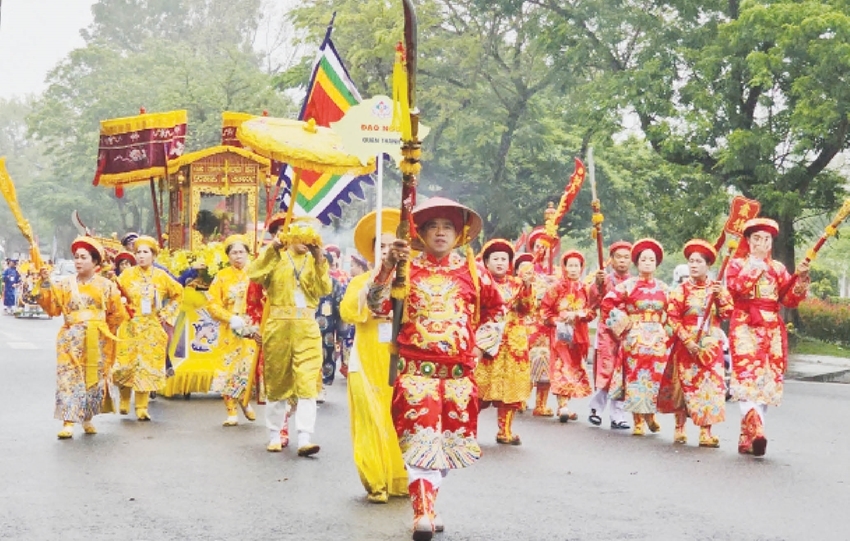
| Procession of the Hue Nam Temple Festival. Photo: P. Thanh |
In this picture, the culture and sports sector is no longer merely a sector that “serves spiritual life,” but is being positioned rightly as a pillar of development, a “soft growth engine” of the heritage city. This shift is not a slogan, but a practical necessity. The trove of documentary heritage, festivals, craft villages, cuisine, and more, if preserved only as “historical capital”, will remain static. But, if they are connected, digitized, narrated, and creatively developed, they will become a major economic – cultural - tourism resource that sustains livelihoods, deepens identity, and elevates Hue’s image on the regional and global map.
Thus, 2026 is not merely a point in time. It is the moment when the culture and sports sector must “reposition itself” and accelerate with new governance thinking and new ways of working: shifting from “pure conservation” to “conservation linked with creativity and digital transformation.” In doing so, each heritage asset becomes not only a memory of the past but also a tangible resource for the future, creating jobs, enhancing urban appeal, and, most importantly, making heritage vibrant in contemporary life.
From practical foundations, Hue is shaping a clear position and distinctive identity: a “city of festivals – digital heritage – culinary capital – leading cultural, resort, and sports destination of the Central Region”, with strategic breakthroughs built on four pillars: culture, heritage, tourism, and sports. For the culture and sports sector, this is the “framework” for reorganizing development space: festival – heritage - creative spaces linked to the Huong River, the Imperial Citadel, ancient streets, ancient villages, garden houses, craft villages, and the sea – lagoon - mountain system; festival axes, pedestrian streets, and night streets designed in an integrated manner to form a “chain of living heritage experiences” - where every step of a visitor is a cultural slice; every stop, a Hue story told with refinement.
In the digital era, the culture and sports sector must lead heritage digital transformation: building a digital heritage database for Hue; developing VR/AR, nighttime light tours, digital tourism maps, multilingual storytelling QR codes… placing “Hue in the palm of visitors’ hands” - convenient and modern while preserving the tranquil, profound spirit of the Imperial Capital. At the same time, more flexible institutional thinking is needed with a “heritage sandbox” - experimental spaces for enterprises, research institutes, and startups to participate in product creation and event organization within heritage spaces, based on strict standards to protect original values.
If heritage is “static”, events are “dynamic.” The 2026-2030 period requires Hue to shift strongly from sightseeing tourism to “event - festival - experience tourism.” Here, the culture and sports sector plays a leading role: transforming heritage into high-caliber event products, connecting culture - sports - tourism to create a year-round event ecosystem, reducing seasonality. At the same time, Hue should gradually position itself on the Southeast Asian event map through international activities and major sporting competitions.
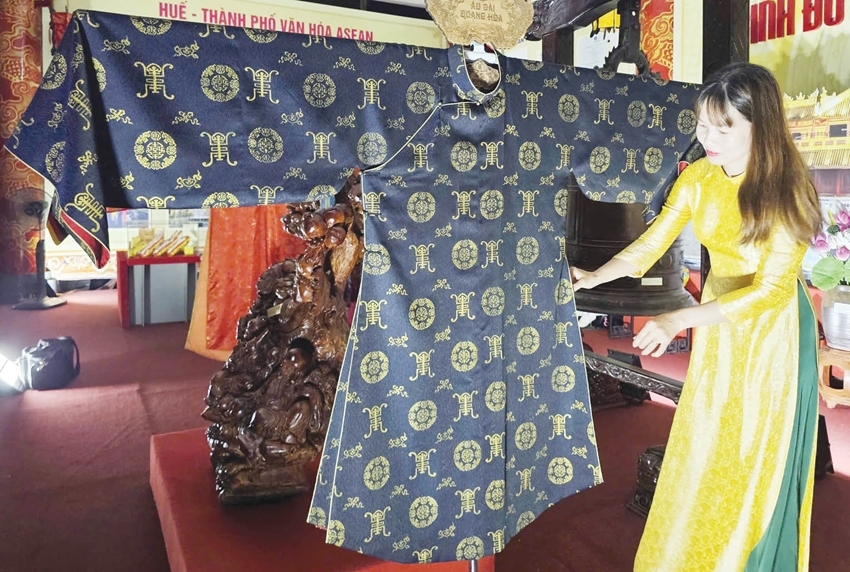 |
| Hue ao dai – one of the “symbols” of the Imperial Capital’s culture. Photo: Nhat Minh |
Importantly, events are not merely “festivities.” Events are a new “growth machine,” expected to significantly increase visitor numbers, activate accommodation - dining - transport - night economy services, create more jobs in event organization, tourism, media, and logistics, and raise the level of socialization toward financial self-reliance for commercial events. But for this machine to run in the right direction, the culture and sports sector must play the role of “conductor”: planning a four-season event system; building quality criteria for artistic, technical, and safety standards; appraising content to ensure identity; promoting socialization and public - private partnerships; applying digital technologies such as e-ticketing, international livestreaming, VR/AR, 3D mapping, and moving toward a “Hue Event App”; and coordinating across sectors to control noise - waste - safety, forming “green event” standards consistent with Hue’s refined character.
When speaking of Hue’s image, one cannot omit the ao dai and performing arts - “cultural symbols” powerful enough to define the city’s brand. In 2026–2030, the city sets out key infrastructure and institutional projects: completing Ba Trieu Square and Indoor Arena; building a standard sports training and competition center; completing an International Convention Center to expand MICE tourism; and especially aiming for a Hue Ao Dai Museum and professional ao dai performance shows for visitors - as a way to turn the brand “Hue – the Capital of Ao Dai Vietnam” into a long-lasting cultural - tourism product. When these institutions take shape, the culture and sports sector will have a solid “material foundation” to enhance activity quality, increase hosting capacity, and create a modern, livable cultural urban image.
Across all breakthroughs, people remain the decisive foundation. Heritage truly lives only when there are people to preserve, understand, and create alongside it. In reality, although the workforce in the city’s culture - heritage sector is sizable, the proportion with formal, specialized training remains limited; new skills such as heritage digitization, cultural communication, and international event organization still need strengthening. In the intangible heritage field, the risk of “broken transmission of traditional crafts” is even more concerning, as many master artisans are elderly while successors lack systematic training. Therefore, entering 2026, the culture and sports sector must regard human resource development as a strategic task: training managers toward integrated conservation planning and international conventions; providing technical training for museums, monuments, and libraries in modern and digital directions; fostering creative and cultural tourism forces in “heritage storytelling”; and building mechanisms of apprenticeships so artisan communities truly become “teachers.”
Notably, this orientation has been embedded in the city’s overall vision and strongly articulated in the Political Report of the 17th Hue City Party Congress: culture and sports are seen as fundamental drivers, as identity, as advantages; while candidly recognizing limitations in facilities and in the sometimes underwhelming exploitation of cultural values relative to potential - thereby setting tasks to invest in institutions, enhance the quality of festivals, arts, and sports, develop cultural industries and smart tourism, and aim for the goal of a UNESCO Creative City. For the culture and sports sector, this is both a “guiding principle” and a reminder: crossing into 2026, it can no longer rely on inertia; concrete action programs, clear standards, and tight coordination mechanisms among the state, businesses, and communities are needed to turn documents into lived reality.
On the threshold of 2026, it can be said that Hue’s culture and sports sector stands at a point of both challenges and great opportunities. Challenges arise from increasing demands for organizational quality, professionalism, digital transformation, and identity preservation amid market flows; opportunities come from Hue’s unique heritage foundation, a festival brand cultivated over many years, a development aspiration rooted in identity, and an increasingly clear vision of a “heritage – green – smart” city.
What will be decisive in the new phase is steadfastness in Hue’s own path: breaking through without trade-offs, modernizing without losing essence, integrating without dissolving. Breakthroughs in culture and sports should not be measured merely by the number of festivals or tournaments, but by whether heritage is “brought to life”, communities benefit, the city becomes more civilized, safe, and friendly, and every Hue resident feels proud to live in a city that cherishes the past to create the future.
Story: Dr. Phan Thanh Hai