Having lived in this city for many years, Huan still longed for the flavors he once tasted. But as the saying goes, “worshiping all year is not equal to the full moon of the first lunar month,” so we decided to eat vegetarian on that occasion.
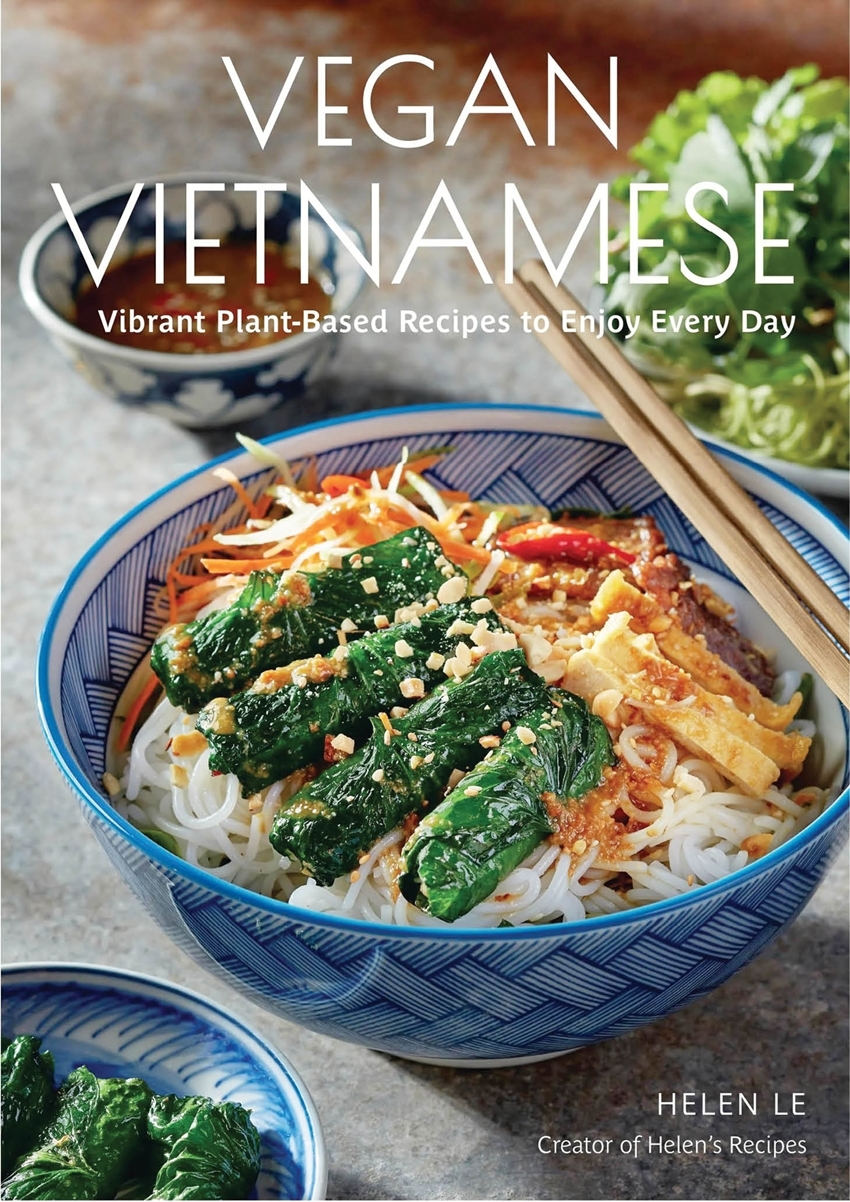 |
| Cameron Stauch’s cookbook |
Our first destination, chosen by Huan, was Dong Ba Market to look for red rice porridge for breakfast, “if it’s the red rice, even better,” as he said. The porridge vendor confidently assured us that her porridge was cooked with red rice: “You’ll know as soon as you taste it.” Though I wasn’t sure the bowl in my hands was truly made from red rice, in the crisp early-morning chill, spoonful of hot porridge eaten with mushrooms and various braised vegetables, with a little fragrant pepper and scallions, were deeply comforting.
Lunch was a variety of Hue-style vegetarian cakes at a small eatery in Vy Da, and the day ended with a warm, comforting dinner at Bo De Restaurant. A day without meat was also a way to nourish both body and mind after many drinking gatherings with close friends.
That Lantern Festival trip to Hue was what urged me – then working as a kitchen and editorial assistant – to propose to the editorial board of The World of Cuisine magazine that we do a special feature on vegetarian food. At the time, since the magazine had many contributors who were journalists in Hue, my knowledge of vegetarian cuisine in the land of the Huong River and Ngu Mountain was broadened. For example, Hoang Thi Tho, author of many distinctive pieces such as “Coming to Hue to eat vegetarian” (co-written with journalist Dien Thong), “In a Hue Ruong house, everything tastes good,” or Hue-born writer Muong Man with the piece “Vegetarian dishes, my mother and I.”
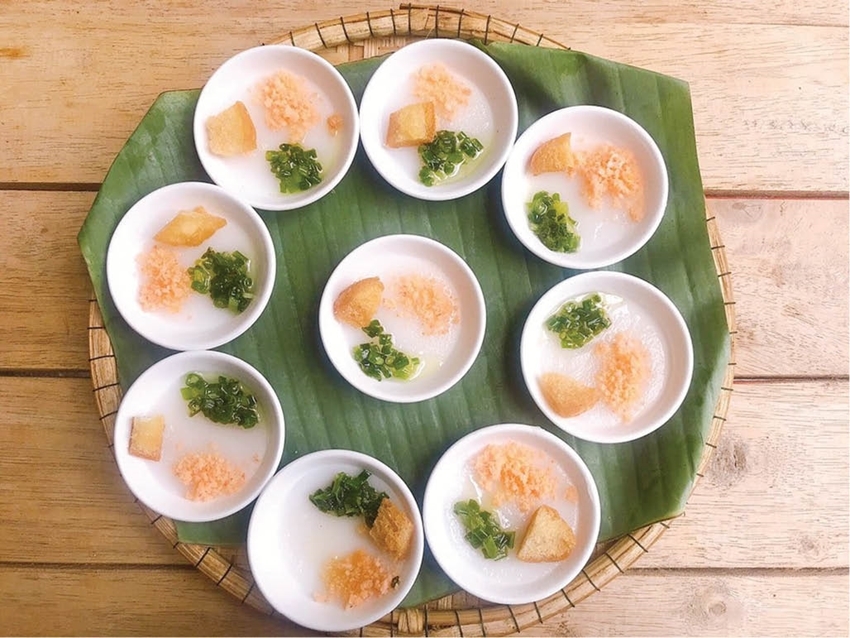 |
| Vegetarian banh beo at Maison Trang Restaurant |
It is fascinating how Ms. Tho wrote about “stylish” vegetarian dining not in restaurants or eateries but in pagodas: “…going to vegetarian restaurants is simply to eat vegetarian; but to eat vegetarian in a ‘stylish’ way, you have to go to a pagoda. But please don’t misunderstand and think that Hue’s pagodas run food services. Not at all. And not just anyone can go to a pagoda to eat vegetarian whenever they want. To have a vegetarian meal at a pagoda – often to entertain guests – you must have a close, heartfelt relationship with the head monk… If the head monk is welcoming, you can be at ease. Many monks, especially nuns, are also formidable cooks. If you’re lucky, you’ll be able to enjoy at the pagoda all kinds of Hue cakes – khoai, beo, nam, loc… – of course, vegetarian versions – extremely delicious and exquisitely prepared. You’ll also be delightfully surprised by beautifully presented dishes made from figs, jackfruit, potatoes, eggplants, wild betel leaves… Rustic yet slightly more refined, you can ask the monks for rice with salt. Lemongrass salt, sesame salt, peanut salt… whatever you like, they have it.”
That is truly the case, as I have been fortunate for many years to be invited every morning of the 5th day of Tet to the Central Hermitage (Binh Thanh) of Master Giac Toan, to attend a vegetarian feast with many dishes cooked by the women volunteers working at the pagoda. The vegetarian dishes are rich with Southern flavors: appetizers of fresh spring rolls or fried rolls with a bowl of dipping sauce better than any I’ve had at vegetarian restaurants; then white rice with fried tofu braised in lemongrass and chili; straw mushrooms braised with green peppercorns… The highlight is a bowl of sour soup made with pineapple, tomatoes, bean sprouts, tofu, taro stems, tamarind, seasoned with herbs and sawtooth coriander – wonderfully sweet and fragrant. Every dish is something to savor and listen to, from the main courses to dessert. Simpler, too, were the days of receiving vegetarian meals at Quang Huong Gia Lam Pagoda during the lifetime of Venerable Tri Thu, or at Van Hanh University when Venerable Minh Chau was rector…
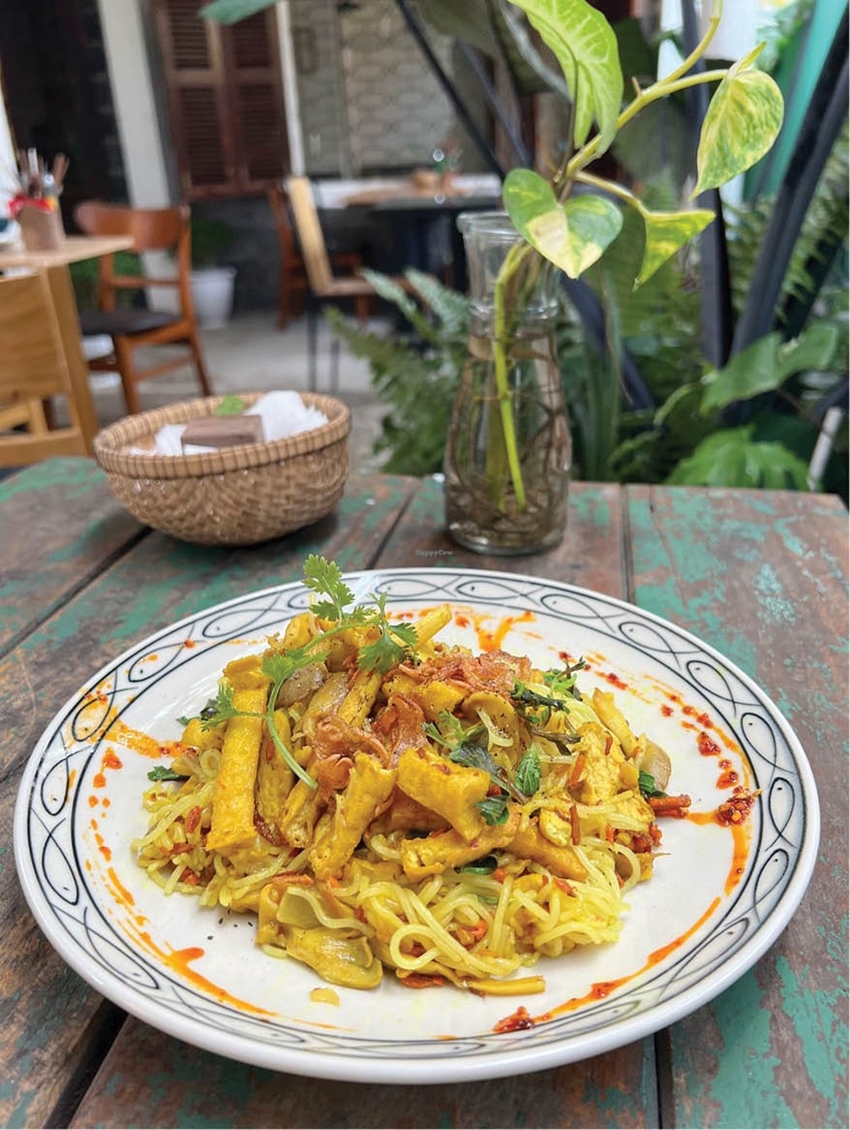 |
| Crispy fried noodles at Mingle Cafe |
In my culinary memories, I recall many simple yet delicious vegetarian meals because they were tied to friendship and affection, such as a Western-style vegetarian meal with bread, cheese, and… wine in the Ruong house at Vuon Ngu Ha of Duong Dinh Vinh. I also won’t forget the rustic vegetarian dishes when a young journalist took me to humble eateries in Kim Long and Nguyet Bieu, and the vegetarian meal at Thien Tam Restaurant on the road to Tu Duc’s tomb, run by a lovely pair of painter friends. I could also mention several times being invited to vegetarian meals while attending the Hue Festival or Trinh Cong Son memorial music nights in the Imperial Capital…
***
There have been many books by foreign authors (and many Vietnamese authors living abroad) written about vegetarianism and Vietnamese vegetarian dishes, such as Vegan Vietnamese by Helen Le, Ever-Green Vietnamese by Andrea Nguyen, Vietnamese Vegetarian by Uyen Luu, Vegan Vietnamese Cookbook by Sophia K. Miller, Vegetarian Vietnam Travel Report by Teresa Bergen… More recently, Vegetarian Viet Nam by Cameron Stauch – a Canadian chef who lived in Hanoi for many years – a first-time cookbook, yet focused on vegetarian cuisine in Vietnam. Along with numerous guides for travelers to Vietnam such as Vegetarian in Vietnam: Your Ultimate Guide!, Simply Vegetarian… Quite a few of these books mention or refer to Hue as an indispensable destination for vegetarians or for those who simply love vegetarian food.
In an article in the August 2025 issue of National Geographic Traveller, Daniel Stables, the author, titled his piece “How Hue became Vietnam’s vegetarian food capital.” The article includes the passage: “Today, Hue’s royal vegetarian culinary heritage is turning the city into an attractive destination for the growing number of travelers to Vietnam who follow a vegetarian diet.”
And I am one of them!