 |
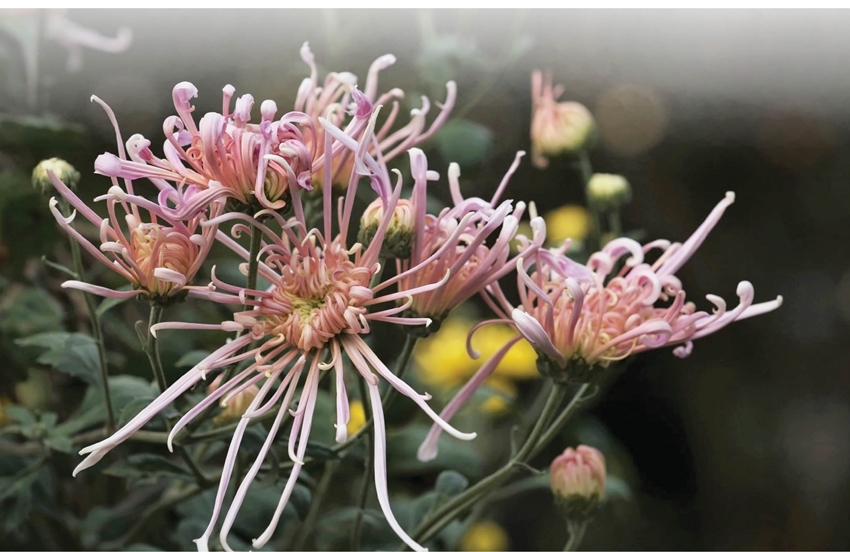
| With their elegant and regal appearance, ancient chrysanthemums are notoriously difficult to care for, making enthusiasts cherish them immensely. Photo: Dao Manh Hung |
At 10 p.m., Minh Tung from Giap Bat, Hanoi, tends to his pots of ancient chrysanthemums as part of his nightly routine. Feeling inspired, he and his son enjoy tea and snacks while admiring the flowers in their modest 10-square-meter rooftop garden. The chrysanthemum-loving community frequently marvels at the stunning blooms from his garden, showering him with admiration.
The noble beauty of chrysanthemums
At the age of 50, Tung’s passion for chrysanthemums remains as strong as when he first began following in his parents’ footsteps as flower enthusiasts. Tung often engages in lively debates about the origins and appreciation of ancient chrysanthemums. According to him, elders from the traditional flower village of Nghi Tam (Hanoi) recall that in the past, only affluent officials and nobles could afford to grow these flowers.
In East Asian culture, chrysanthemums symbolize longevity, prosperity, nobility, and elegance. They are part of the "Four Noble Plants" alongside pine, bamboo, and yellow apricot blossom. Chrysanthemums are often referred to as the "noble flower," with their unique trait of "leaves that do not fall from the branch, flowers that do not touch the ground." When their cycle of offering beauty to the world ends, they wither gracefully on the plant rather than falling to the earth.
Among enthusiasts in northern Vietnam, varieties such as Hoang Long Trao (Golden Dragon’s Claw), Hong Tu Kieu (Graceful Pink Chrysanthemum), and Bach Khong Tuoc (White Peacock Chrysanthemum) are the most sought-after. When in bloom, their soft, curved petals exude elegance and a unique charm. Due to their demanding care requirements, growers lavish them with extraordinary attention. Each growth stage brings distinct joy, from the anticipation of budding to the delicate beauty of semi-bloomed flowers and the awe-inspiring display of full blossoms. These three opulent and enchanting varieties were popular in Hanoi during the early 20th century for Tet displays but became scarce over time, only to make a resurgence in recent years.
 |
|
While some individuals cultivate ancient chrysanthemums privately, Dao Manh Hung, director of the Vietnam Ornamental Plants Park, and his team have dedicated a special area to rare chrysanthemum varieties. Hung has even hosted a large-scale exhibition featuring ancient chrysanthemums and Vietnamese ceramics, drawing significant public interest and evoking memories of Hanoi's past.
To create such an impressive garden that attracts thousands of visitors, Hung spent years searching, cultivating, and shaping ancient chrysanthemums in handcrafted ceramic pots. Despite receiving offers of several million dong per pot, he refuses to sell them.
A vision for a royal botanic museum
Through connections with gardens, researchers, and royal descendants, information about ancient chrysanthemums in Hue is sparse. However, culinary artisan Mai Thi Tra, 90 years old, a relative of Emperor Duy Tan’s wife, shared an intriguing detail. She recalled seeing Hong Tu Kieu and Bach Khong Tuoc commonly referred to in the past as large chrysanthemums. "These flowers were only planted in royal residences and noble households. As the plants grew taller, gardeners would place bamboo stakes around them for support and care for them meticulously," she reminisced.
Nguyen Phuc Loi, a descendant of the royal My Hoa Cong lineage, The grandson of Thuy Thai Vuong Nguyen Phuc Hong Y, and the son of Nguyen Phuc Ung Ai - Ung Chan (Emperor Duc Duc) recounted seeing the delicate and enchanting Bach Khong Tuoc in his family garden long ago. However, over time and due to storms, the flowers have faded away.
 |
| |
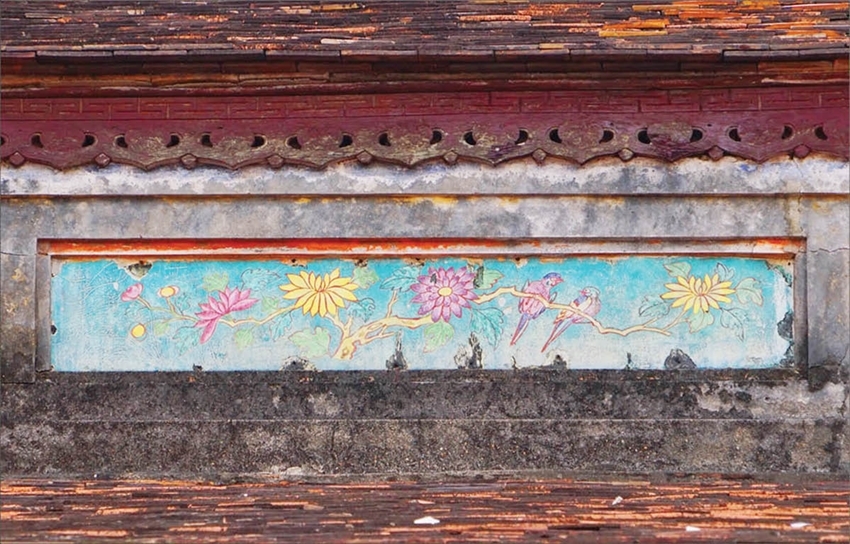
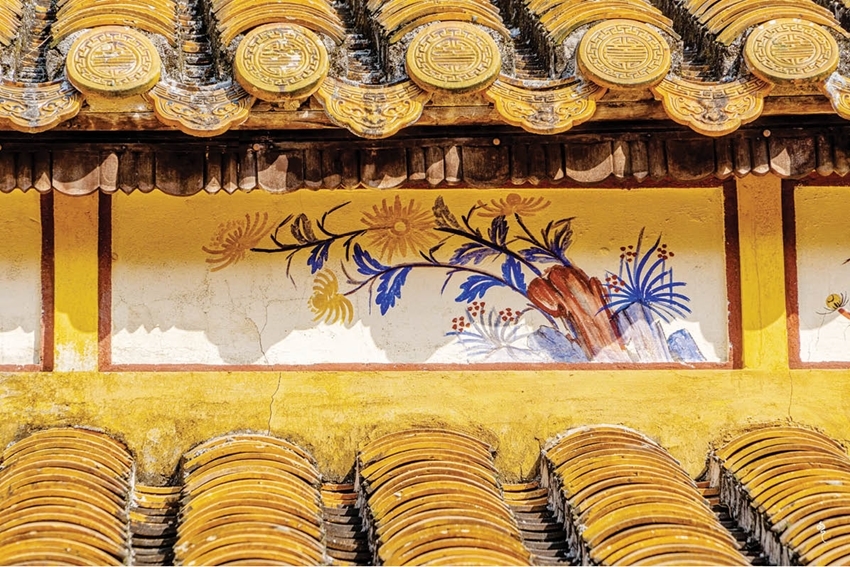
Many flower enthusiasts believe that ancient chrysanthemums first appeared in Hue, starting in the imperial court before spreading to noble residences. The "chrysanthemum defying frost" philosophy embodies the integrity of scholars, a metaphor for officials’ steadfastness amid the changing tides of worldly affairs. Chrysanthemum symbols are also prevalent in the Nguyen Dynasty’s heritage architecture. In his work "The Sun and the Chrysanthemum: Symbols of Vietnamese Royalty," Vu Kim Loc, a researcher, highlights the presence of chrysanthemum motifs in royal garments, jewelry, and ceremonial items. Structures like the Ngo Mon Gate, Thai Hoa Palace, and Emperor Thieu Tri’s mausoleum showcase chrysanthemum patterns resembling today’s ancient varieties.
While searching for traces of ancient chrysanthemums in Hue, I came upon Assoc. Prof. Dr. Nguyen Van Duc, Head of Training and Student Affairs at the University of Agriculture and Forestry (Hue University). He is currently collecting three pure Vietnamese chrysanthemum varieties from the north for experimental planting. Assoc. Prof. Duc lamented that despite his efforts to locate them in central Vietnam, they no longer exist. Last year, a student from Trieu Phong, Quang Tri, informed him that her mother used to grow such chrysanthemums, but the plants perished in recent storms. The central region’s climate, particularly the heavy rains, poses a significant threat to ancient chrysanthemums.
In our conversation, Assoc. Prof. Dr. Duc, an enthusiast of restoring rare plants, proposed establishing a royal botanic museum. As the former imperial capital, Hue once hosted many rare plant and fruit varieties, such as longan, lychee, aromatic rice, and camphor trees. This heritage is unique to Hue as it aspires to become a centrally governed municipality.
"These rare plant varieties are likely scattered among the people. With enough effort, cultivation, and care, they will bear fruit again. Just like ancient chrysanthemums, I hope this spring will see them bloom in Hue once more, as they once did in the imperial city of old," Assoc. Prof. Duc expressed.