 |
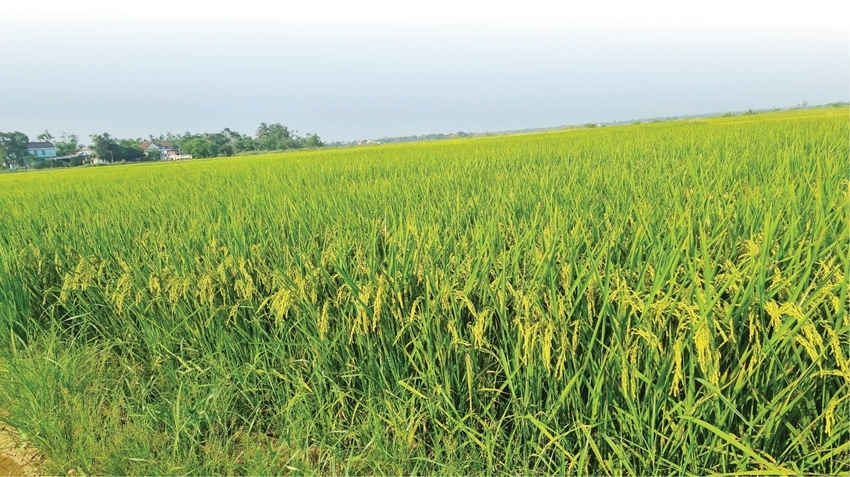
| J02 rice currently being studied and its cultivation area being expanded. Photo: Van Thiep |
On a chilly day at the end of the year in Hue, we arrived in Phu Ho commune just after its fields had endured major floods. Floods are never welcome, yet for local farmers, they also bring alluvial deposits to fields that have been drained in preparation for a new crop.
We were greeted by Mr. Duong Van Thiep, Director of Phu Ho Agricultural Cooperative. Inside the cooperative’s newly built headquarters, the conversation about rice and the rice brand of Phu Ho flowed endlessly.
Being a third-generation farmer born and raised in the fields, Mr. Thiep’s love for rice seems almost innate. After completing high school and beginning work at Phu Ho Agricultural Cooperative, he enrolled in the Faculty of Agronomy at University of Agriculture and Forestry, Hue University under a part-time program, determined to return and serve his hometown’s farmlands. In 2014, at the cooperative’s 2014 – 2019 congress of Phu Ho Agricultural Cooperative, he was elected Deputy Director at the age of 33. In the subsequent terms (2019 – 2024 and 2025 – 2030), he was entrusted with the position of Director.
Reflecting on the past decade, a period during which the cooperative transitioned under a new operational model, Mr. Thiep takes pride in the establishment of the rice brand of Phu Ho, built upon the J02 rice variety.
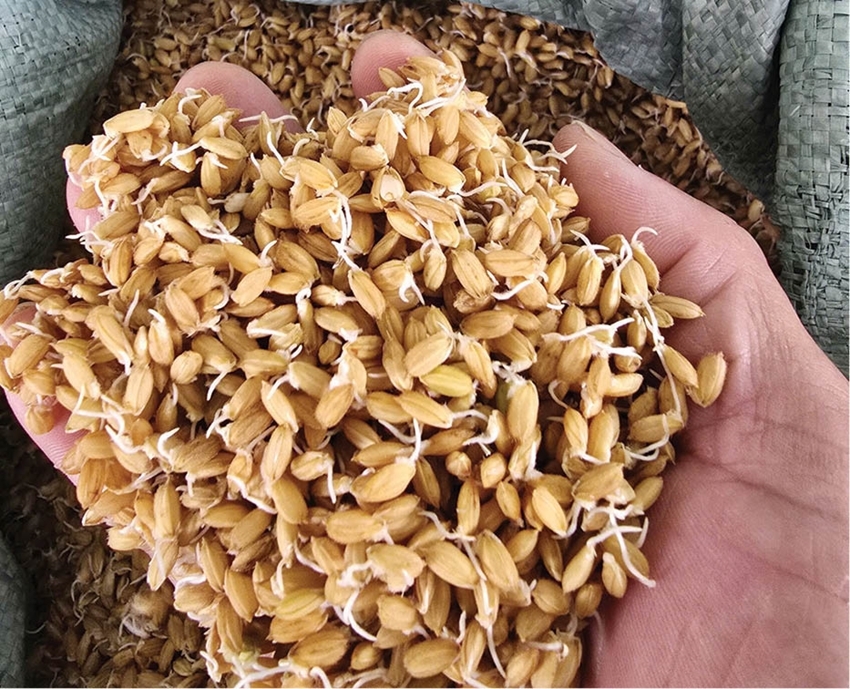 |
| The J02 seed being the foundation of the rice brand of Phu Ho. Photo: Van Thiep |
In late 2024 in Hanoi, at a ceremony organized by Vietnam Cooperative Alliance, Phu Ho rice was honored as one of the country’s 100 outstanding products, receiving the First Mai An Tiem Award. The award is named after the legendary Mai An Tiem, a symbol of self-reliance and resilience.
To better understand the nearly ten-year journey of building the brand, we visited veteran farmer Bui Quang Quy. In his modest home nestled beside the fields bustling with a new crop, the usually reserved farmer grew animated at the mention of J02. He vividly recalled the early days when the new variety was first piloted in Phu Ho’s fields.
During the 2016 – 2017 winter-spring crop, Phu Ho was selected to pilot three hectares of the new J02 variety in Tay Ho hamlet. This is a pure-line Japonica rice variety of Japanese origin, introduced and selected by the Agricultural Genetics Institute. At the time, Mr. Quy served as Tay Ho’s hamlet chief and was the first household to participate in the model, encouraging fellow farmers to join.
Initially, many farmers were hesitant: J02 required a longer seed incubation period and had a longer growing cycle than other varieties. Moreover, the rice also needed to be sun-dried under three full days of strong sunlight after harvest. “The most worrying time was during panicle formation. The panicles looked short and sparse. Some villagers even came to ‘scold’ me, saying I had persuaded them to plant a ‘terrible’ variety,” Mr. Quy recalled with candor. Yet after 120 days of tending the crop day and night, the first harvest proved remarkable. The plump, heavy panicles yielded significantly higher productivity than traditional varieties. Having cultivated dozens of rice varieties over the years, Mr. Quy recognized J02 as a gift to the flood-prone land of Phu Ho.
“At that time, we longed for a variety that could withstand Hue’s cold and unpredictable winter-spring weather; resist lodging during heavy rains and winds; deliver high yields; taste good; and fetch a good price. Fortunately, J02 met all of those ambitious criteria,” affirmed Cooperative Director Duong Van Thiep.
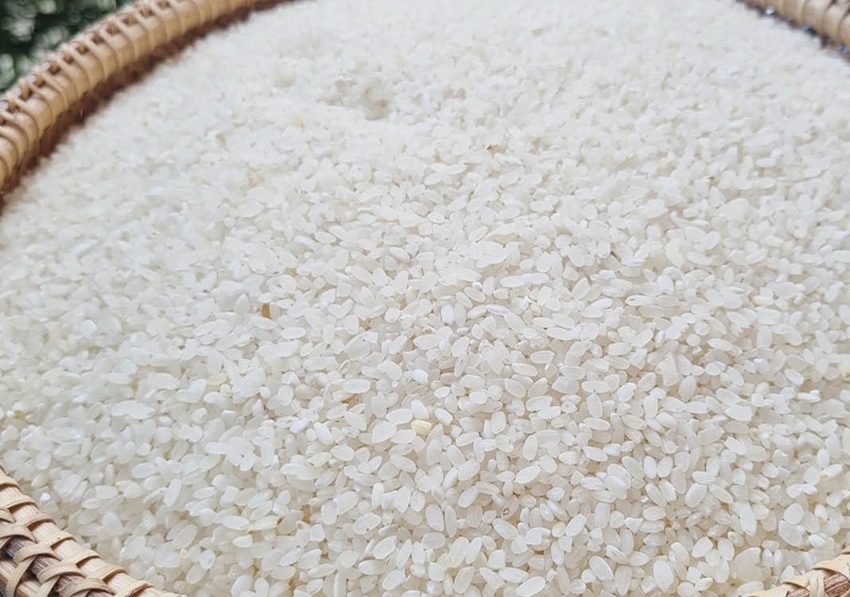 |
| J02 rice being fragrant and sticky, favored by the market. Photo: Van Thiep |
Following the successful pilot, J02 cultivation expanded rapidly, from three hectares to 50 hectares in the next winter-spring crop, peaking at 270 hectares in 2022. From Tay Ho, the variety spread to Dong Di and Su Lo hamlets. Selected for the One Commune One Product program, the rice brand of Phu Ho has achieved a three-star rating. Today, J02 accounts for 50 percent of the cooperative’s total 536 hectares, becoming the main crop for 1,000 farming households.
Regarding economic efficiency, Mr. Bui Quang Khanh of Tay Ho hamlet shared that from his four ‘mau’ (local land units) planted entirely with J02, and with current selling prices ranging from VND 9,000 to 11,000 per kilogram, his family earns around VND 120 million per crop, an increase of VND 20 – 30 million as compared to other varieties. “It’s strange: the rice seems to understand our hardships. The harsher and colder the weather at the start of the season becomes, the greener its leaves and the sturdier its stalks grow. The grains are sticky, fragrant, sweet, and nutty; the broken rice ratio is very low; prices are high and the market is stable. What more could we ask for?” Mr. Khanh shared after a long day in the fields.
A demobilized soldier and certified electrician who began cultivating J02 at the age of 24, Mr. Khanh represents the third generation of farmers in Phu Ho who have chosen to stay with the land. Listening to him speak passionately about rice, one cannot help but sense his profound affection for the crop.
With quality established and recognition secured, attention now turns to the future. Mr. Nguyen Van Hung, Acting Vice Chairman of Hue City Cooperative Alliance, noted that being recognized as an outstanding rural industrial product at provincial, municipal, regional (Central Highlands), and national levels as well as receiving the Mai An Tiem Award provides strong momentum for Phu Ho rice to further strengthen its brand, promote its products, and expand its markets. The alliance will accompany the cooperative and may study expanding J02 cultivation to other regions.
Enhancing product quality, introducing it into supermarket distribution channels, and moving toward VietGAP-standard production zones to sustain and elevate the value of Phu Ho rice are among the aspirations shared by the cooperative’s leadership and the 1,000 farming households of this flood-prone land as they enter the new year.