 |
|
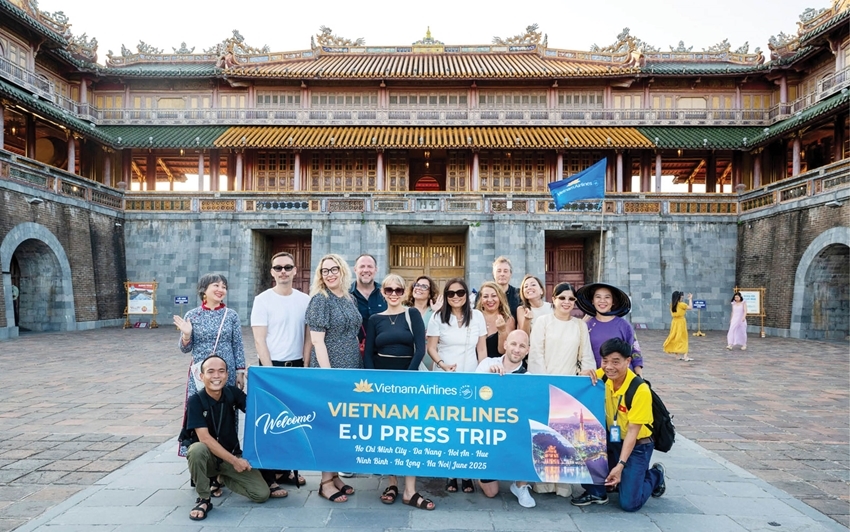
A famtrip delegation from Europe surveying tourism products in Hue
|
Lack of market analysis
In 2024, Hue tourism welcomed approximately 3.9 million visitors, an increase of nearly 22% compared to 2023; among them, nearly 1.4 million were international visitors (up almost 17%) and 2.5 million were domestic visitors (up 25%).
Among the top 10 source markets for visitors to Hue, several countries recorded strong growth, such as Italy (up 114%), Spain (up 62%), France (up 57%), and Germany (up 54%). However, some markets saw a decline compared to 2023, including Thailand (down 52%) and Malaysia (down 46%), etc. Notably, traditional markets like Japan and South Korea were no longer among the top 10, indicating a clear shift in international tourism trends.
The “tourism painting” partly reflects the fluctuations in tourists’ demands, preferences, and choices of products and destinations. A typical example is South Korea, which was once the leading source market during the 2016-2020 period, but has recently lost that position.
According to a representative from the Planning and Tourism Development Division of the Department of Tourism, over 10 years ago, the tourism sector conducted market demand surveys targeting domestic tourists and several international markets such as South Korea and Thailand. However, since the COVID-19 pandemic, customer trends and preferences have changed significantly.
 |
| Experiencing on Tam Giang Lagoon |
Market analysis and tourist segmentation efforts still lack depth. Investments in product development, types of accommodations, and promotional campaigns are often based on traditional experience. Tourism products tend to focus on “selling what we have” rather than “what visitors need”, resulting in a lack of immersive cultural-heritage experiences, entertainment, and shopping options. This is one of the reasons why many tourists find Hue’s tourism offerings monotonous and lacking appeal, despite the area’s significant development potential.
Mr. Vu Van Chuong, Vice Chairman of the Hue City Travel Association and Director of Tu Hao Vietnam Travel Co., Ltd. stated that market analysis provides essential data for travel businesses to effectively access and tap into potential markets. Without in-depth analysis, it is difficult for businesses to develop suitable products. Meanwhile, most travel companies in Hue are small or micro-sized and lack the resources to conduct market research on their own, thus requiring support from the tourism sector. “Businesses need specific information about customer preferences and demands to develop appropriate products. If they only have vague or general data, it is very difficult to implement in practice,” Mr. Chuong explained.
Listening to the market
Identifying tourism and services as a key economic sector, Hue City has set out a comprehensive development strategy that not only aims to increase visitor numbers but also focuses on market expansion, boosting visitor spending, and extending the average length of stay, thereby increasing tourism revenue. According to the Tourism and Service Development Project for Hue City for the period 2025-2030, with a vision to 2045, the goal is by 2030, the city will welcome 10 to 12 million visitors, with an annual growth rate of 18-20%; international tourists are expected to account for around 45-50%; the tourism sector is projected to contribute approximately 15% to the city’s GRDP. Furthermore, over 100,000 jobs will be created, 90-95% of which will involve trained workers. The average spending per tourist is expected to reach 2.5-3 million VND, with an average stay of 2.5 days.
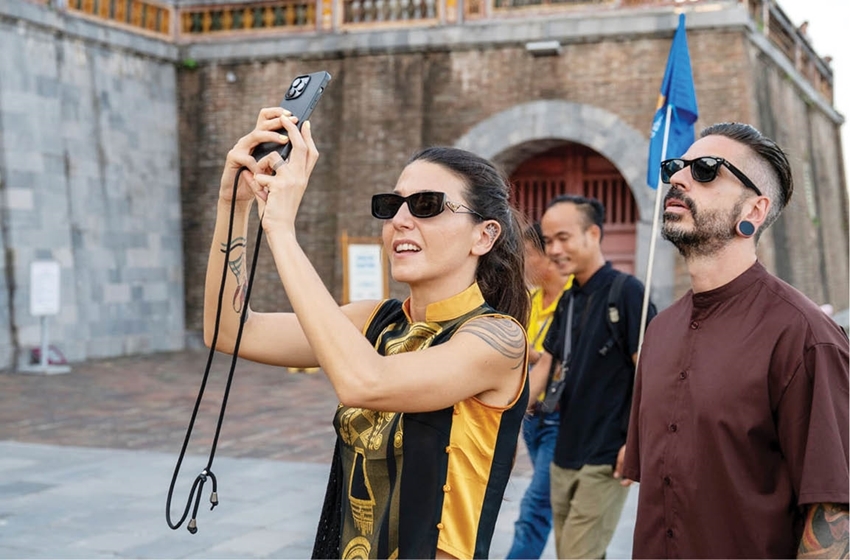 |
| International tourists visiting Hue Imperial Citadel |
With actual figures in 2024 reaching only 3.9 million visitors, the path toward the 2030 target remains challenging, especially in the context of intense competition among localities. Many provinces and cities have merged and expanded their administrative boundaries, giving them more room to develop tourism. Without a well-structured strategy for market analysis and insight, Hue’s tourism sector will face difficulties in creating products that are sufficiently attractive.
Mr. Tran Minh Tan, Head of the Planning and Tourism Development Division under the Department of Tourism stated that the market is evolving, with family groups, young travelers, and the trend of self-guided tourism on the rise. International tourist trends have also changed significantly compared to the past, along with shifts in consumer preferences. Conducting market analysis through surveys of specific visitor segments is essential and should be carried out regularly, at least once every three years to allow for timely adjustments to tourism products.
The survey sample needs to be sufficiently large and take into account factors such as age, gender, interests, income, and nationality. At the same time, it is necessary to study the demand for different types of tourism (leisure, exploration, adventure, cultural tourism, etc.), factors influencing destination choice, and estimated spending levels. In addition, analyzing behaviors related to shopping, information searching, and tour booking, etc., is also valuable data.
In addition to surveying tourists, it is also important to conduct research from the perspective of travel agencies, accommodation providers, and other relevant stakeholders. Specific analysis results will help the tourism sector and businesses formulate effective strategies, develop appropriate products and services, and optimize promotional activities to attract target customers.
Currently, Hue has been implementing various solutions to develop tourism. However, the core issue lies in “listening to the market” in order to provide products and services that meet actual demand. Hue does not need to create an excessive number of new products; what matters is that each product offered must be truly appealing. And that can only begin with systematic and regular market analysis.