 |
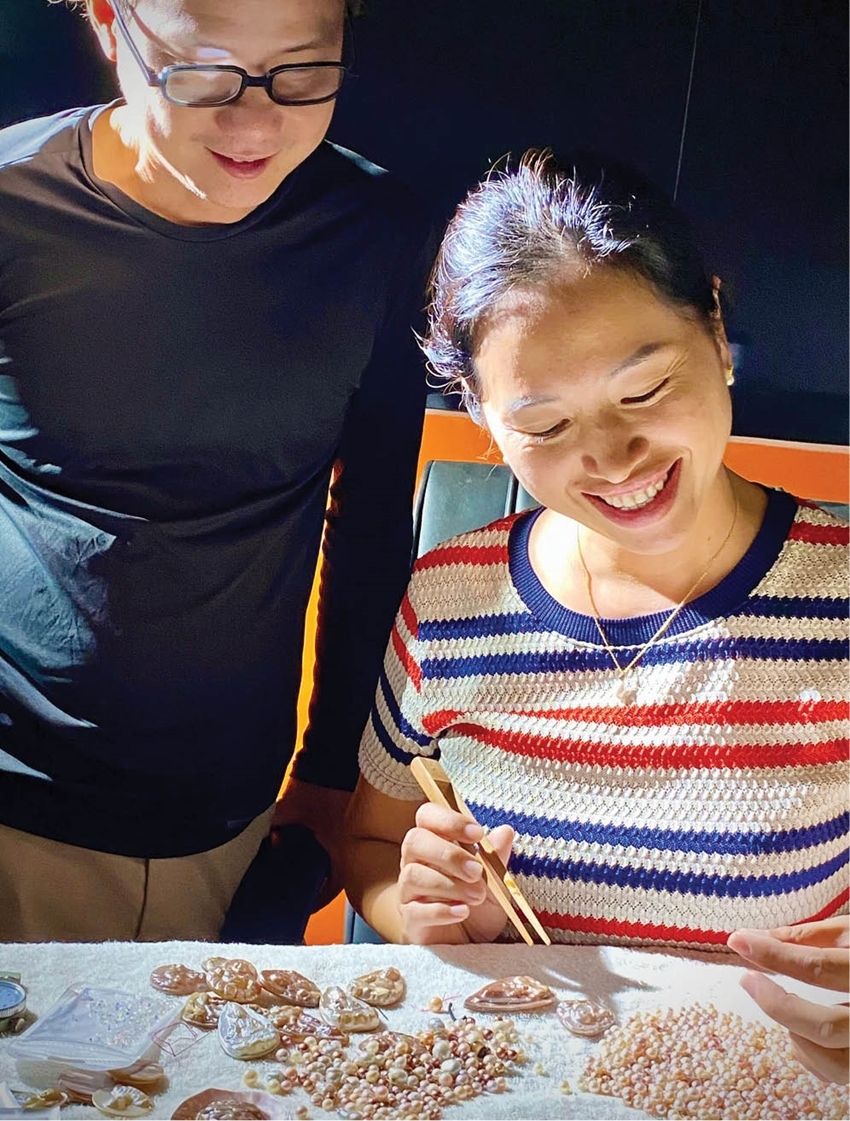
| Pham Duc Bang and Truong Thi My Dung check the quality of pearls |
Coming home
“Coming home” is the phrase I have heard Pham Duc Bang repeat time and time again in our conversations by the Huong River. A former student of Quoc Hoc High School, he studied architecture and built his career in Ho Chi Minh City for nearly 15 years. Yet the desire to return to Hue never left him. To turn that wish into reality, he and his wife carefully saved and prepared for the day they would move back. “We had planned to return in 2025,” Bang shared. “But when COVID-19 struck unexpectedly, our whole family packed up and came home earlier for safety. Hue feels fresh and warm with family love. The kids refused to go back to Ho Chi Minh City. So, I told myself, coming back a few years earlier is just fine”.
But once back in Hue, what next? Architecture offered limited opportunities. His wife, who had worked in communications for major American corporations, also had to leave her job behind.
“We kept searching for ideas. In the end, we decided: let’s farm pearls in the Huong River. Many people said I was dreaming; how could the Huong River possibly grow pearls?” Bang recalled.
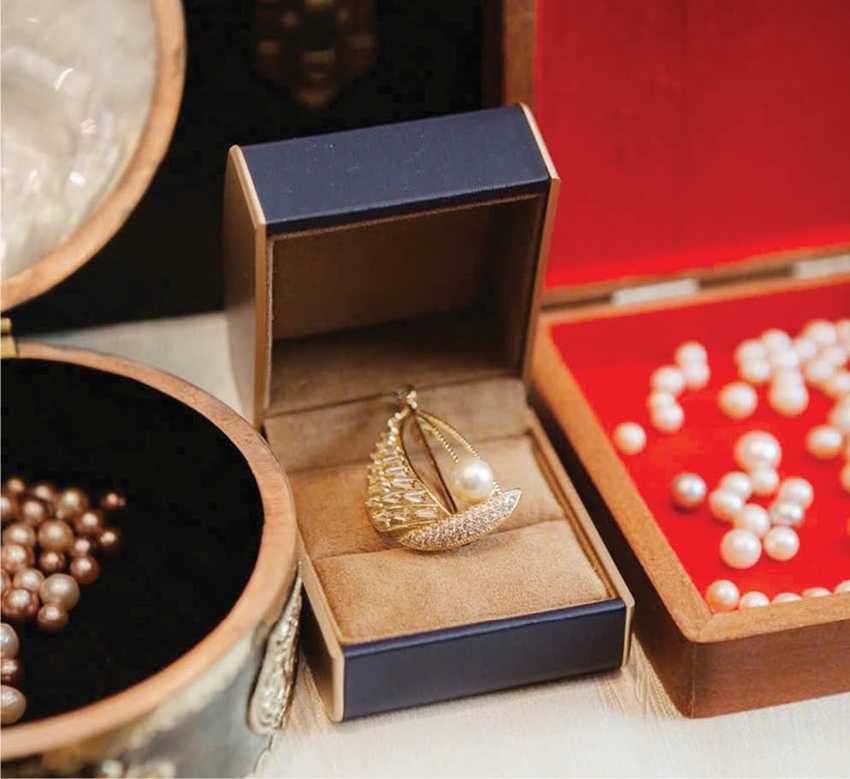 |
| Kodo’s pearl products |
Solving the problems of Huong River pearls
In Ninh Binh, there is a well-known expert in freshwater pearl cultivation, Mr. Dinh Van Viet. Bang came across him in a newspaper interview and felt he had finally found the missing piece. Hue has the serene, emerald Huong River, flowing nearly 30 kilometers from upstream to downstream. The river is famous; pearls are a luxury product. If the two could be combined successfully, it would be an ideal foundation for a brand. The young architect packed his bags and headed north.
After more than a decade of tireless research and numerous setbacks, Mr. Dinh Van Viet had achieved significant success in freshwater pearl farming. Recognizing Bang’s dedication, perseverance and passion, he agreed to mentor the couple, passing on techniques from basic to advanced, from selecting mussel breeds and nurturing them to mastering the delicate grafting process that allows pearls to form. Each month, Bang and his wife spent ten days in Ninh Binh, learning while running pilot farming batches. “We released thousands of mussels into different sections of the Huong River over three consecutive years. If one batch failed, we tried again with another,” Bang’s wife - My Dung, said.
In 2022, the couple established Kodo Pearl Joint Stock Company and obtained an official operating license. They invited Mr. Dinh Van Viet and several industry experts to join them on the journey.
The species cultivated for pearls must live in clean, nutrient-rich water. They feed on plankton, green algae and naturally occurring compounds in the river, meaning they actually help filter the water rather than pollute it. However, choosing which species to farm and where to place them to minimize risks, such as mussel mortality or deformed, rough pearls at harvest…, requires careful calculation.
Common across rivers and lakes in central Vietnam, the thin-shelled green mussel and the thick-shelled black mussel were selected. The green variety typically produces pearls with soft white-pink hues. The black mussel yields darker shades, including the distinctive “Hue purple”. Minerals in the water, combined with climate and temperature, play a crucial role in determining the quality of each pearl formed inside the mussel.
“The more we experimented, the more we realized that each stretch of the Huong River produces a different tone of pearl, some brilliantly luminous, others deep and mysterious. That’s a difference compared to other farming regions,” Bang reflected after three years of trials across multiple river sections. The young couple also excitedly revealed a surprise: in certain waters, the river even produced pearls with a golden hue, a royal gold luster of Hue’s royal family.
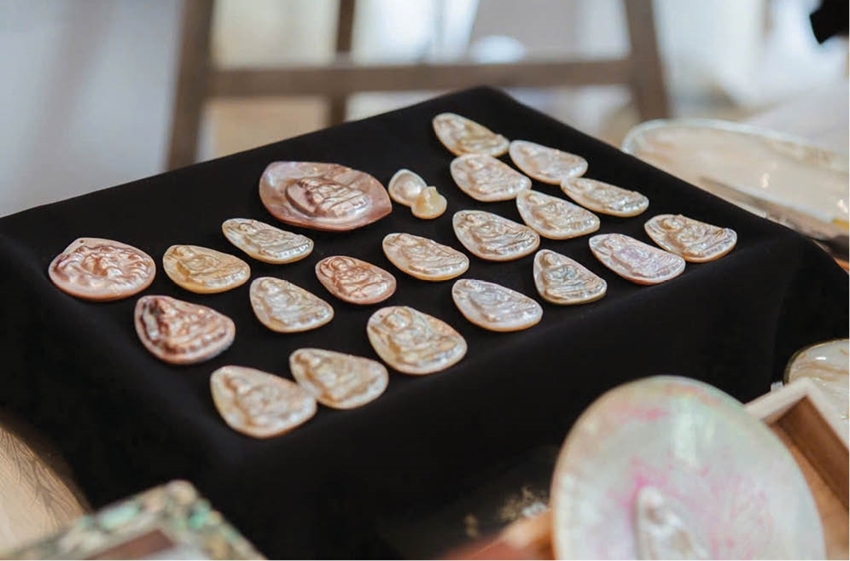 |
| Kodo’s pearl products |
By instinct, when a foreign object is inserted into its body, the mollusk will attempt to expel it. If it cannot, it secretes a substance to coat the irritant and heal itself, which is called nacre. Layer upon layer of nacre builds up over the years, eventually forming a pearl. The grafting technique must therefore ensure that the mussel can “accept” the nucleus placed inside it.
Continuing Hue’s heritage story
After three years of persistence, Pham Duc Bang and Truong Thi My Dung are beginning to reap their first sweet results. These are pearls lifted from the Huong River - formed inside hundreds of mussels that were released into the water, tested by nature, endured, and ultimately yielded their treasures beneath the river’s surface.
Especially during the flood season of 2025, hundreds of mussels survived resiliently. Flood-related risks are real, but they have also provided valuable lessons, reinforcing the belief that even in heavy rains and rising waters, with the right techniques and carefully chosen locations, harvest day can still be awaited with confidence.
“Our next step is to create product lines that carry the Hue identity of Huong River pearls, then seek out markets and expand farming areas,” Bang said confidently.
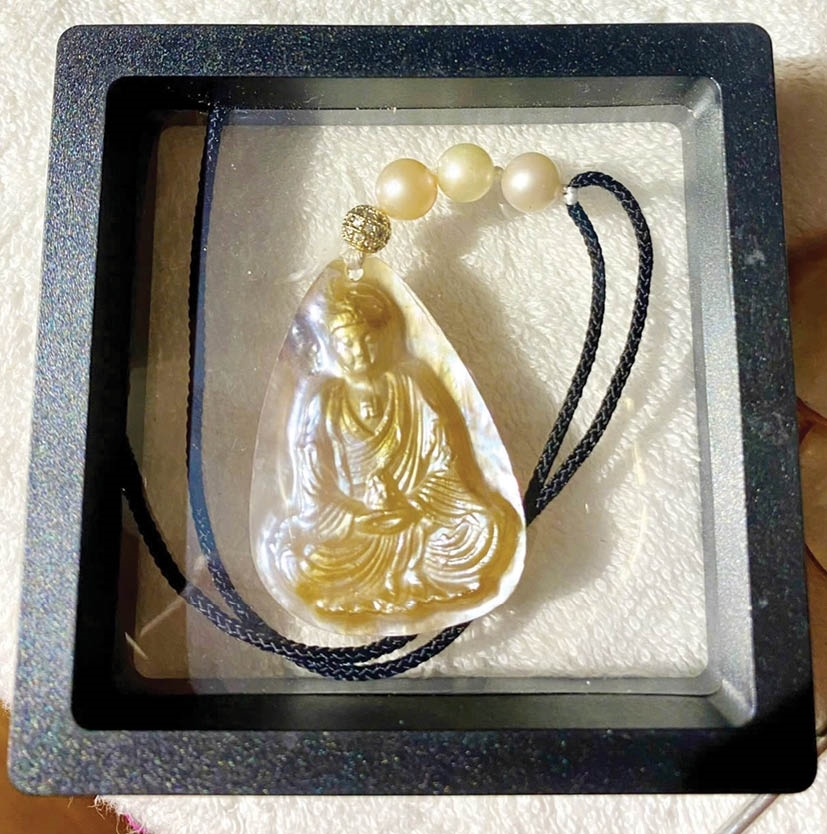 |
| Kodo’s pearl products |
Hue’s cultural heritage has become the central source of inspiration Bang chose to shape and breathe life into this high-end product line. The architecture, motifs and decorative patterns of the Hue royal court; pagodas and spiritual life; folk culture; and traditional crafts embodying the essence of Vietnamese craftsmanship in Hue, they all serve as design materials to enhance the beauty and distinctiveness of pearl products bearing Hue brand.
“We already have an exclusive product line,” Bang revealed. “They are finely crafted miniature statues coated with pearls, such as Buddha statues, statues of historical figures, and sacred mascots associated with Hue’s culture”. The products have received positive evaluations from pearl industry experts, and the couple is completing procedures for their official market launch. At the same time, they are registering trademarks and seeking permits to expand farming areas, train personnel, and develop this craft sustainably in Hue.
The Huong River has proven capable of nurturing pearls. Pham Duc Bang’s decision to return home has found its answer. One can imagine a not-so-distant day when pearls in the signature Hue purple or a luxurious imperial gold will be found in the former imperial capital — pearls born not from the sea, but from the poetic Huong River flowing through the heart of the city.