ClockSunday, 04/01/2026 19:43

Over 400 athletes compete in Hue City Open Youth Chess Tournament

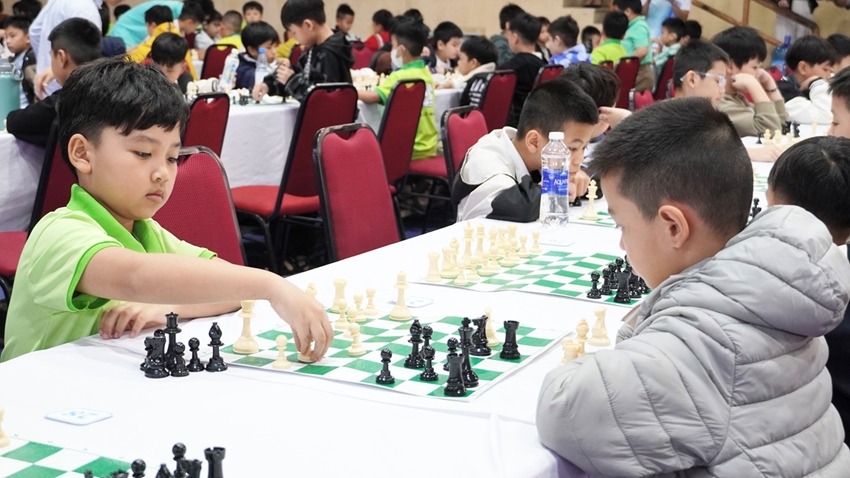
HNN.VN - On the morning of January 4, Hue City Youth Center organized the 3rd Hue City Open Youth Chess Tournament - 2026.
Nearly 250 players compete in the Chess and Chinese Chess Tournament at the City Sports GamesCreating breakthroughs in high-performance sports

 Young athletes participating in the tournament

This year’s tournament attracted 440 athletes from 30 chess clubs and schools both within and outside the city. Athletes competed in several categories, including individual boys, individual girls, boys’ team, and girls’ team - divided into age groups: U6, U7, U8, U9, U10, U11, and Open.

The tournament followed a modified Swiss system with 7 rounds, each game lasting 20 minutes. At the conclusion of the event, the Organizing Committee awarded a total of 173 sets of medals, including 68 individual sets and 105 team sets to the athletes.

A representative from Hue City Youth Center stated that the tournament was held as a practical way to achieve excellence in celebration of the 14th National Party Congress, the 96th anniversary of the founding of the Communist Party of Vietnam (February 3, 1930 - February 3, 2026), and to welcome the Year of the Horse 2026.

Furthermore, the tournament also contributes to promoting the physical training and sports movement in general, and the chess practice movement among local youth in particular. At the same time, the tournament serves as a platform to discover and nurture talented young players, develop a next generation of young athletes, and strengthen exchange and learning among chess clubs within and outside the city.

By Minh Nguyen
RATING
Be the first to review this post!
  Comment

YOU MAY CARE ABOUT

Eating vegetarian, missing Hue

On the Lantern Festival (the Full Moon of the First Lunar Month) more than 15 years ago, the most “pure Hue native” friend I know, architect Nguyen Trong Huan, and I put on thin raincoats and walked together through the light, drifting drizzle to search for Hue’s culinary specialties. Having lived in this city for many years, Huan still longed for the flavors he once tasted.

Eating vegetarian, missing Hue
Hue’s yellow apricot blossom… snubbed by the emperor

Ask the people of Hue what flower they love most, and most will likely answer: the apricot blossom. To put it more formally, “hoang mai” - yellow apricot, without a doubt. Don’t believe it? Come to Hue and see for yourself! There’s a whole movement called “Yellow apricot blossom in front of the entrance”; a completed research project on “Conservation and development of Hue’s yellow apricot variety (Hue’s Hoang mai)”; a scientific conference on developing Hue’s Hoang mai into a key local product, aimed at successfully realizing the project to build Thua Thien Hue province (now Hue City) into Vietnam’s yellow apricot homeland. My friend, journalist Minh Tu, even published a book called “In front of the house stands a yellow apricot tree”, which sold out instantly, was reprinted, and translated into foreign languages to great acclaim.

Hue’s yellow apricot blossom… snubbed by the emperor
Touching the Ancient Soul of Hue

On a pure morning, I bumped into groups of visitors strolling along the path leading into Hue Imperial Citadel. Cradling her camera in both hands, Ms. Marie, a French tourist, asked the guide in a gentle voice: “May I… try on Vietnam’s traditional costume?”. That question seemed to open an unexpected journey for them, an experience that felt as if they could touch the ancient soul of Hue

Touching the Ancient Soul of Hue
Hue Draws Visitors from Near and Far for Springtime Travel

From the morning of the first day of the Lunar New Year (February 17), the spring travel atmosphere in Hue has been vibrant and festive. Visitors from across Vietnam, along with international tourists, have chosen the former imperial capital as their holiday destination, creating a lively tourism scene on the very first day of the New Year.

Hue Draws Visitors from Near and Far for Springtime Travel
Hooves Opening New Paths

In East Asian culture, horses are not merely a means of transport but a cultural symbol. In Hue during the Nguyen Dynasty, the presence of horses accompanied ceremonial processions and imperial carriages. Even today, that image endures on two bronze urns of the Nine Dynastic Urns - Huyen Dinh and Anh Dinh (the alias of Tu Duc) - like a layer of resilient metallic memory, reminding us that horses once played a role in the life of the former imperial capital.

Hooves Opening New Paths

LASTEST NEWS

Return to top