 |
| Tac Ka Coong Festival is the cultural quintessence with profound human values between people and mountains, forests, rivers, and streams |
Within the framework of the 15th “Cultural, Sports and Tourism Festival of the mountainous ethnic groups” in Thua Thien Hue Province 2024, the People's Committee of A Luoi District organized for the first time the theatrical reenactment of the Tac Ka Coong Festival of the Co Tu ethnic group in A Luoi District.
The ceremony took place on the morning of May 16 in A Luoi Square, including main rituals such as the Choh co (setting up the Neu pole), the Tong Ti ri (buffalo binding ceremony), the Chuot Ti ri (buffalo stabbing ceremony), and the Tac Ka Coong offering ceremony (offering ceremony to the mountain gods). The rituals were performed by village elders, and artisans of Hong Ha and Lam Dot communes, and a mass art troupe of A Luoi District.
The ceremony began by setting up of the Neu pole in the sacred ground of the village, and that wish is the message to the passersby coming to the festival. The villagers prayed for the Neu pole to stand tall and unwavering, and not tilt or break during the buffalo binding ceremony, so that the festival would be a great success.
Following the Neu pole setting up ritual, the ceremony progressed to the ritual of offering a feast to the gods. The people, who offered the feast, were selected by the village elders. They are young women and men with exceptional beauty and character, as well as holy and pure souls. And the dishes are made from the best parts of the sacrificed animals, buffalos, cows, goats, pigs, chickens, etc., while the cakes like a koat, a zuh, ang co are made from fragrant sticky rice grains from their upland fields.
Following the offering ritual, the villagers proceed to perform a ritual to thank gods for giving the village of the Co Tu ethnic people a peaceful and prosperous life, and for their children to grow up to be good people. They also prayed to the gods to continue to protect and grant their children, grandchildren, and the village health, good luck, prosperity, peace, and happiness.
From the very beginning to the end of the festival, the air was filled with the vibrant and rhythmic sounds of gongs and drums, creating an atmosphere of a lively festival. According to the organizing committee, today, the Co Tu descendants in A Luoi have been continuing to preserve, cherish, and promote the tangible and intangible cultural values of their own ethnic group. The Tac Ka Coong Festival is indeed the cultural quintessence that carries the profound human values between people and the mountains, forests, rivers, and streams. The Co Tu ethnic people always live with the gratitude, worship, and is forever attached to and in harmony with all things and nature, the place where they were born, raised, and matured.
Following are photos taken at the ceremony:
 |
| The ceremony took place in A Luoi Square, and the Neu pole is considered a symbol of the strength of the great unity of the village's descendants |
 |
| Young men and women, with exceptional beauty and character, were chosen by village elders to participate in the festival |
 |
| The Co Tu ethnic people arranged the traditional offerings under the Neu pole |
 |
| Co Tu girls performed their traditional dances |
 |
| Delicious dishes were prepared and offered to the gods |
 |
| The village elders and villagers performed a ritual to thank the gods for bestowing upon the Co Tu ethnic people a peaceful and prosperous life |
 |
| The descendants of the Co Tu ethnic people in A Luoi have been continuing to transmit, preserve and promote the cultural values of their ethnic group |
 |
| The sounds of gongs, drums, and trumpets, etc. made the atmosphere of the festival vibrant |
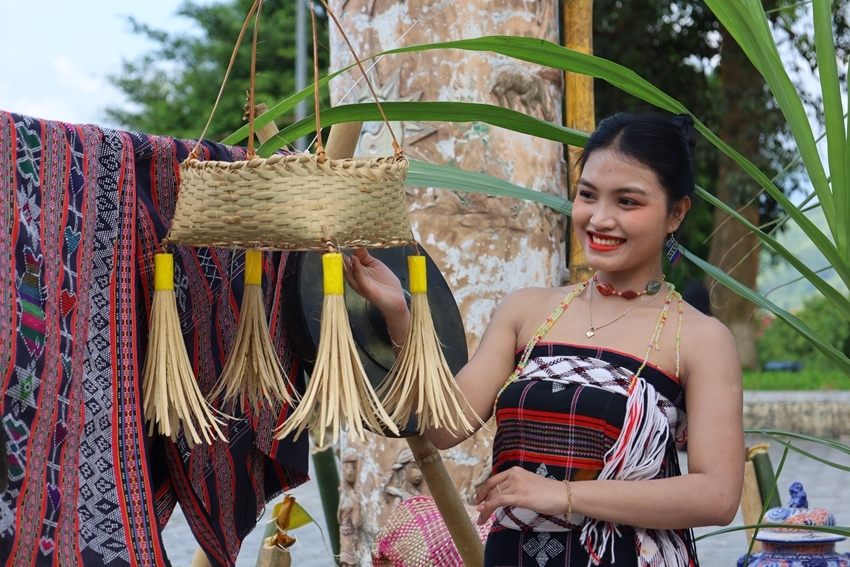 |
| A charming smile of a Co Tu girl amidst the festive atmosphere |
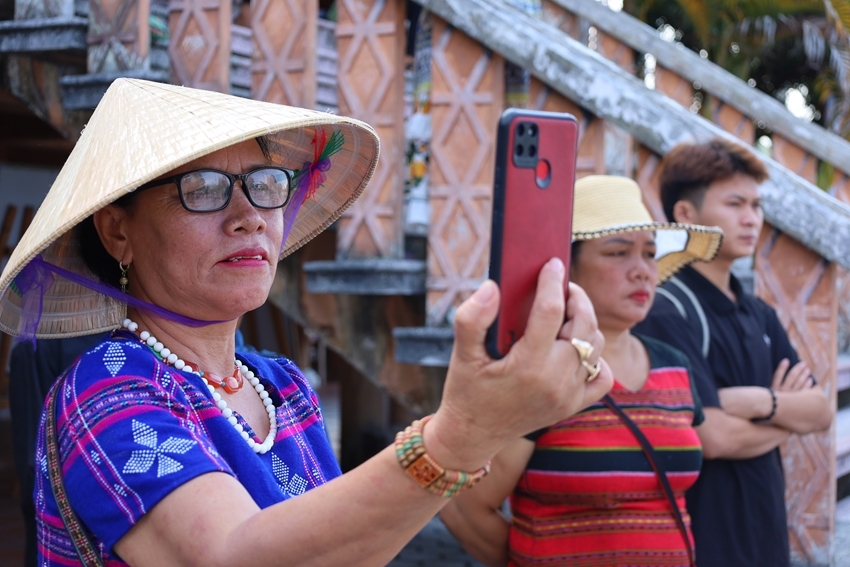 |
| Residents of A Luoi district and visitors from near and far watched the festival with rapt attention |
Story and photos: N. MINH