 |
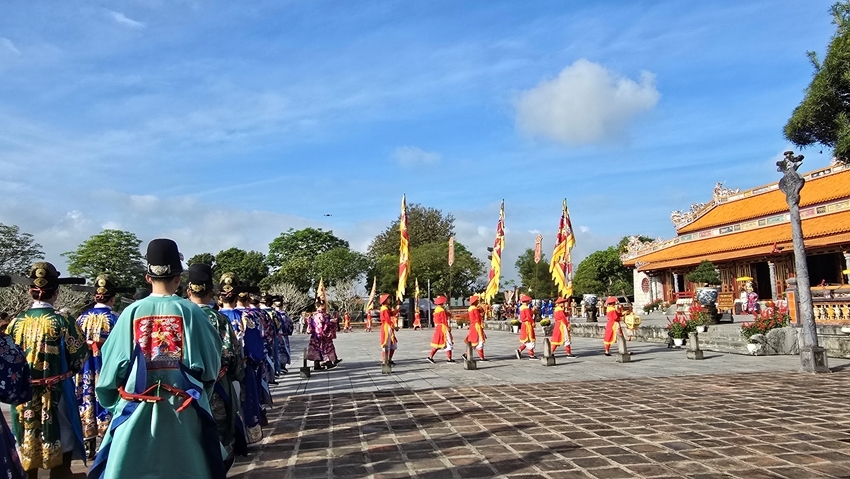
| Civil and military officials enter the courtyard of Thai Hoa Palace in accordance with their ranks and court hierarchy |
On a mild, sunny spring morning, the Grand Court courtyard echoed with the sounds of imperial ceremonial music. The ceremonial procession, along with civil and military mandarins in traditional court attire, took their places in strict order of rank, recreating the solemn scene of the Grand Court audience held at the beginning of the new year under the Nguyen Dynasty.
Nguyen Dan (Lunar New Year’s Day) was one of the most important court ceremonies of the year during the Nguyen Dynasty, held on the first day of Tet. On this occasion, the emperor presided over the Grand Court audience at Thai Hoa Palace to receive New Year greetings from civil and military officials and to proclaim edicts for the new spring. Afterward, the court continued with the Regular Court audience at Can Chanh Palace, which involved more inner-court rituals.
At the reenactment, the emperor’s procession from Can Chanh Palace, passing through Dai Cung Mon Gate and entering Thai Hoa Palace, was vividly reconstructed. Civil and military officials stood on both sides of the Grand Court courtyard to perform the ritual of presenting memorials and New Year greetings. The court then proclaimed the emperor’s edicts of benevolence amid the solemn sounds of Grand Music and Small Music, creating a distinctive ceremonial atmosphere of the imperial palace.
After the Grand Court audience, the emperor returned to Can Chanh Palace to continue the New Year rites. There, imperial princes and nobles paid their respects to the emperor, followed by banquets and spring rewards for officials, symbolizing unity and royal benevolence at the start of the new year.
Mr. Nguyen Phuoc Hai Trung, Deputy Director of Hue Monuments Conservation Centre, said that the Nguyen Dynasty’s Nguyen Dan court ceremony has been reenacted in a theatrical format since 2021. Prior to staging the event, the rituals were carefully researched based on Nguyen Dynasty historical records. Costumes of the emperor, civil and military officials, and participants were recreated according to strict imperial standards to ensure authenticity and historical value.
According to Mr. Trung, reenacting royal court rituals offers the public a vivid and accessible way to engage with heritage. Through this, residents and visitors can better understand the ceremonial life of the Nguyen Dynasty and more deeply experience the traditional Tet atmosphere within Hue Imperial Palace.
Watching the ceremony, Ms. Nguyen Thu Trang, a visitor from Hanoi, shared that this was her first time witnessing a reenacted imperial court ritual at the Imperial Citadel. “It’s a very special experience that helps me better understand Nguyen Dynasty culture and the beauty of Hue’s traditional Tet,” she said.
The reenactment of the Nguyen Dan court ceremony not only helps preserve and promote the heritage values of the Hue imperial court, but also offers the public a journey back to the Tet of bygone days. In the unique heritage space of the Imperial Citadel, rituals once performed only within the royal palace are now vividly brought to life, enriching visitors’ experiences whenever spring returns to Hue Imperial Capital.
Some images from the reenacted Nguyen Dan court ceremony under the theatrical format:
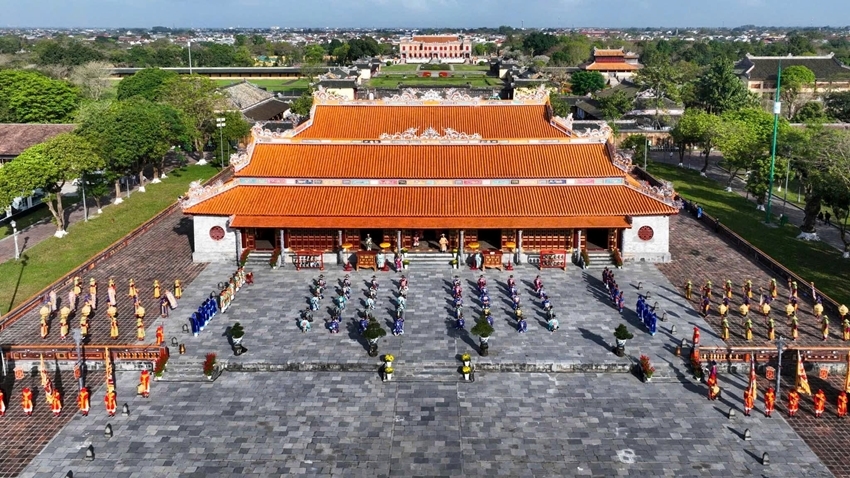 |
| Panoramic view of the Nguyen Dan court ceremony (Photo: HH) |
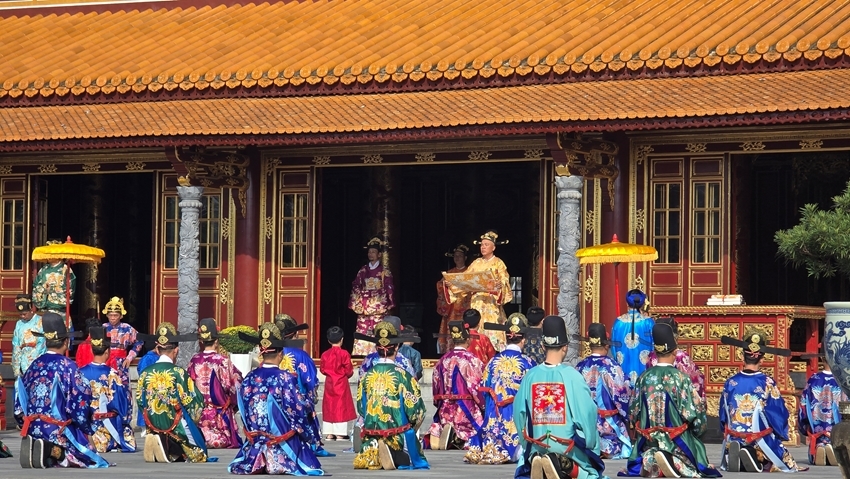 |
| Nguyen Dan is a major court ritual of the Nguyen Dynasty |
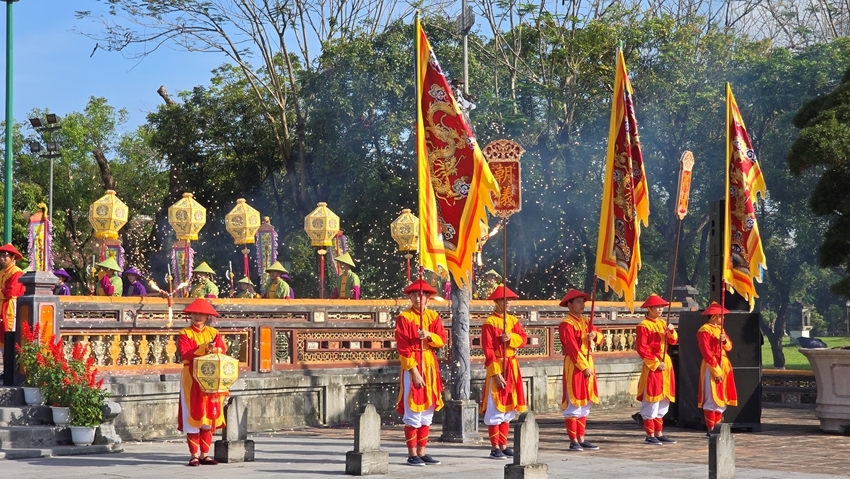 |
| The traditional Tet atmosphere recreated in the historic imperial palace setting |
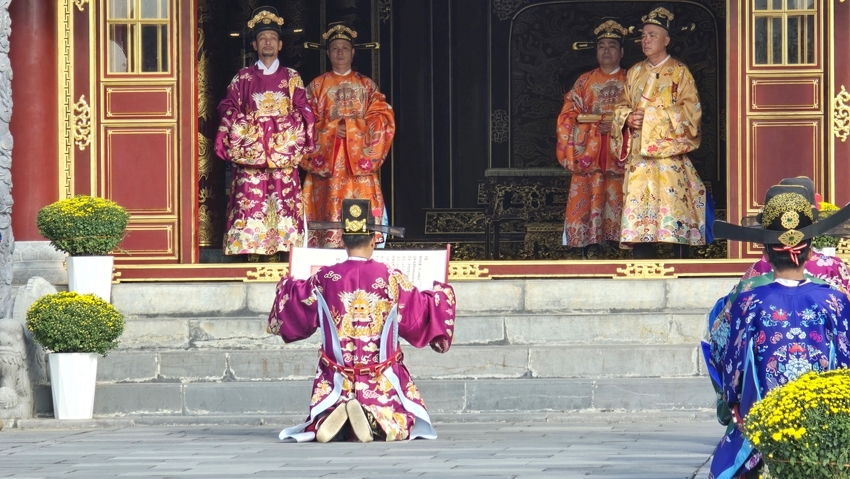 |
| Officials wishing the emperor a prosperous new year |
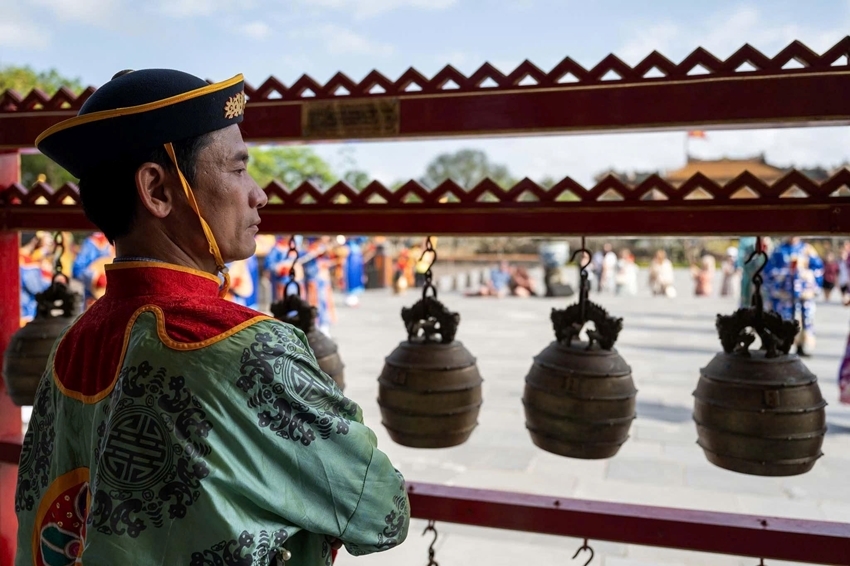 |
| Performances of Grand Music and Small Music to welcome the New Year (Photo: HH) |
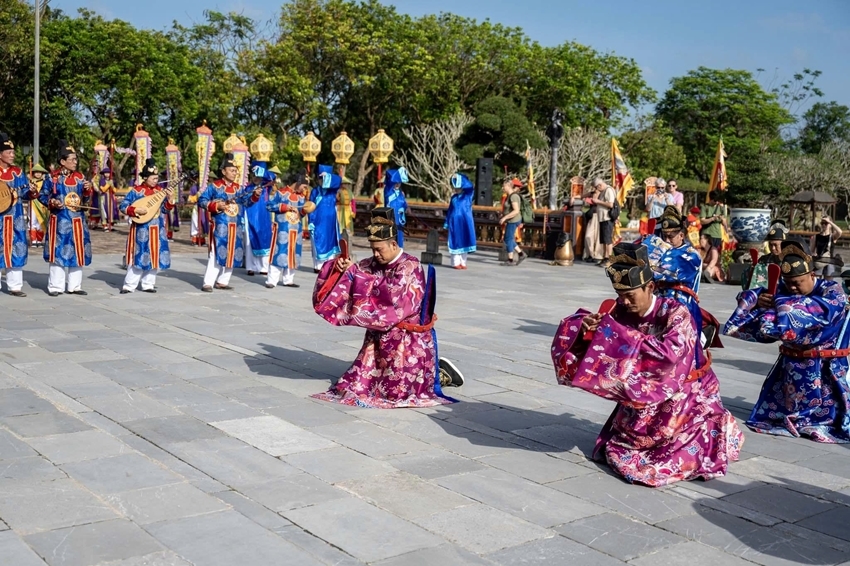 |
| Costumes of the emperor, civil and military officials and participants were recreated according to imperial standards to ensure authenticity and historical value |
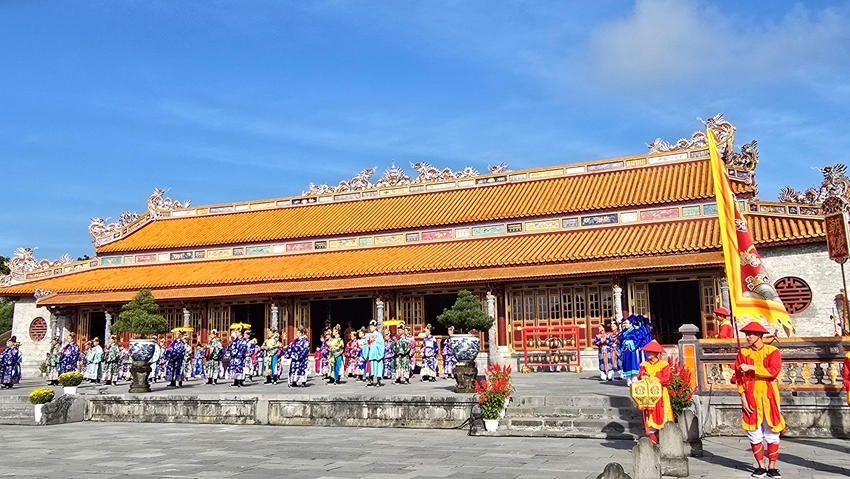 |
| After the major restoration of Thai Hoa Palace at the end of 2024, the Nguyen Dan court ceremony is now regularly reenacted on special occasions for visitors |
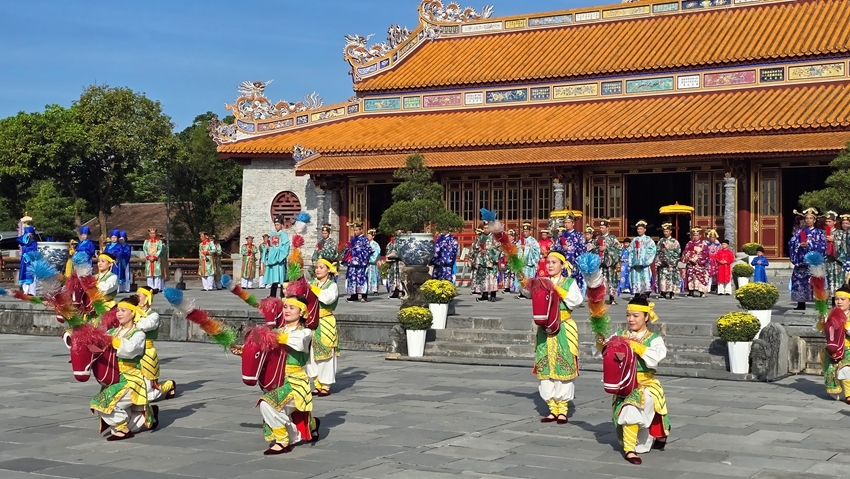 |
| The court dance “Luc Triet Hoa Ma Dang” was reenacted for the first time at the Nguyen Dan ceremony |
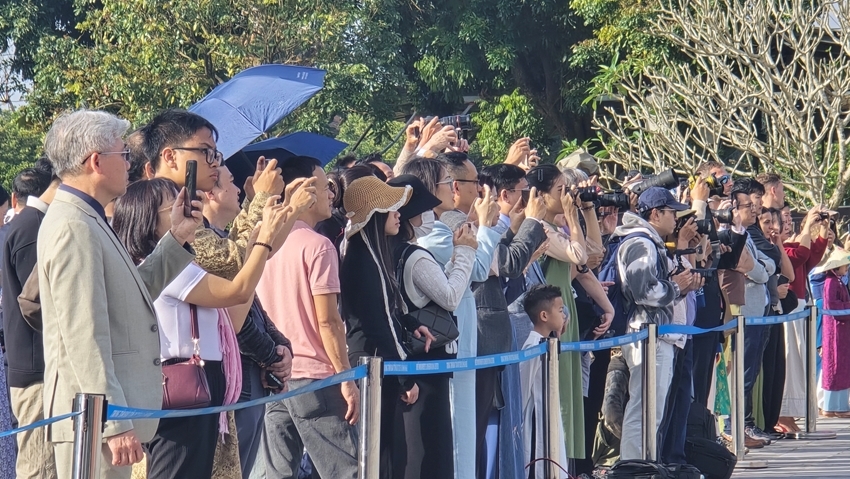 |
| Visitors enthusiastically following the program |
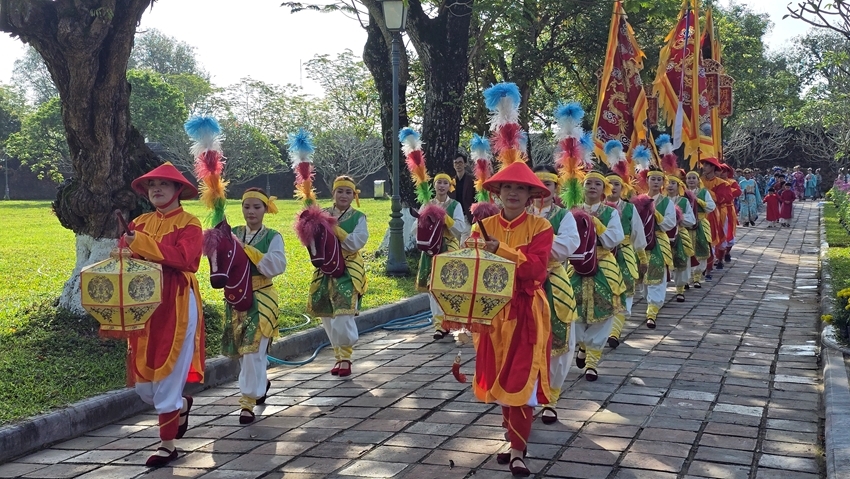 |
| The Hue Monuments Conservation Centre researched and reenacted the Nguyen Dan ceremony based on Nguyen Dynasty historical records |