 |
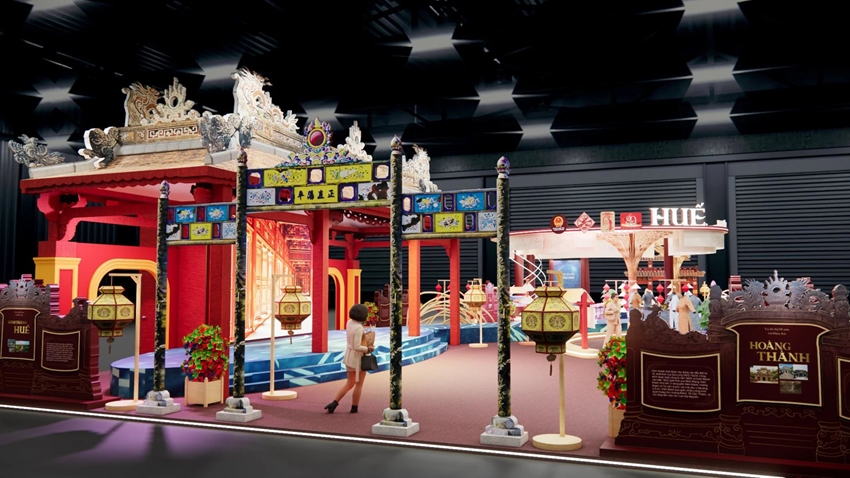
| Perspective view of the exhibition space of Hue City |
On the afternoon of August 4, the Department of Culture and Sports announced that Hue City will participate in the exhibition with the theme “Hue - Heritage, Identity, and Vision for Green Development”.
This is an opportunity for Hue City to affirm its position as “Hue - Ancient Capital, New Opportunity” to promote its image and convey the message of sustainable development based on the preservation of cultural heritage to the public and visitors.
Accordingly, Hue City’s exhibition space, covering an area of over 600 square meters, is designed with an open layout. The themes showcasing socio-economic achievements are arranged in a flexible, modern manner while still reflecting the artistic essence and distinctive characteristics of Hue’s culture.
Specifically, the display will include the following areas: a photo exhibition on socio-economic achievements; the space “Hue - Heritage City”; “Hue - The Capital of Ao Dai”; experiences of traditional handicrafts and OCOP products; along with an area showcasing smart city and green development models. Altogether, these form a harmonious whole that vividly reflects Hue’s development journey from its glorious past to a future of integration and innovation.
The first highlight is the photo exhibition “Hue – From Ancient to Modern City”, which recreates the history lasting over 700 years of the imperial land. Here, images of architectural works such as the Imperial City, the Royal Citadel, the Forbidden Purple City, the mausoleums of the Nguyen Emperors, as well as traditional festivals, court music, and Hue’s garden houses, etc., come vividly to life, symbolizing the cultural values of Hue throughout different historical periods.
The “Hue - Heritage City” space portrays Hue City’s journey in the work of preserving and promoting various forms of tangible and intangible cultural heritage, featuring 8 UNESCO-recognized cultural heritages in 3 categories: tangible heritage, intangible heritage, and documentary heritage. The display will showcase valuable documents, artifacts, and creative models, allowing visitors to interact and experience heritage values in a vivid and engaging way.
In addition, the “Hue - the Capital of Ao Dai Vietnam” area will be a highlight, offering visitors the chance to contemplate collections of traditional Ao Dai across different periods, especially the ancient and modern five-panel ao dai, along with fashion shows, Ao Dai-wearing experiences, and photo posing opportunities. The elegant designs, featuring colors and patterns characteristic of Hue, will help affirm the brand name “Hue – the Capital of Ao dai Vietnam”, just as it once was in the past.
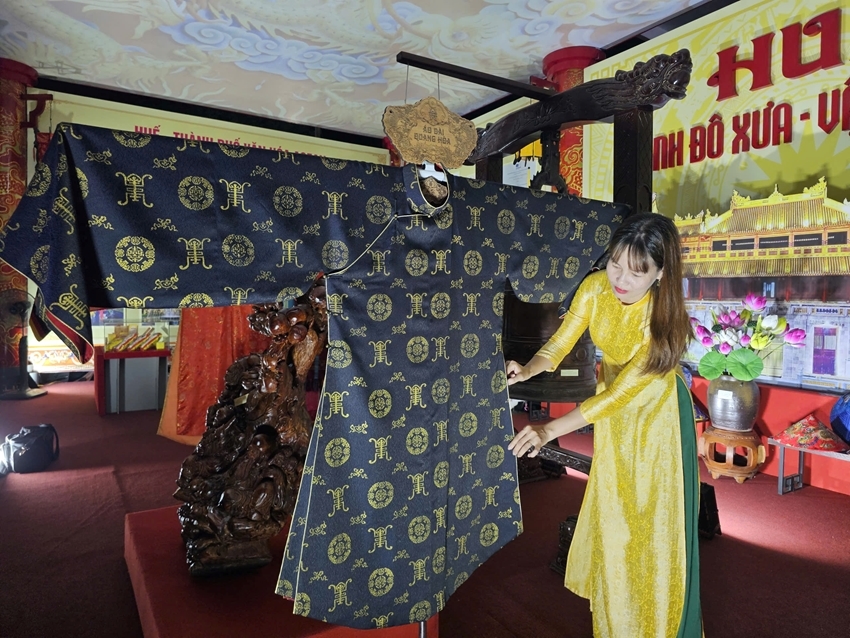 |
| Hue - the Capital of Ao dai Vietnam, the highlight of the exhibition |
The experience area for Hue tradition handicraft and OCOP products promises to be an attraction. Here, artisans from Hue’s craft villages will give live demonstrations of processes such as making Thanh Tien paper flowers, conical hats, and traditional embroidery, etc. Visitors can also try their hand at these crafts, thereby gaining a deeper appreciation for the meticulousness, precision, and creativity that artisans put into each product presented to the public. In addition, various distinctive OCOP products such as Hue lotus tea, five-color cakes, phan nu (traditional face powder), and Bao La bamboo and rattan items will be showcased to further connect with visitors.
According to the Department of Culture and Sports, with the message “Hue - Heritage, Identity, and Vision for Green Development”, Hue City hopes to make a strong impression at the National Exhibition celebrating the 80th anniversary of National Day.
It is known that the exhibition is a national and international-scale event directed by the Government, with the Ministry of Culture, Sports, and Tourism serving as the standing agency. The focus will be on presenting and displaying the country’s outstanding achievements over 80 years of building and development across various sectors, particularly in key areas such as industry and technology; investment and trade; agriculture and rural development; security and defense; foreign affairs; healthcare and education; as well as culture, sports, and tourism. At the same time, the exhibition will showcase Vietnamese culture, the nation, and its people, highlighting a 4,000-year cultural tradition, the rich cultural diversity of 54 ethnic groups, the abundance of resources and specialties from the three regions, and remarkable architectural works from past to present across the country.
By N. Minh