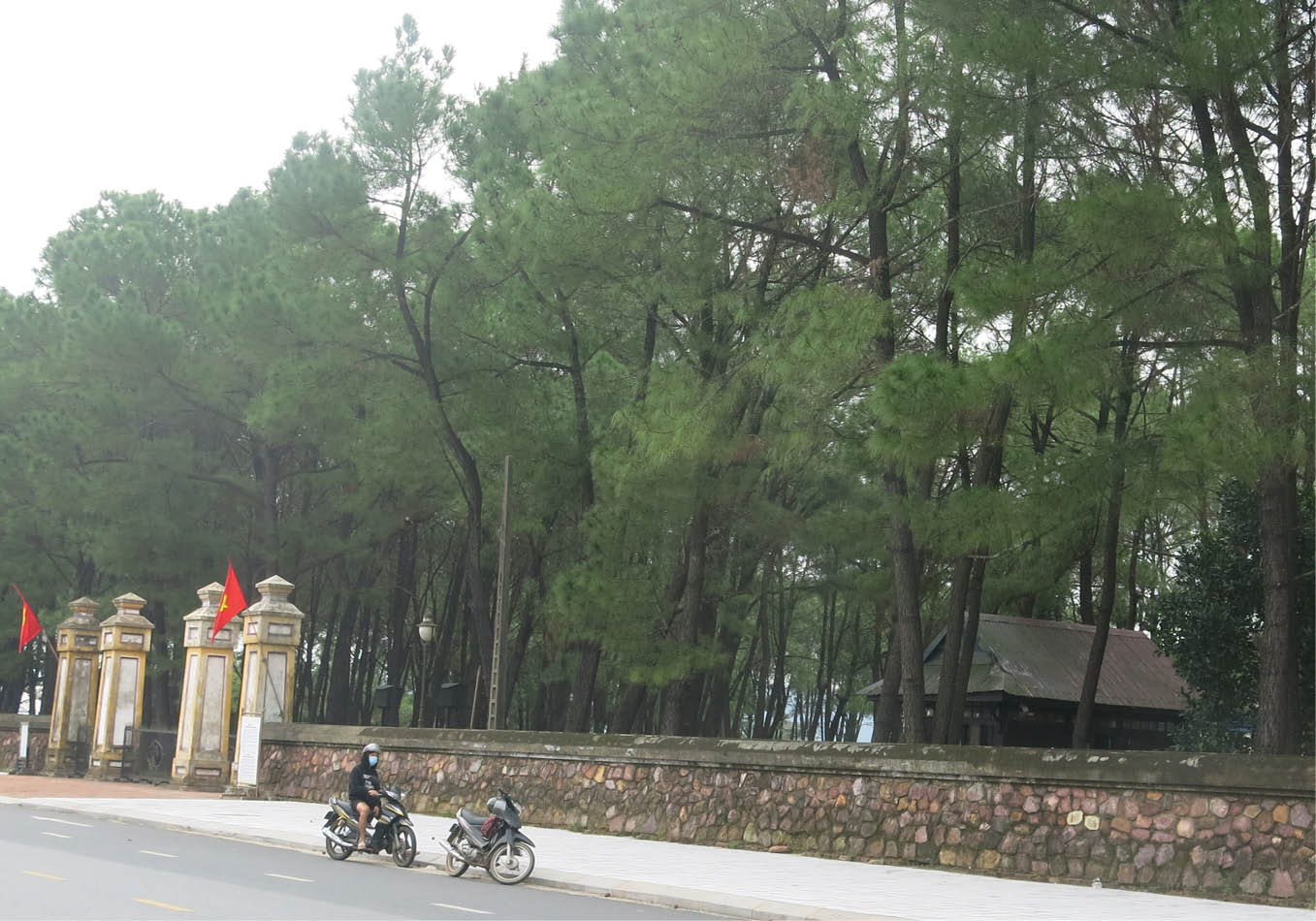
Nam Giao Esplanade will be restored to preserve and promote its value. Photo: MH
The investment project "Conservation and restoration of Nam Giao Esplanade" (phase 1) was approved by the Provincial People's Committee in October 2018. The project has a total budget of nearly 24 billion VND, invested by Hue Monuments Conservation Center and implemented within 5 years.
According to the approved decision, in phase 1, the project will focus on renovating and conserving the Trai Cung Palace; the system of the walls, gates and grounds of Trai Cung Palace and the earth walls on East and West sides; designing a new electric lighting system and embellishment of garden landscape...
With Trai Cung Palace, the project will dismantle all existing tiled floors; calibrate and reinforce the entire stone base, re-tile the floors with Bat Trang brick, and plaster cement mortar ... The wood frame system will be completely dismantled, repaired and reinforced. The rotted components that do not guarantee the integrity of the structure will be replaced. Parts of the roof that do not guarantee the quality of the structure will also be replaced. The roof made of yellow glazed tiles will be restored.
Mr. Vo Le Nhat, Director of Hue Monuments Conservation Center, said that Nam Giao Esplanade is a unique and important architectural work of Hue Monuments Complex system, is the only esplanade remaining relatively intact and is of the largest scale compared to the ancient esplanades in Hue in particular and Vietnam in general.
Over the past 200 years, Nam Giao Esplanade has been quite seriously damaged. Although some items have been restored, the structure has not been fully preserved and restored. The goal of the project "Conservation and restoration of Nam Giao Esplanade" is to preserve the original elements, increase the life expectancy and the sustainability of the structure and to promote the value of monuments and ensure safety under the Heritage Law.
To contribute to the project, Hue Monuments Conservation Center cooperates with the Department of Culture and Sports to organize a workshop to consult experts, artisans and researchers on project design plans.
According to Dr. Phan Thanh Hai, Director of the Department of Culture and Sports, the design and construction plan of the Nam Giao Esplanade conservation and restoration project is meticulously prepared by the investor in coordination with the consultants. The plan demonstrates evidence of the thorough process of research investigation, which builds upon the archaeological excavations and the use of reliable sources. The plan ensures the requirements of a portfolio for restoration and embellishment of monuments.
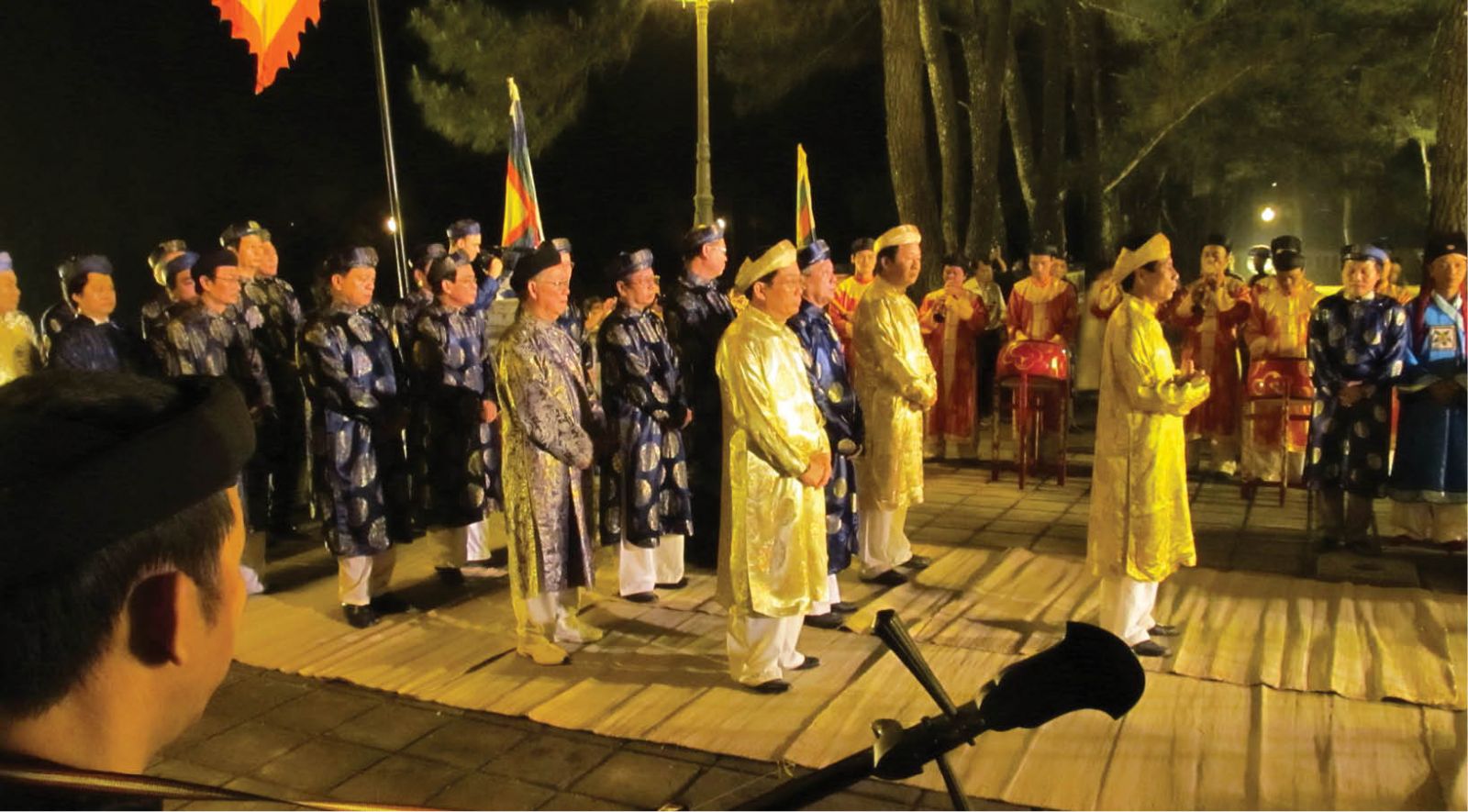
Provincial leaders, the Nguyen Phuoc family and a large number of local people participating in a Nam Giao ritual reenactment at Hue Festival. Photo: HK
Mr. Hai suggested that the East Wall restoration should not be included in the first phase of the project because it is necessary to supplement it with the archaeological research results and make the planning adjustments. He also called for further research and supplementing the scientific evidence for the design plan of some decorative details in the main Trai Cung Palace project. He also proposed adding a detailed plan for the system of landscape and trees in Trai Cung Palace area. In addition, he suggested building a separate project to study the work's interior, artifacts, documents and display plans, the system of billboards to introduce the building... to facilitate tourism and to bring into full play Nam Giao Esplanade’s potentials after being restored.
The researcher Nguyen Xuan Hoa said that the project has examined many documents and images related to Nam Giao Esplanade. This monument underwent many changes and the most appropriate architectural design is to restore Nam Giao Esplanade as it existed in the period 1936-1945. The project needs to repair Nam Giao Esplanade’s screen, because although the East Wall is no longer there, the East screen is an important original site that identifies the location of the East Wall.
In addition, it is necessary to modify the protective iron gate to be more suitable with Hue imperial monuments. Mr. Hoa also proposed that the Provincial People's Committee supplement the project to adjust Tam Thai road outside the Nam Giao Esplanade relic area so that the renovation and restoration of the wall and the East gate can be included in the second phase of the project.
In alignment with this project, in February 2020, the Cultural Heritage Department has issued a written agreement on the design of construction drawings to preserve and repair Nam Giao Esplanade relic - phase 1. At the same time, the center is required to supplement materials to reinforce restoring the screens of the inner wall and the back gate; supplementing the design of the cover house for the restoration process and making consistent modifications of the general ground drawings.
Built by Emperor Gia Long in 1806, Nam Giao Esplanade is a complex of architectural works including Giao Dan, Trai Cung, Than Tru and Than Kho. During the Nguyen dynasty’s reign, Nam Giao Esplanade was the place where kings held the ritual of Sacrifice to the Heaven and Earth every spring. From 1890 onwards, it was held every 3 years. The unique architecture of the Esplanade and the ritual of the Nguyen Dynasty are special and unique royal culture under the monarchy, containing unique values in terms of history, culture and humanity.
By Minh Hien