 |
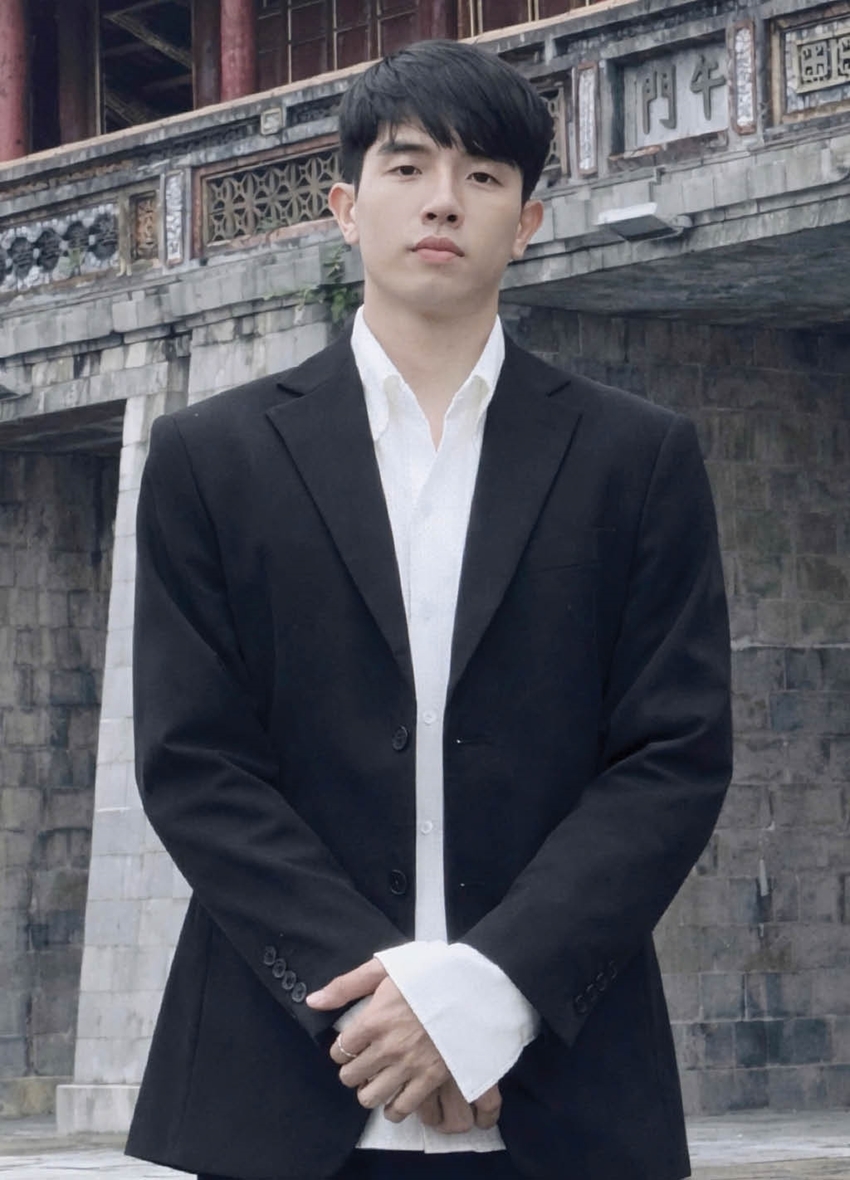
| Musician Huynh Anh Khang |
Huynh Anh Khang shared: This is the 10th time I’ve come to Hue. Or rather, I should say I’ve returned to Hue, because coming here feels like coming home. I feel love and closeness here, and Hue gives me more energy, new discoveries, and inspirations for my music. I loved Hue from the very first time I came here.
So when was the first time you came to Hue and immediately fell in love with this place?
It was in 2019. I joined a film crew on a location scouting trip as the song writer for the movie. At that time I had absolutely no prior idea about Hue. But when I arrived, the nature and the people of Hue gave me a very familiar feeling. It was my first time setting foot there, yet Hue didn’t make me feel hesitant at all, from its people to its cuisine. It is strange because I had no previous connection with Hue, but the land of the Huong River and Ngu Mountain gave me the feeling that it was where I belonged. I can’t explain that in words; I can only feel it. Since then, I’ve felt as if I “owe” Hue something.
Was your love for Hue also the inspiration that led you to change your musical style?
I started writing songs in 2016 across many different musical genres. But after my trip to Hue in 2019, I switched entirely to writing songs in the cổ phong (ancient-style) genre. Cổ phong music can be loosely understood as songs that bring a new breeze to old stories.
The term cổ phong originated in China, where the genre has grown strongly and become a fresh trend in contemporary music. It began with historical costume dramas and palace intrigue films. Later, Chinese online games that emphasized historical aesthetics gave this genre even more room to develop.
Vietnamese cổ phong music is shaped by scales built from the Vietnamese pentatonic system, or from folk melodies familiar in everyday life. From there, the song writers and music producers combine modern and classical instruments to create music where the ancient and the modern intersect. This kind of music is both old and new, calm and enchanting like the past, yet also fresh and dynamic like the present.
A defining feature of cổ phong music is its refined and delicate lyrics, with harmonious rhymes that resemble classical poetry. The themes are often gentle and melodic, leaning toward storytelling. Therefore, this genre is not simply entertainment, but it also encourages listeners to reflect on human relationships, history, and the emotions of past generations, helping us understand the people of the past and appreciate the historical stories of our nation. When I write cổ phong music, I feel that I am telling a story of Vietnam that is close to my heart and part of my very being.
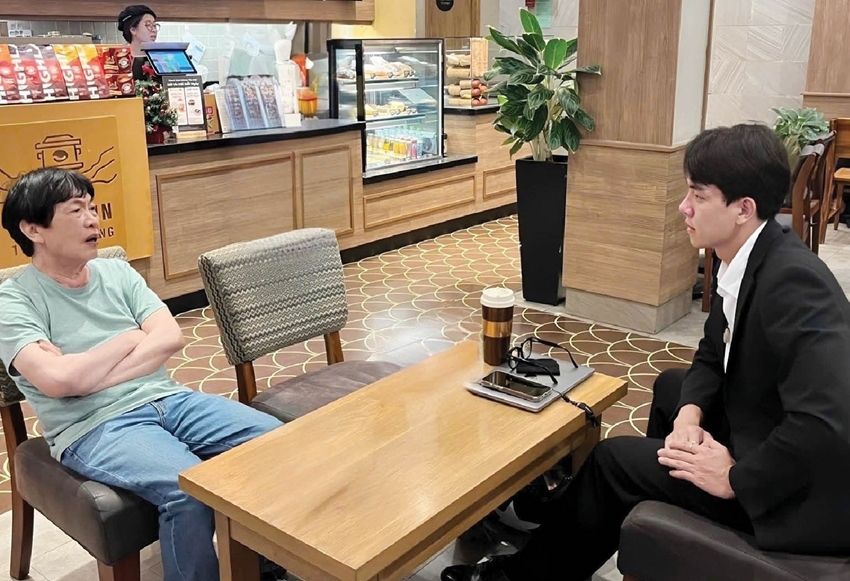 |
| Musician Anh Khang talks about Hue with artisan Trinh Bach (on the left) |
Specifically, are you telling stories about the imperial capital of Hue through this genre?
The first cổ phong song I wrote was “Nhat Binh,” written right after my first visit to Hue. I borrowed the image of the Nhat Binh Ao-dai to talk about the sorrow of Duc Tu (Empress Dowager Tu Du). My song expresses sympathy for women in the past. For example, Duc Tu was the “mother of the nation,” yet who knew that the luxurious palaces were also the most restrictive places for women like her? Women in the imperial court, once they wore the Nhat Binh robe, were no longer simply themselves. They were surrounded by etiquette, family traditions, and moral codes.
Is Your song “Pha Tam Giang,” about the beauty of a famous place in Hue?
As I mentioned, a unique feature of cổ phong music is symbolism and metaphor, using scenery to tell human stories. My song “Pha Tam Giang” is also about the story of Duc Tu after her husband passed away. It speaks of the sorrow of a woman in the imperial court who saw the king both as her husband and as her sovereign. Lyrics such as:
“The one who follows the clouds, can you feel the cold frost of the night? / Where have you gone now? Please remember me and return…” or “I kneel to bid you farewell / Grey-haired I wait for the one I love/. The river holds no reflection of the moon, / Even the Tam Giang lagoon runs dry…”
These lines portray the deep loneliness and grief of a woman after losing her husband, like a river without the moon’s reflection, like the Tam Giang lagoon when its waters run dry.
When writing, do you ever think of a particular musician or song?
I often think of musician Dang The Phong and his immortal song “Giot mua thu” (Autumn Raindrops). It is a sad yet beautiful song. My cổ phong songs are also sad, but it is a beautiful kind of sadness. Life always has two halves, joy and sorrow. I explore the sorrowful side, but not in a tragic or despairing way.
Listening to your songs, it seems you don’t use folk elements like Hue chants or royal court music?
That’s true. My songs do not use Hue musical scales. The reason is that I don’t feel I’m capable enough yet to fully explore those traditional materials. In other words, I admire Hue’s traditional music with great humility, but I choose not to incorporate it directly into my works. However, Hue is present in my music through stories, imagery, and lyrics… In short, my music carries the spirit and soul of Hue.
|
|
| Huynh Anh Khang was born in 1992 and currently lives and writes music in Ho Chi Minh City. Some of his songs include: “Nhat Binh,” “Phia sau Ngo Mon,” “Vo chong Ngau,” “Pha Tam Giang,” and “Bach quy da hanh.” |
Now that you’ve returned to Hue this time, what are your plans?
As I said at the beginning of this conversation, I feel like a child of Hue. It’s a place to return to. When I come here, I know where to sit and eat a meal, where to soothe my soul in the slow, pure, nostalgic atmosphere of this land. This is the first time I’ve come to Hue in winter, and what I enjoy most is sitting and watching the Hue rain. I feel that the souls of Hue people are always a bit moist, never fully dry (laughs). Perhaps the calm yet gentle character of Hue people partly comes from family traditions, and partly from the weather...
I come to Hue also to learn: learning the slow way of life here, learning the patience of Hue people. With natural disasters and floods like these, without patience with nature and with each other, it would be difficult to survive.
There is a parallel: my love for cổ phong music is also my love for Hue. Every visit to Hue gives me a broader perspective and stronger emotions to continue my journey with Vietnamese cổ phong music.
Thank you, Mr. Huynh Anh Khang, for this fascinating conversation.