 |
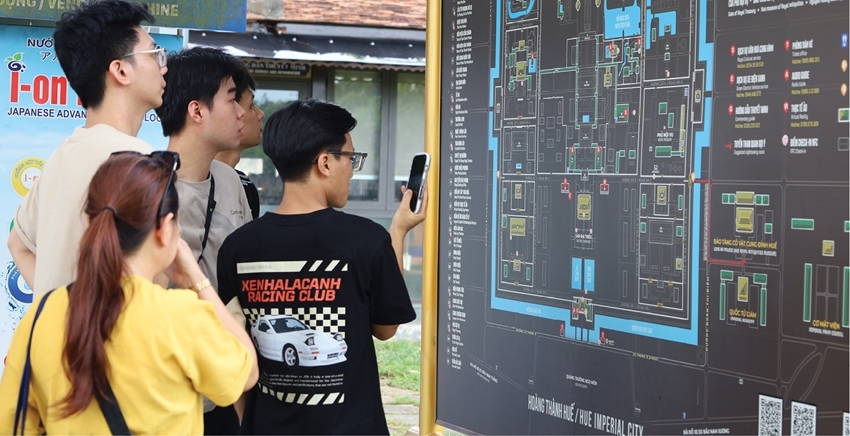
| Visitors access travel information while exploring Hue |
Using technology to explore Hue
While visiting Hue, Ms. Nguyen Thi Thai Hoa and her family from Hanoi chose to book a Grab Cyclo for a unique local experience. According to Ms. Hoa, compared to her previous visit five years ago, Hue now offers far greater convenience thanks to the integration of digital technology. Last time, they had to keep asking for directions. This time, they simply opened the Hue-S app. From booking transportation, planning sightseeing itineraries to using the automated audio guide system, everything made the trip smoother and more enjoyable for her family.
After years of implementation, the application of digital technology in Hue's tourism sector has entered a new phase of development, with transportation, dining, shopping, and heritage exploration services being connected across digital platforms. Whereas visitors once had to rely on traditional sources of information, they can now use their smartphones to plan an entire journey -from booking services and transportation to discovering local cuisine, selecting restaurants, and choosing attractions. Above all, greater transparency of information, particularly pricing, gives visitors added peace of mind.
In practice, the digital transformation of tourism in Hue has been advancing effectively through a range of initiatives, particularly public-private partnerships. One notable example is the collaboration between Hue City and Grab Vietnam, which has helped bring local transportation, cuisine, and cultural experiences onto digital platforms. Upon arriving at the airport, visitors can conveniently travel to the city center using GrabBike or GrabCar. During their stay, in addition to experiencing Hue aboard a Grab Cyclo, they can easily discover renowned local eateries through the "Famous Eats" collection on GrabFood or Hue Culinary Passport application developed by the Department of Tourism.
According to Mr. Vo Hoang Lien Minh, Head of the Tourism Management Division under Hue Department of Tourism, one of the highlights of Hue's smart tourism strategy is the adoption of digital tourism maps and VR360 virtual reality technology. Integrated into the Hue-S platform, the digital tourism map provides information on accommodation, restaurants, entertainment venues, and historical sites, allowing visitors to determine the location, receive navigation assistance, and obtain real-time service recommendations. The digitization of tourism resources, together with the widespread adoption of cashless payment methods, has optimized destination management while making information more accessible and intuitive for travellers.
According to the tourism sector, platforms such as Hue Tourism Information Portal, Visit Hue, and Hue Tourism Passport have become the core of an integrated digital ecosystem, providing comprehensive online services for visitors. The application of 3D technology in digitizing Hue's culinary heritage, along with accommodation management software linked to the national database, reflects the city's commitment to developing a smart and modern tourism industry. Building on this foundation, technology is also being introduced directly into heritage spaces, creating new ways for visitors to engage with traditional value. A prime example is the "Mystical Imperial Palace" program at the Imperial Citadel, where reenactments of royal ceremonies, artistic performances, lighting effects, and 3D projection mapping have transformed the historic site into a highly interactive nighttime attraction that has drawn large numbers of visitors.
Expanding the use of technology in tourism
One of the tourism sector's key initiatives is the development of an AI-powered Virtual Tourism Assistant, which provides visitors with destination information, weather updates, event schedules, and personalized itinerary recommendations. By tailoring suggestions to travelers' interests and budgets, the platform helps users make better-informed travel decisions.
According to Ms. Tran Thi Hoai Tram, Director of Hue Department of Tourism, as Hue pursues the development of smart, sustainable tourism built upon its rich cultural heritage, one of the city's strategic priorities is to advance comprehensive digital transformation across the tourism sector. Hue is developing an integrated digital tourism ecosystem that brings together a wide range of services on a single platform while digitizing tourism resources, enhancing industry databases, and improving intelligent management systems. At the same time, the city is expanding the use of emerging technologies such as artificial intelligence (AI), big data (Big Data), 3D digital mapping, virtual reality (VR), and augmented reality (AR) at museums, heritage sites, and traditional villages to both improve management efficiency and enrich visitor experiences.
Currently, the tourism sector is focusing on strengthening digital infrastructure, expanding specialized databases, increasing the application of digital technologies and artificial intelligence, and making greater use of data analytics to support tourism management, administration, and development. Hue Tourism Information Portal (visithue.vn) continues to be upgraded and is now available in five languages: Vietnamese, English, French, Japanese, and Korean. The city has also completed the integration of its tourism statistical reporting system with Vietnam National Authority of Tourism, enabling more than 200 travel agencies and accommodation providers to submit regular reports through a fully digital platform.
The tourism sector is also expanding multimedia interpretation and mobile self-guided audio tours on mobile devices from heritage sites to eco-tourism and community-based tourism destinations. In addition, it is developing a digital map of wellness tourism destinations, further enriching the tourism industry's digital database.