 |
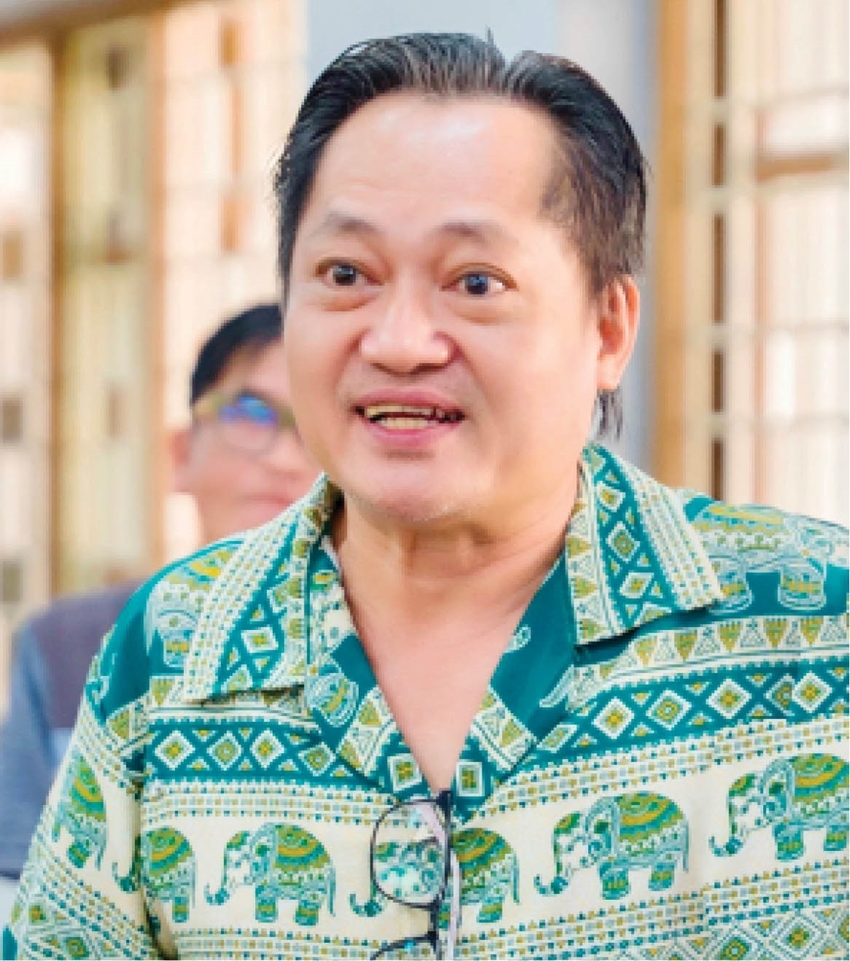
| Cao Xuan Hai, CEO and Founder of HINOKI TAMASHI Vietnam |
Mr. Hai expressed: In my view, Vietnamese lacquer possesses a uniquely rare foundation in the world—it is both a long-standing cultural heritage and a material with the potential to develop into a modern creative industry.
First, in terms of resources and techniques, Vietnam produces around 400 tons of natural lacquer resin each year—an exceptionally rare indigenous material. Vietnamese lacquer creates visual depth, luster, and spatial dimensionality that are difficult for other materials to replicate. This is complemented by a distinctive system of techniques, including mother-of-pearl inlay, eggshell, and gold and silver applications, forming a unique aesthetic language.
Second, in terms of production force, Vietnam has a network of traditional craft villages stretching from North to South, such as Ha Thai and Tuong Binh Hiep, with a large pool of artisans and competitive labor costs.
Third, in terms of artistic value, Vietnamese lacquer has evolved beyond handicrafts into an independent genre of painting since the era of the Indochina School of Fine Arts, establishing a distinctive identity within the global art landscape.
More importantly, from an economic perspective, lacquer is not merely a “heritage” but is emerging as a global materials and design industry, with steady growth (a compound annual growth rate (CAGR) of around 5.5%). Therefore, Vietnam’s core competitive advantage lies in five key factors: unique natural materials; traditional techniques; a distinctive artistic language; competitive costs; and the ability to scale across multiple industries.
Given its great potential and advantages, where does Vietnam currently stand on the global lacquer map?
Despite such significant potential, my observations in practice reveal a clear paradox: Vietnam remains a “sleeping giant.” Looking at the global landscape, China demonstrates strong large-scale production capacity; Japan has successfully positioned itself in the luxury segment; South Korea seamlessly integrates design with popular culture; while Myanmar closely links lacquer with tourism. Meanwhile, Vietnam largely remains at the level of small-scale, fragmented handicraft production, exporting low-value goods. The country still lacks clear market data, a sufficiently strong national brand, and a complete value chain to attain a position commensurate with its potential on the international map.
What specific strategies and plans are required to take Vietnamese lacquer further in line with your “Make Local, Go Global” slogan (loosely translated as “Produce locally, go global”), sir?
To realize the slogan “Make Local, Go Global,” I believe the core strategy should not be limited to simply “exporting products,” but rather to exporting both value and an entire ecosystem. In my view, this requires implementation across four key pillars: building a national brand to position Vietnamese lacquer art as a global benchmark; developing an ecosystem that connects artisans with designers and architects; establishing a value chain focused on key segments such as luxury interiors, fashion, and corporate gifts; and, finally, promoting the experience economy.
For me, “Made Local” means strengthening production and business development in Vietnam in general, and in Hue City in particular, thereby contributing to socio-economic development and building the “Made in Vietnam & Hue” brand. It also involves selectively developing product lines aligned with the strengths of each locality, including Hue, in order to expand lacquer-based applications across various sectors.
“Go Global” represents a vision of reaching the global stage, requiring the development of products and services that can be marketed to international visitors in Vietnam as well as exported abroad according to a clearly defined roadmap. In addition, Vietnamese lacquer should broaden its artistic applications and fully integrate into global currents in art and design.
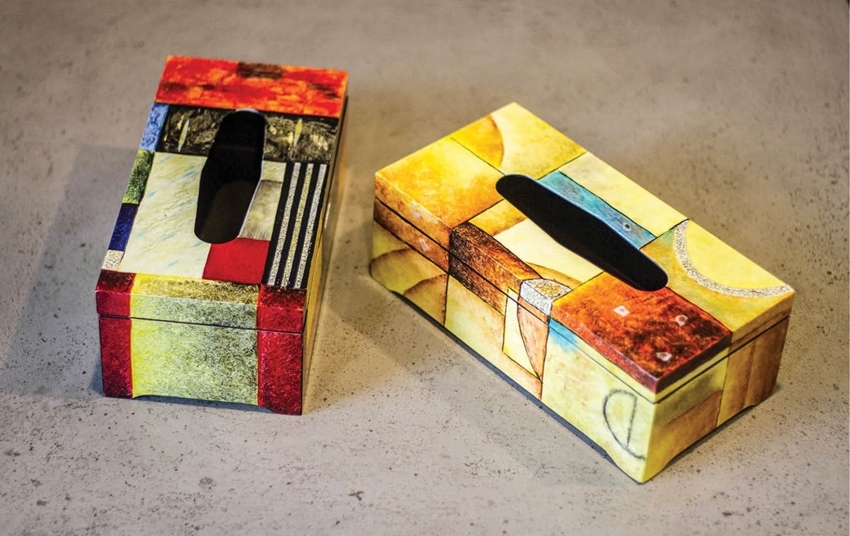 |
| Some lacquer art products manufactured at the Binh Duong factory have already been exported internationally |
In your view, is Vietnam fully capable of becoming a global center for lacquer art?
I consider this entirely feasible. However, the journey to position Vietnam as a global center for lacquer art will face considerable challenges. I would broadly categorize them into three main groups. First, the industry structure remains weak, with production still small-scale and lacking value chain linkages. Second, there is a shortage of modern creativity, as the design workforce is not yet strong enough to develop products that align with international aesthetic preferences. Finally, there is still a lack of a comprehensive national strategy and clear direction, supported by long-term investment. This is not merely a matter of art, but a question of cultural industry development—one that requires a collective effort to address.
Lacquer commercialization in a way that ensures both its development and the preservation of Vietnamese identity is undoubtedly a long story?
Precisely. In my view, the core of lacquer commercializing lies in clearly distinguishing three layers of value. The first is the heritage layer, where traditional techniques and processes must be preserved in their original form. The second is the design layer, which serves as a bridge to translate heritage into a contemporary language. The third is the market layer, which integrates lacquer into modern lifestyles. I believe that without design, our heritage would remain “confined,” but without preserving the heritage layer, products would “lose their soul.” Therefore, we must safeguard the core while continuously innovating in applications—extending lacquer into lifestyle, interior, and fashion domains.
The idea of integrating Vietnamese lacquer with the tourism sector and the experience economy at this talk is especially compelling. Having traveled extensively around the world, could you share examples of how other countries have approached this, and suggest how this idea could be translated into practice?
Based on my firsthand experience from field trips, I have observed that countries such as Japan, Myanmar, and South Korea have been highly successful in transforming handicrafts into cultural experiences. What they share is a common approach: they do not merely sell products, but rather sell stories and experiences. In my assessment, Vietnam can fully develop models such as experiential craft villages, exhibition spaces that narrate heritage stories, training workshops, or partnerships with resorts to integrate lacquer into high-end hospitality experiences. This is precisely the model of a cultural experience economy that we should strive toward.
So, specifically for Hue, what recommendations would you propose?
I would argue that Hue enjoys a distinct advantage, where heritage, culture, tourism, and the arts converge powerfully. I propose the development of three key models: a creative center serving as the “brain” of the industry; an integrated craft village model combined with experiential tourism at scale to generate direct economic value; and a lacquer museum to preserve the soul of this heritage. Hue can draw valuable lessons from Kyoto in maintaining its identity while modernizing to transform heritage into economic value. With its existing strengths, Hue is well positioned to emerge as a “Kyoto of Vietnam” in this domain.
Thank you for sharing your insights.