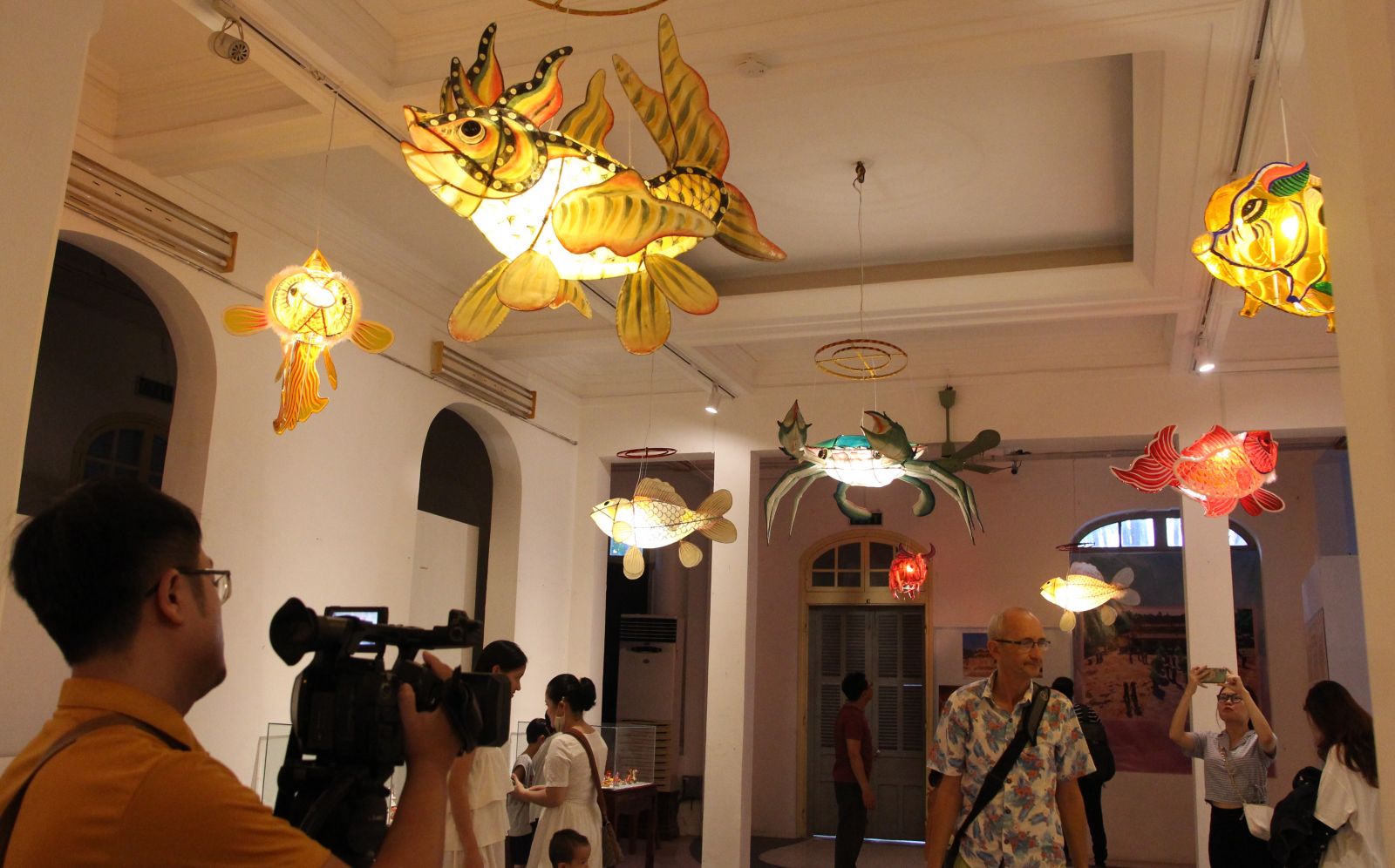
Lost Mid-Autumn lanterns are revived by the culture researcher Trinh Bach
Many people exclaimed with admiration when seeing lanterns in the shape of familiar animals such as fish, pig, crab, etc. Those old-styled Mid-Autumn lanterns are now on display at the Culture, Information and Sports Center next to the romantic Perfume river on the occasion of the Mid-Autumn Festival this year.
The man who revived those lanterns is Trinh Bach, who had previously restored the royal costume of the Nguyen dynasty.
According to Trinh Bach, previously in the North, there were many places which produced Mid-Autumn lanterns for children the best of which was the Bao Dap village in Nam Truc, Nam Dinh. Its villagers made lanterns professionally on a large scale.
However, with the ups and downs of history, the craft of making traditional lanterns disappeared in the North. Luckily, some people from the Bao Dap village who immigrated to Saigon in the mid-50s gathered to form the area of Phu Binh (presently Tan Phu) and continued with their lantern making.
“For more than half a century now, all Mid-Autumn lanterns in the South have been made in Phu Binh. But sophisticated old-styled ones have been extinct for almost 30 years,” said Bach.
In 2007, Bach found his way to Phu Binh looking for whole-hearted artisans in the hope that he could revive the precious craft. For many reasons, he could not meet Nguyen Trong Van until 10 years later.
“Van and his family had produced Mid-Autumn lanterns for many generations in Bao Dap. Since moving to Saigon, they have continued with their craft with some change in the form of the lantern,” said Bach.
After that, Trinh Bach worked directly with Nguyen Trong Binh, Van's son. Binh is considered a skilled craftsman who has the ability and owns the secret to make bamboo frames into complex shapes in a natural manner.
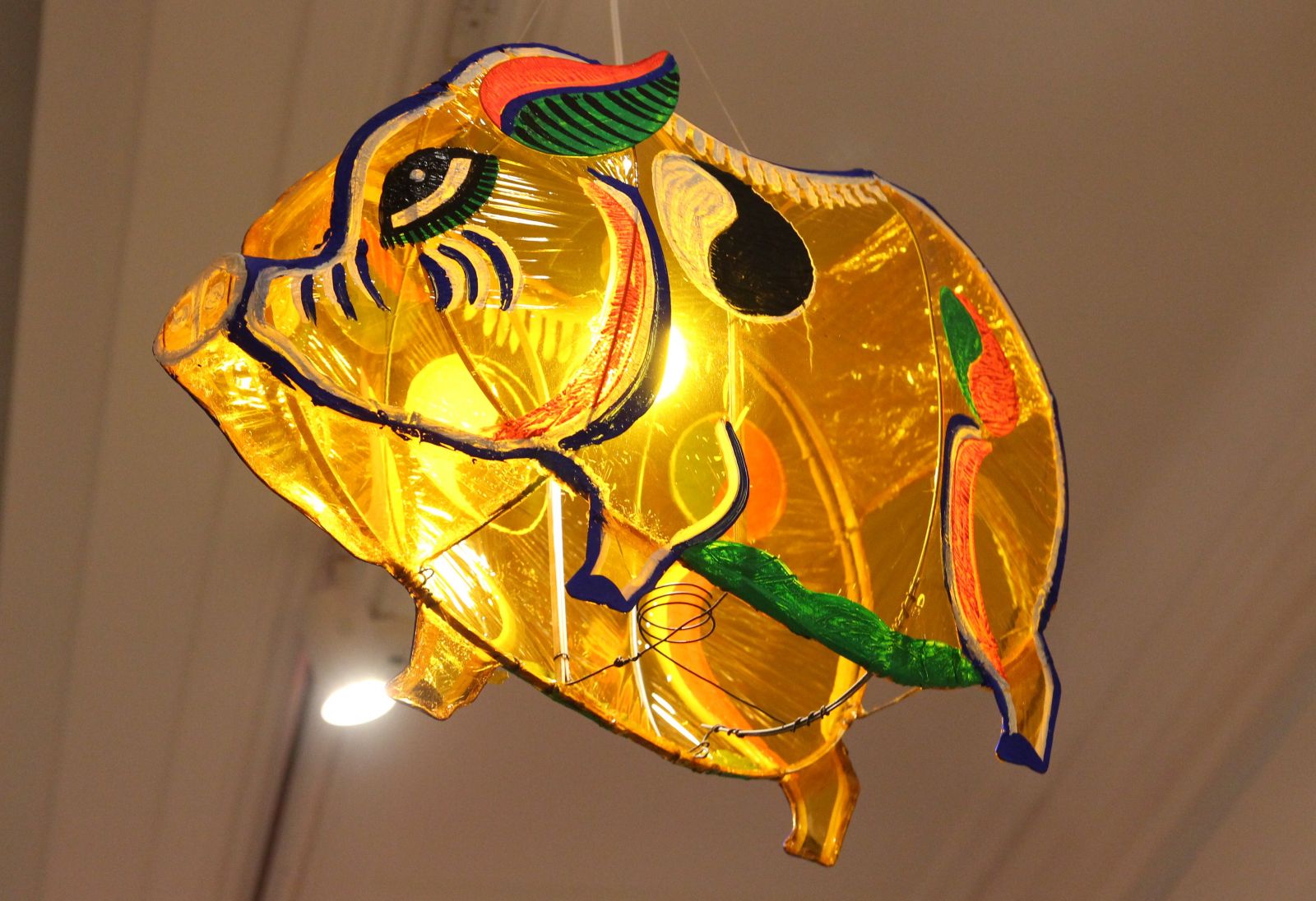
The cute pig lantern
Though reviving successfully a number of expensive Mid-Autumn lanterns of Saigon in the past, Bach is not sure yet about the material that people in Bao Dap used to make lanterns.
According to Bach, pictures and artifacts left in museums in France show lanterns made of glossy transparent paper while more expensive ones of thin silk. But most of them were made of certain special paper that allowed people to paint many layers of watercolor on it.
While researching, Bach discovered that in the past, in Bao Dap, people made Mid-Autumn lantern with giay nhieu or cloth. Giay nhieu is a kind of thin paper with cotton inside so that it could resist water. After decorating the lantern by drawing patterns on it, they coated the lantern with special types of oil to make it waterproof and glossy.
Unlike Chinese lanterns, lanterns made in Bao Dap are hung on a bamboo rod. Besides, new models are made to diverse the collection; for example, the pig lantern is based on Dong Ho or Kim Hoang folk paintings; the Japanese Koi lantern, etc.
“Today, lantern producers in Phu Binh are making traditional Mid-Autumn lanterns after models by the Van family. They started with simple shapes first. There has been increasing orders from all over the country,” said Trinh Bach.
Story and photos: N. Minh