 |
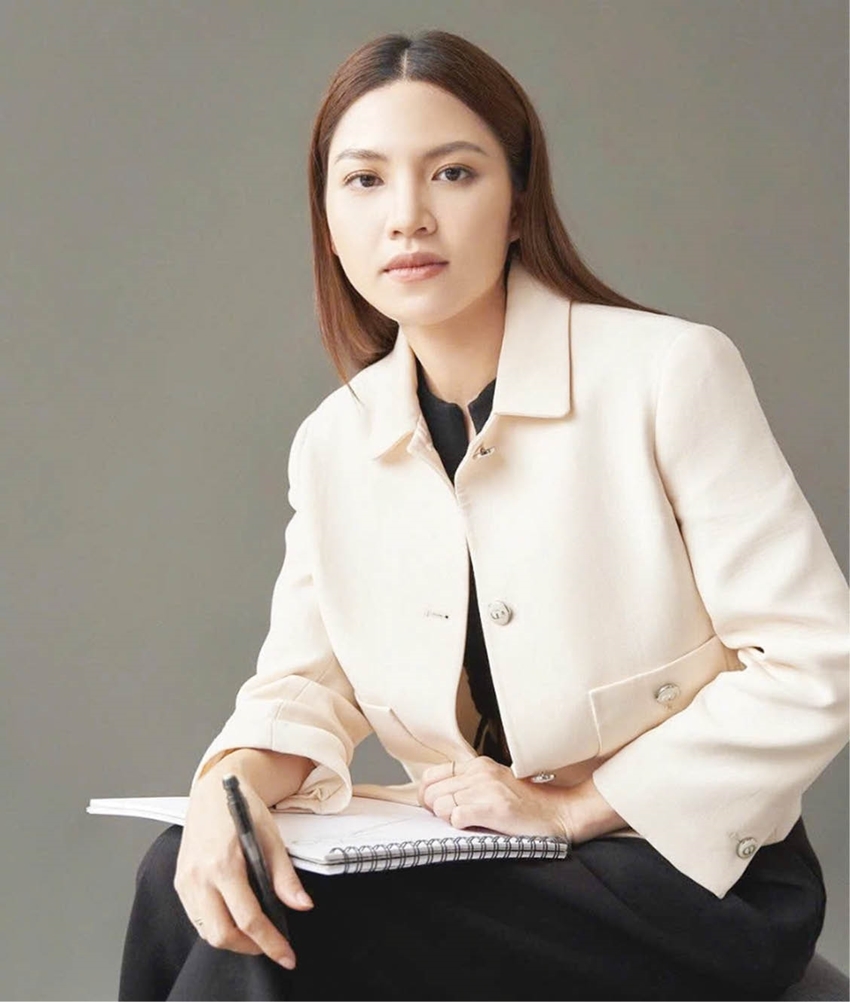
| Designer Nguyen Quynh Anh |
Hue Today Weekend had a conversation with designer Nguyen Quynh Anh - founder of the bridal brand Lecia Bridal and Creative Director of the HER-ITAGE project - to talk about her journey inspired by the art of embroidery and the beauty of heritage through HER-ITAGE, driven by her aspiration to integrate traditional culture into the flow of contemporary life.
Sharing the start of the story of incorporating Vietnam’s embroidery heritage into bridal gowns, Quynh Anh said excitedly:
The HER-ITAGE project is a special journey that seeks to restructure heritage while redefining the relationship between women and traditional values. The project’s name is a subtle combination of “Her” and “Heritage,” symbolizing both a tribute to modern women and a respect for tradition. In the world of Lecia Bridal, “Her” represents the contemporary woman - globally minded yet deeply connected to her cultural roots. HER-ITAGE goes beyond preservation; it strives to bring Vietnamese embroidery into contemporary life through bridal fashion.
 |
| One design in the collection draws inspiration from Hue’s royal architecture and motifs |
HER-ITAGE was conceived from a concern that Vietnam’s embroidery heritage is at risk of fading over time. I believe that the value of a heritage can only be truly preserved when it coexists with contemporary life. With that in mind, HER-ITAGE seeks to integrate Vietnamese embroidery into modern living through bridal gowns - creations that are both symbolic and associated with life’s most significant moments. Through every stitch, the wearer not only feels the beauty of the craft but also touches the cultural story.
Why did Quynh Anh choose Hue as the first destination to tell the story of Vietnamese embroidery heritage through your fashion of bridal gowns?
Hue has long been one of the major cradles of Vietnamese craftsmanship, especially imperial embroidery. More importantly, Hue carries within itself a distinctive spirit: elegance, serenity, and depth, which is also the very spirit Lecia wishes to convey.
Moreover, during my visit to Hue this year and my encounters with its young people, I witnessed a development that is integrated yet deeply anchored in its roots. Therefore, Hue serves as the backdrop to vividly illustrate the project’s message: a journey that incorporates traditional values into contemporary life.
Many viewers were impressed by the sophisticated embroidery techniques recreated in a modern language on wedding dresses showcased at the exhibition “HER-ITAGE - Restructuring Traditional Embroidery.” Which traditional embroidery techniques were used and further innovated upon that traditional foundation to be seamlessly incorporated into this collection of Vietnamese embroidered bridal gowns?
Lecia decodes traditional embroidery into three core elements: technique, material, and rule. From that foundation, Lecia selectively retains certain elements while transforming others to align with modern language. For example, instead of using traditional embroidery threads, we experimented with laser-cut fabric strips, hemp fibers, and silk yarns, or altered stitching patterns from short, uniform, and repetitive strokes to longer, irregular, and creative ones.
 |
| HER-ITAGE goes beyond conservation; it serves as a bridge to integrate Vietnamese embroidery into contemporary life through bridal gown fashion |
By reprogramming these three elements and blending them with other handicraft techniques, such as 3D floral making, beading, laser cutting, embossing, and inlaying, Lecia creates a completely new look grounded in the essence of traditional embroidery. One of the key words shaping Lecia’s aesthetic is “simplicity.” After the transformation, refined details are arranged in proximity, so that viewers can sense enjoyment yet familiarity. The ultimate goal is to make Vietnamese embroidery accessible to the public, not confined to a small circle—thereby preserving its traditional value while keeping pace with modern life.
In the collection of bridal gowns showcased at the exhibition, many motifs draw inspiration from Hue’s royal architecture and imperial patterns. Incorporating these intricate designs into bridal gowns must have been a meticulous and time-consuming process of research and creation for you and your team, right?
Several designs in the collection draw inspiration from Hue’s architecture and motifs. The greatest difficulty lies in maintaining authenticity without arbitrarily altering these elements. The challenge is to strike a balance between traditional elements and a global aesthetic language, as Lecia serves both domestic and international clients. This process calls for meticulous attention, thorough research, and creativity to preserve the cultural spirit while creating fashion that is sophisticated, modern, and accessible.
Could you share a memorable experience from your journey of incorporating Vietnam’s embroidery “heritage” into bridal fashion?
One memory I will never forget is the Mini Show aboard the Hueritage Royal Boat in Hue. As the show was unfolding, the sky suddenly broke into rain. Usually, rain is the greatest worry for any open-air event, it turned into a special moment. The rain lent the space a poetic beauty so characteristic of Hue - both romantic and serene. That moment not only offered guests an unforgettable experience but also became a cherished memory for the entire team.
In your view, has the journey to carry Vietnamese embroidery beyond conservation - allowing it to live and breathe in contemporary life - found success so far?
To this day, I cannot claim full satisfaction, for this is just the start of a long journey. Embedding Vietnamese embroidery into contemporary life cannot be measured by a few collections; it will require many more strides to truly prove its value. What I wish most is that the project can continue to receive support and companionship so that the essence of Vietnamese craftsmanship can spread widely, and so that Vietnamese people can proudly choose products “Created and Crafted in Vietnam” - items that carry both creative and cultural value - rather than merely “Made in Vietnam.”
Looking ahead, I envision product lines featuring Vietnamese embroidery becoming Lecia’s hallmark on the international market. Beyond bridal gowns, I aspire to develop many new collections and expand the stage beyond the national border, spreading the beauty of Vietnamese heritage with a contemporary, streamlined look while preserving its depth and identity.
Thank you, Quynh Anh!
|
|
|
“Completing a bridal gown can take three to five months, sometimes even a full year, depending on the amount of embroidery detail. For the bridal gowns in this debut collection, we combined tambour and hand embroidery with layered embroidery to make the motifs come alive, almost like 3D images - a blend of traditional and modern embroidery. This is highly creative and painstakingly meticulous, and to my knowledge, nothing like this has been done elsewhere."
Embroidery artisan Phung Thi Vui
|