 |
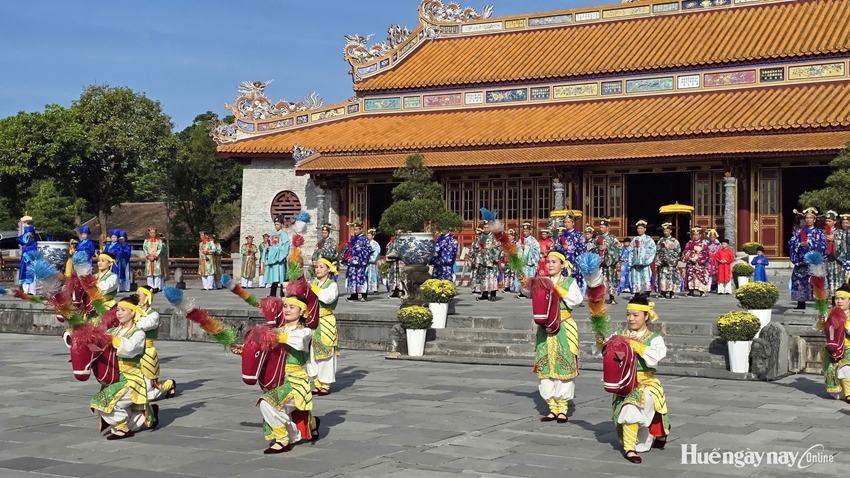
| Hue's heritage has the potential to become an endogenous resource for the economy |
Within the framework of the international conference "Preserving and promoting the value of cultural heritage: International experience and Reality", held on the afternoon of July 18, experts conducted in-depth discussions on issues specific to Hue, the former Imperial Capital.
Expanding approaches to Hue heritage
Ten papers presented by scholars offered many new perspectives, ranging from history, culture, philosophy, public administration, urban planning, and cultural industries to digital transformation and heritage economy development.
The studies recognize Hue as a "treasure trove of heritage," encompassing the Complex of Hue Monuments, the heritage of the Nguyen Dynasty, Buddhism, traditional craft villages, Bai Choi folk art, and its distinctive cuisine. At the same time, they regard these as resources for a creative heritage city that develops sustainably on the foundation of culture.
A notable trend highlighted by many scholars is the shift in preservation thinking. Whereas the focus in the past was primarily on safeguarding the value of heritage, current research pays greater attention to the "submerged" aspects of heritage, including collective memory, systems of values, local knowledge, lifestyles, and cultural identity. These are considered the factors that determine the long-term vitality of heritage while also creating connections between the past and contemporary life.
According to Assoc. Prof. Dr. Nguyen Xuan Te (Editor-in-Chief of the Van Lang University Journal of Science), Hue is at a major institutional turning point where heritage is no longer viewed simply as an object of preservation but has become an endogenous resource and a form of soft power for development.
Assoc. Prof. Dr. Te believes that the new legal framework established by the 2024 Cultural Heritage Law, together with cultural development orientations for the new period, has created opportunities to shift from passive preservation toward preservation linked with continuous creativity, the development of cultural industries, and the heritage tourism economy. Under this orientation, the heritage tourism economy is expected to contribute around 13–14% of Hue's GRDP by 2030.
Analyzing the issue further, Assoc. Prof. Te noted that Hue's outstanding advantage lies in its unique heritage system and its historically verified values. However, the locality also faces bottlenecks in institutional mechanisms, human resources, and the lack of coordination in management. Alongside the opportunities presented by digital transformation and the data era, Hue must also respond to the pressures of commercialization and the increasingly significant impacts of environmental change.
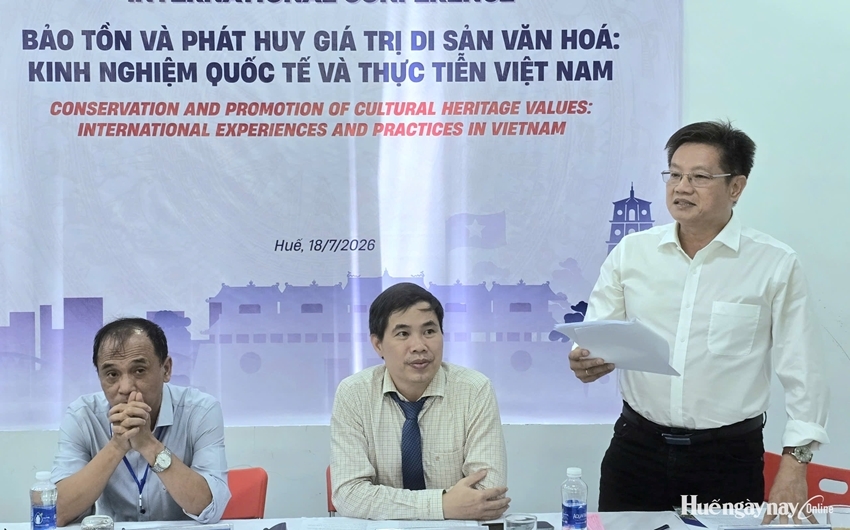 |
| Dr. Phan Thanh Hai and experts chair the thematic discussion session “Preserving and promoting the value of Hue’s cultural heritage” |
To transform heritage into a driver of development, Assoc. Prof. Te proposed a range of solutions, including improving institutional frameworks, building a modern conservation ecosystem, standardizing human resources, and promoting comprehensive digital transformation. In particular, he emphasized the role of the community in heritage conservation, viewing local people as the principal actors rather than merely beneficiaries.
Another perspective that attracted considerable attention was the paper ‘From Wawel to Hue Imperial City: Royal heritage in contemporary memory’ by Dr. Hoang Phuong Thao (Hanoi National University of Education). By comparing Poland's Wawel Castle with Hue Imperial City, the author posed the question: What enables a heritage site to remain meaningful after its political role and historical power have come to an end?
According to Dr. Thao, Wawel is not merely a historical monument but has become a national symbol where memory is continuously practiced and remains open to dialogue with modern society. Meanwhile, Hue Imperial City - once the center of power under the Nguyen Dynasty - has great potential to become a ‘living space of memory’. Drawing on international experience, she argued that telling the story of the Nguyen Dynasty should be presented from multiple, objective perspectives. Such multidimensional interpretations of history would help heritage connect more effectively with the public while expanding creative opportunities for education, tourism, and cultural industries.
Culture must become a national strategic sector
Meanwhile, during the session ‘Preserving and promoting cultural heritage values: International experience and Reality in Vietnam’, experts focused on clarifying the current situation while suggesting new directions for developing the value of heritage.
Approaching the issue from the perspective of digital asset governance, Assoc. Prof. Dr. Nguyen Manh Dung (University of Social Sciences and Humanities, Vietnam National University, Hanoi) argued that heritage work in Vietnam still mainly focuses on preserving artifacts, digitization, and archiving, without treating heritage data as an asset requiring governance. Once digitized, heritage is no longer simply artifacts or archived information but becomes cultural data assets. Therefore, the object of governance is no longer the artifact itself but the data associated with the artifact.
In the digital era, the value of heritage lies not only in the artifacts themselves but increasingly in the capacity to create, manage, and exploit heritage data. The central task of heritage governance should no longer stop at digitization but should shift toward building data asset governance models, enabling heritage data to become a resource for education, research, cultural industries, innovation, dissemination, artificial intelligence, and digital transformation.
According to Assoc. Prof. Dung, rather than serving solely as institutions that preserve and protect heritage, management agencies should become managers of data platforms by establishing data standards, mechanisms for data sharing, regulations governing access and licensing, intellectual property protection, and coordination among stakeholders within the heritage data ecosystem. The role of the state should gradually shift from being the holder of data to being the architect of institutions and coordinator of the data ecosystem, ensuring both the promotion of innovation and the protection of public interests, cultural values, and cultural sovereignty in the digital environment.
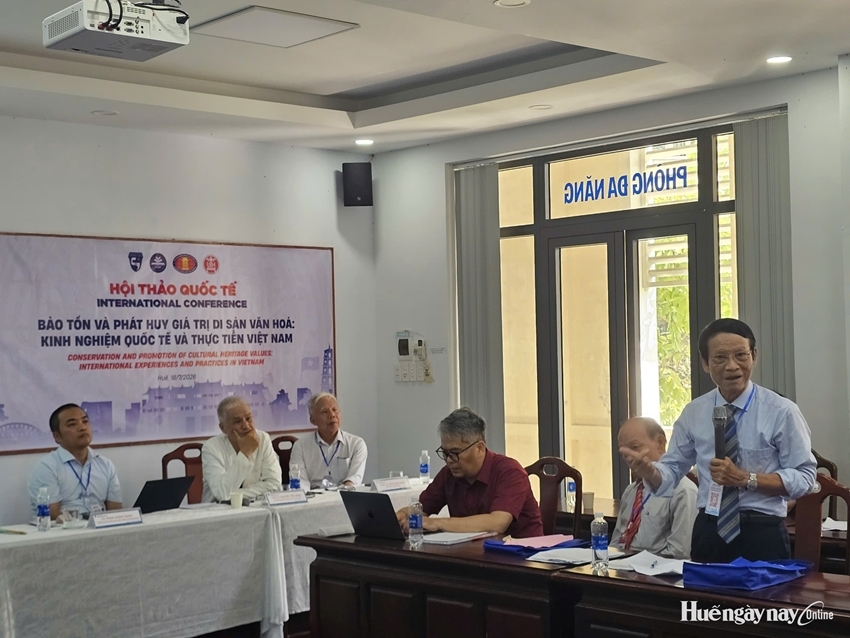 |
| Experts discuss issues related to the development of cultural industries in Hue and Vietnam |
Also from the University of Social Sciences and Humanities (Vietnam National University, Hanoi), Dr. Doan Thu Nguyet drew on South Korea's strategy for building national soft power through the Hallyu (Korean Wave) phenomenon to reflect on Vietnam's own capacity for action and derive policy recommendations. She argued that South Korea succeeded because it established a comprehensive national strategy in which culture was closely integrated with technology, policy, and the market.
To achieve this, South Korea developed five main pillars: multimedia content industries; digital platforms and technology; soft power and the transfer of cultural meaning; related industries and lifestyles; and the guiding role of the state. As a result, the economic and social spillover effects have been evident through exports of cultural content, which have in turn boosted sectors such as cosmetics, cuisine, fashion, gaming, and others.
Returning to Vietnam, Dr. Nguyet emphasized that this should be regarded as a fundamental lesson and that the country must develop a concrete roadmap. Vietnam should consider culture a national strategic sector, with the state playing a supportive rather than interventionist role, while simultaneously promoting the development of cultural industries and building a national branding ecosystem.
|
|
|
The conference ‘Preserving and Promoting the Value of Cultural Heritage: International Experience and Reality’ was jointly organized by the University of Sciences (Hue University), the University of Social Sciences and Humanities (Vietnam National University Ho Chi Minh City), the University of Social Sciences and Humanities (Vietnam National University Hanoi), and Hanoi National University of Education.
Receiving more than 300 papers, the conference brought together scholars, experts, lecturers, administrators, and researchers from universities, academies, research institutes, and government agencies. Participants included scholars and specialists from five countries, including Spain, Japan, South Korea, France, and China, as well as a large number of Vietnamese researchers.
|
Story and photos: L. Minh - N. Minh