 |
|
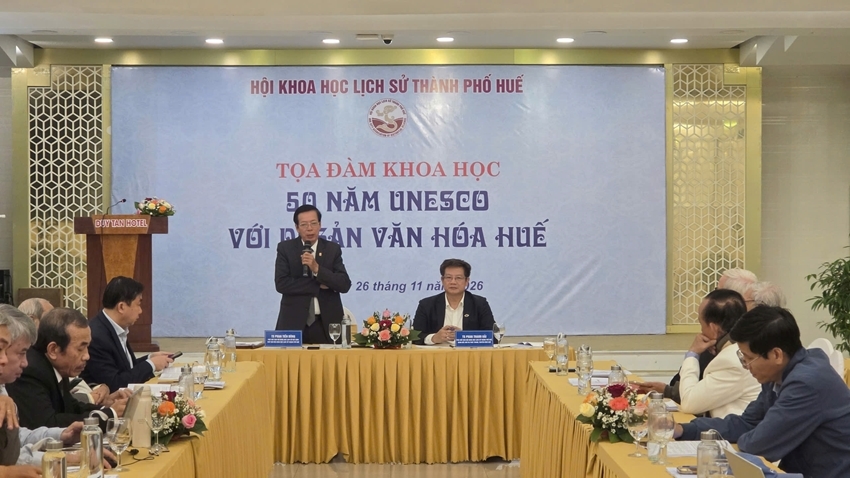
The seminar “Hue’s Cultural Heritage Through 50 Years of UNESCO Engagement”
|
2026 marks the 50th anniversary of Vietnam becoming a member of the United Nations Educational, Scientific, and Cultural Organization (UNESCO). Within the framework of cooperation between Vietnam and UNESCO, preserving Hue’s cultural heritage has held particular significance. In 1981, amid war damage to many structures in the former imperial capital and deterioration over time, UNESCO Director-General Amadou-Mahtar M’Bow called on the international community to join efforts to protect, preserve, restore, and develop Hue City.
In 1993, UNESCO named the Complex of Hue Monuments on the World Heritage List, making it the first tangible cultural heritage site in Vietnam to receive this recognition. In 2003, Royal Court Music (Nha nhac cung dinh) became the first intangible cultural heritage of Vietnam to be recognized by UNESCO. These milestones underscored Vietnam’s efforts to mobilize international resources to safeguard the monuments, as well as national long-term commitment to heritage preservation.
At the seminar, delegates emphasized UNESCO’s role and the contribution of international cooperation to the protection, preservation, and promotion of Hue’s cultural heritage. Furthermore, they discussed the identification, classification, and recognition of heritage sites, along with responsibilities for safeguarding them after recognition, particularly in the context of urban development.
Reflecting on the history of cooperation, Dr. Phan Thanh Hai, Director of Hue Newspaper and Radio-Television, and Vice Chairman of Hue Association of Historical Science, highlighted UNESCO’s role in raising the profile of Hue’s cultural heritage, as well as in the process of defining the preservation approaches and connecting it with international resources. He noted that cooperation can only achieve lasting results when professionals apply the knowledge they have gained to their work. Management agencies translate knowledge into practice, and local communities actively engage in heritage protection.
Additionally, presentations presented at the seminar also offered solutions to link heritage preservation with cultural tourism, heritage economy, and creative economy. Proposals included making use of digital data to develop tourism offerings, documenting and digitizing culinary knowledge, supporting artisans, and promoting public-private partnerships. These initiatives could be considered parts of the preparations for Hue’s bid to join the UNESCO Creative Cities Network in the field of gastronomy.
Many participants also proposed establishing a mechanism to allocate a portion of revenue generated by heritage-based economic activities to conservation efforts and improving the livelihoods of those directly involved in preserving and passing on cultural heritage.
The seminar’s discussions will help Hue determine priority areas for international cooperation, define the respective responsibilities of management agencies and local communities, and establish a stronger basis for evaluating urban development and tourism projects that may affect the heritage.