ClockSaturday, 08/09/2018 15:01

Admiring Dragons and Phoenixes on the Treasures of the Nguyen Dynasty

HNN.VN - This is also the name of the exhibition which is co-organized by the National Museum of History and Hue Monuments Conservation Center. The exhibition opening ceremony was on the morning of September 7 (7/9), at Hue Museum of Royal Antiquities.

Watching for the exhibition “Dragon - Phoenix on Nguyen Dynasty royal treasures”A thousand shining years of Vietnamese cultureAn exhibition introducing the finest ordered porcelain itemsThe antique collection of a Hue manRestoring royal sweet dishes of the Nguyen Dynasty

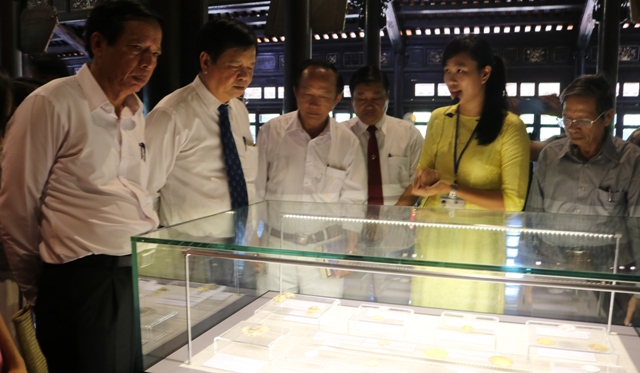
Introducing to the delegates the antiques decorated with dragons and phoenixes

The antiques displayed at the exhibition are items used in the life and rituals of the Nguyen Dynasty. They are made of rare precious materials such as gold, silver, gem, jade, and turtle shells. They are categorized into 4 groups: objects of power symbol, objects used for the altar and rituals, objects used in the office and everyday life objects.
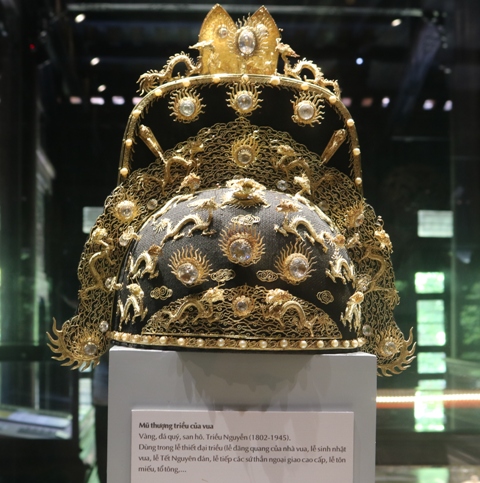
The King's royal hat decorated with the image of dragons

Hue was the capital of the Nguyen dynasty (1802-1945) and was also the last capital of Vietnam under the monarchy. In the Nguyen dynasty, the most prominent and most popular of Hue art forms were the four sacred animals, including Long (dragon), Phuong (phoenix), Lan (unicorn), and Linh Quy (sacred turtle), and the most typical of the four were the dragon and phoenix.

Dragons appeared very early in Vietnamese art, but it was not until the Nguyen Dynasty that the image of the dragon reached its artistic height, with a variety of portrayed topics, materials, and forms of expression. Like the dragon, the phoenix is a special symbol in the Vietnamese culture. But unlike dragons, which originated from the north, phoenixes may be the product of the Southern people.
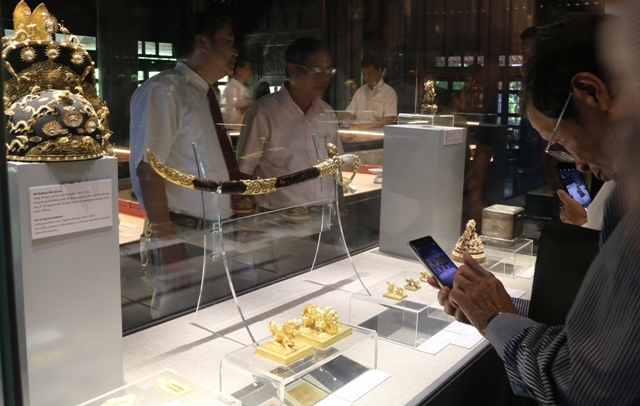
Safeguarding the dragon image on the Nguyen Dynasty’s antiques

"It can be said that the dragon-phoenix image of the Nguyen Dynasty has been presented by contemporary artists on various materials. In addition to the symbol of power, the dragon-phoenix image is ​​also a prayer for the prosperity of the regime. From traditional art, the dragon-phoenix image entered imperial art, which was optimized to carry the image of the supreme power of the throne. At the same time, it symbolized openness and the aspiration for a peaceful society. The Nguyen Dynasty’s dragon-phoenix symbol has left a huge legacy in shaping art forms and is a multi-dimensional symbol of the Vietnamese culture. These are priceless treasures that not only contain historical, cultural and artistic values ​​of an era, but they also reflect the talents and creativity of Vietnamese artisans in crafting products under the monarchy," said Dr. Phan Thanh Hai, Director of Hue Monuments Conservation Center.

Story and photos: Dong Van

RATING
Be the first to review this post!
  Comment

YOU MAY CARE ABOUT

Visiting the Imperial Academy

It was a stroll through images and fond memories of Quoc Tu Giam (Imperial Academy) - a relic of the Nguyen Dynasty nestled in the heart of Hue Ancient Capital. The site is expected to undergo restoration this November, with a total investment of over 108 billion VND.

Visiting the Imperial Academy
Two Ao dai of Empress Dowager Tu Cung return from the US

On the morning of May 20, at Hue Royal Antiquities Museum, Hue Monuments Conservation Center solemnly received two casual ao dai that belonged to Empress Dowager Tu Cung. Ms. Cong Ton Nu Kim Chi (currently living in the US) authorized Mr. Pham Xuan Cuong to present them.

Two Ao dai of Empress Dowager Tu Cung return from the US
Re-enacting the Nguyen Dynasty emperors’ tea party at Hue Imperial Citadel

For three nights, from April 25 to 27, at Di Nhien Duong Pavilion - an ancient architectural structure in Thieu Phuong Garden - within Hue Imperial Citadel, Hue Monuments Conservation Center collaborated with the Doi Dep tea brand to organize the program “Re-enacting the scene of the emperors hosting tea party for his mandarins” as part of the launch of the Royal tea enjoyment service.

Re-enacting the Nguyen Dynasty emperors’ tea party at Hue Imperial Citadel
Following the traces of Co Ha

Co Ha - the famous royal garden of Hue’s Imperial Capital during the Nguyen Dynasty, has almost lost its architectural traces through time and historical events. However, thanks to the collection, digitization, and analysis of archival photos, an intact Co Ha is being revealed, truly embodying the meaning of “class”.

Following the traces of Co Ha
Hue’s heritage sites bustling with Tet festivities

On the first day of the Lunar New Year of the Snake, heritage sites in Hue opened their doors for free, welcoming thousands of visitors to experience the festive atmosphere of the traditional Tet holiday.

Hue’s heritage sites bustling with Tet festivities

LASTEST NEWS

Return to top