 |
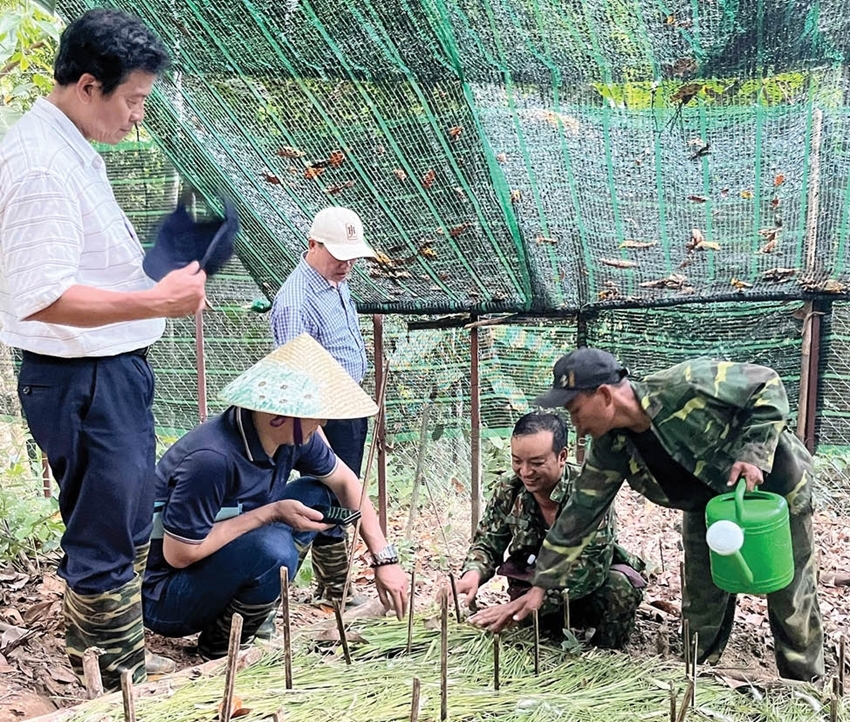
| Research team conducting Ngoc Linh ginseng propagation |
Selecting ecologically suitable transplant areas
Hue City has a rich natural forest ecosystem, high mountainous terrain, and a typical cool, humid climate. In particular, the western mountainous region is considered one of the areas with great potential for researching the transplantation and development of Ngoc Linh ginseng.
Results from the research project “Scientific and practical basis for transplanting Ngoc Linh ginseng in Thua Thien Hue province (now Hue City)” by the Soil and Fertilizer Institute - Vietnam Academy of Agricultural Sciences show that the Bach Ma - Hai Van mid-altitude mountain range and the western A Luoi region share many ecological characteristics with the natural distribution area of Ngoc Linh ginseng, located only about 50-70km from the Ngoc Linh area. These areas have tropical rain-season evergreen closed forests, high canopy cover, and thick organic litter, promoting the growth and development of Ngoc Linh ginseng.
Regarding climate, the Bach Ma area stands out with cool temperatures ranging from 16-27°C on average, air humidity consistently above 85%, high rainfall, and numerous foggy days, very similar to ecological conditions in the original Ngoc Linh ginseng region. Meanwhile, the A Luoi highland area also has many suitable factors, though it experiences some influence from southwestern foehn winds, causing air humidity to significantly drop during certain months of the dry season.
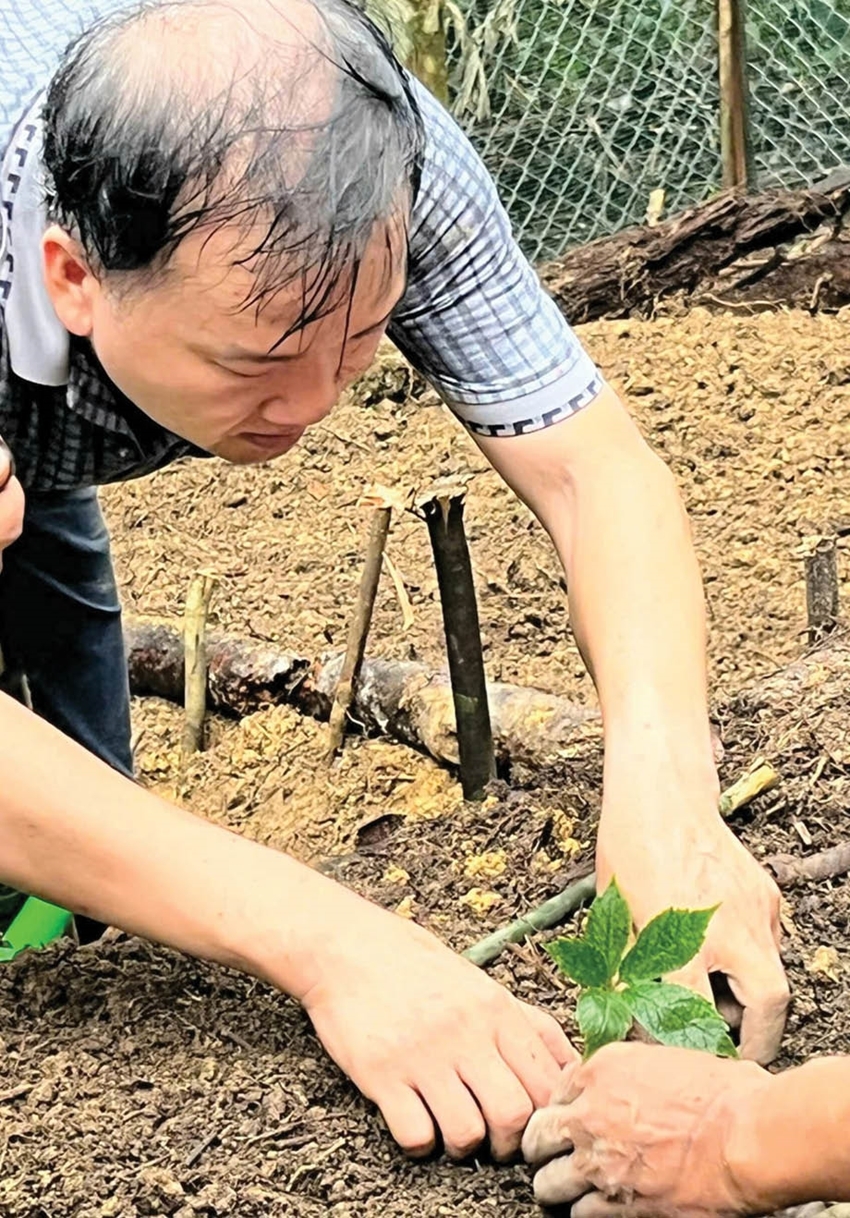 |
| Ngoc Linh ginseng experimental planting in the Bach Ma area |
Beyond climate, soil quality in the research areas in Hue is also assessed as quite similar to that in the natural ginseng distribution area. The topsoil is loose, rich in organic humus, with high humic and fulvic acid content and good moisture. These are ideal conditions for Ngoc Linh ginseng, which grows primarily on the forest floor layer beneath the primary forest canopy.
Scientists believe that the similarity in terrain, climate, and soil has created a solid scientific foundation for researching the transplantation of Ngoc Linh ginseng in Hue City, especially at Bach Ma National Park and some natural forest areas in A Luoi.
Evaluating the research results, a representative from the Soil and Fertilizer Institute stated that transplanting Ngoc Linh ginseng in Hue is a scientifically-based direction, especially in the Bach Ma area, which has all the suitable ecological conditions. According to the research team’s proposal, the priority land area for developing Ngoc Linh ginseng by 2030 is approximately 4,280 hectares, accounting for 6.34% of the total area. The 2030-2040 period is projected at over 28,340 hectares, accounting for 42.79%. However, scientists also emphasize the need for continued long-term monitoring, particularly regarding growth cycles, medicinal quality, and the ability to scale up the model under natural conditions.
Environmental, Economic, and Social Benefits
From an environmental perspective, Ngoc Linh ginseng is a plant that “depends on the forest” and “preserves the forest.” Growing ginseng necessarily requires protecting natural forests, maintaining a high canopy cover, and a thick organic humus. Therefore, developing Ngoc Linh ginseng in Hue does not deplete forest resources but contributes to raising awareness of forest protection, biodiversity conservation, and maintaining ecological balance in mountainous areas.
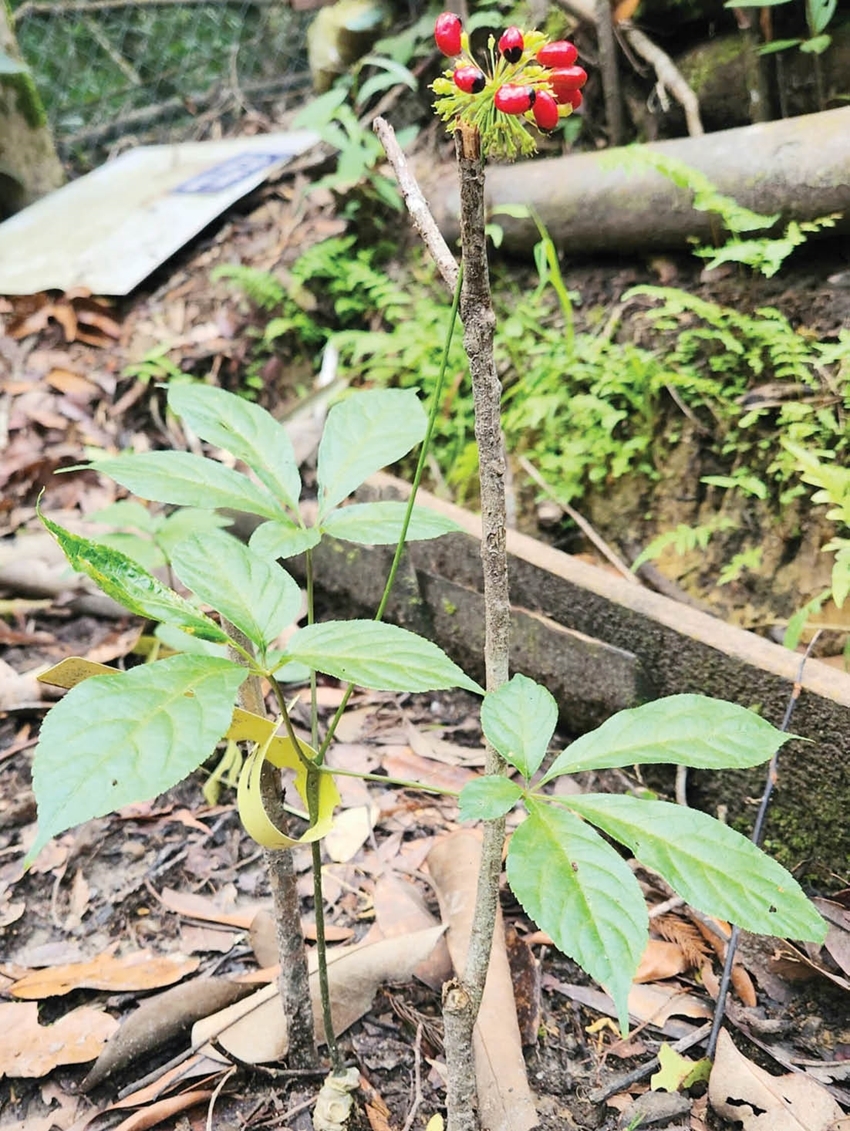 |
| Transplanted Ngoc Linh ginseng in Hue is assessed as well-adapted to the Bach Ma and A Luoi forest regions |
Economically, Ngoc Linh ginseng has a very high value compared to many other crops in mountainous regions. Dr. Luong Duc Toan from the Soil and Fertilizer Institute said that preliminary experimental results show that Ngoc Linh ginseng planted in Bach Ma has growth patterns, morphology, and medicinal quality resembling those of ginseng planted in the original region. Notably, the saponin content - the active compound group determining ginseng value - in 4-year-old tuber ginseng planted in Bach Ma reached levels nearly equivalent to Ngoc Linh ginseng of the same age in Quang Nam and former Kon Tum. This opens prospects for establishing a new Ngoc Linh ginseng growing region in Hue, contributing to diversifying the structure of precious medicinal plants, increasing forestry production value, and creating sustainable income sources for the locality.
The transplantation and development of Ngoc Linh ginseng also hold great significance in creating stable livelihoods for ethnic minority people and mountain residents. In fact, the cultivation practices and experience in growing and caring for medicinal plants among people in the A Luoi area and Hue mountains share many similarities with those of people in Quang Nam and Kon Tum, which have long been associated with Ngoc Linh ginseng. This is an important advantage for technology transfer, production, and gradual scaling up of the ginseng planting model after successful transplantation.
At the project acceptance conference, Mr. Nguyen Xuan Son, Director of the Department of Science and Technology, affirmed that the research results have provided important evidence for guiding the transplantation and development of Ngoc Linh ginseng in the area. At the same time, the development of Ngoc Linh ginseng needs to be placed within the overall medicinal plant development plan, linked with forest leasing mechanisms, forest protection, and policies supporting people to participate in sustainable ginseng cultivation.
Experts believe that if Ngoc Linh ginseng is properly planned and implemented correctly, it could become a key medicinal plant for Hue City in the future, contributing to promoting socio-economic development in mountainous areas while affirming the position of a national product in this new land.