Regarding this issue, the Thua Thien Hue Newspaper correspondent conducted an interview with the Member of the Provincial Party Committee, Deputy Secretary of the City Party Committee, Chairman of the Hue City People's Committee Vo Le Nhat (Prior to January 1, 2025, the time when Thua Thien Hue Province transitions to Hue City under the Central Government).
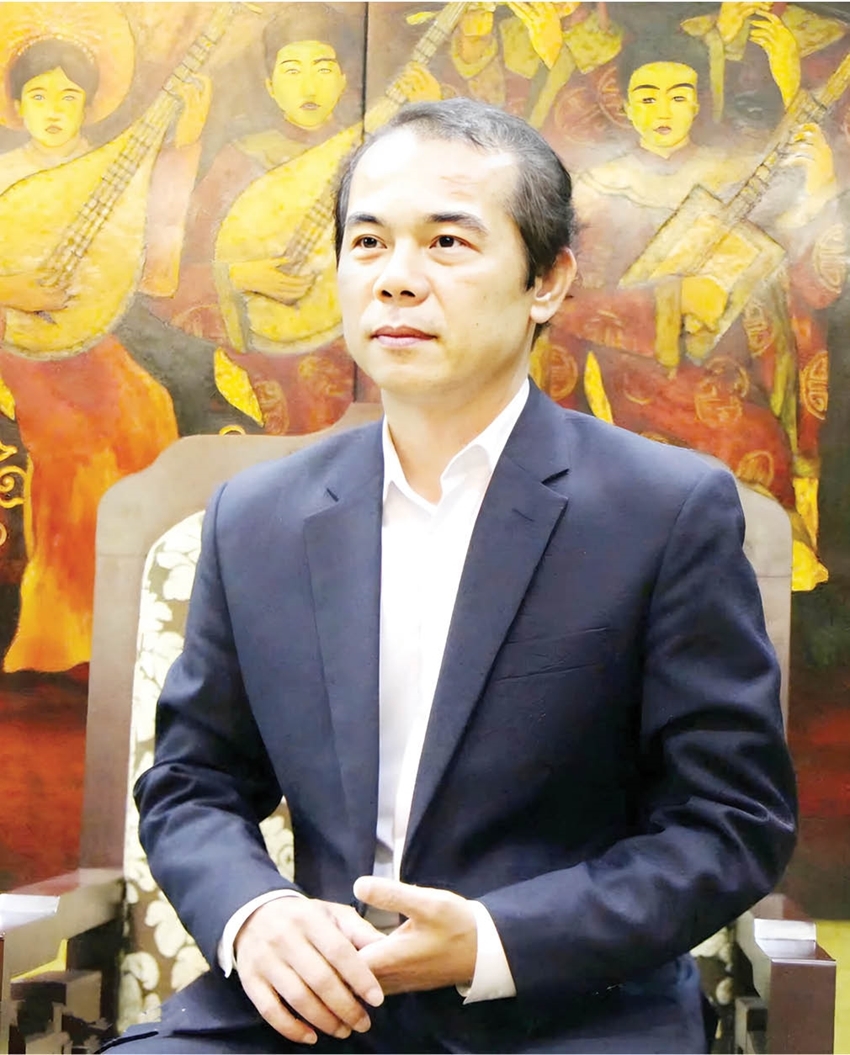 |
| Member of the Party Central Committee, Chairman of Hue City People's Committee Vo Le Nhat (Prior to January 1, 2025, the time when Thua Thien Hue Province transitions to Hue City under the Central Government) |
Together with Thua Thien Hue that are transitioning to Hue City under the Central Government, two new districts will be established on the basis of the former Hue City. Could you share the basis for this decision and why the names Thuan Hoa and Phu Xuan were chosen?
Alongside Hanoi, Ho Chi Minh City, Da Nang, Can Tho, and Hai Phong, Hue City will become Vietnam’s sixth centrally-governed city starting January 1, 2025. This is not only a source of pride for the people of Thua Thien Hue but also opens a new and promising chapter for a region rich in history and culture—a land of talented people.
Based on the current geographical area of Hue City and pursuant to Resolution 54-NQ/TW by the Politburo, wherein Thua Thien Hue will transition to a centrally-governed city built upon the foundation of preserving and promoting the heritage values of the Ancient Capital and Hue's cultural identity, with characteristics of culture, heritage, ecology, landscape, environmental friendliness, and smartness, the establishment of two new districts will meet the standards of a centrally-governed city, urban classification criteria, administrative unit standards, and ensure compliance with the provisions of the Constitution and the urban development plans, projects, and programs of the province approved by competent authorities.
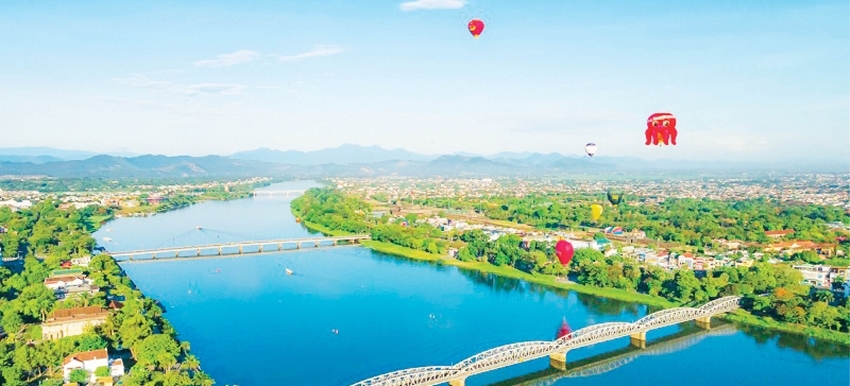 |
| The bridges connecting Phu Xuan with Thuan Hoa Districts |
According to the Project to establish a centrally-governed city based on the provincial administrative boundaries, the land of Thuan Hoa - Phu Xuan - Hue plays a crucial role in the development of the Vietnamese national history. The naming of the two districts Thuan Hoa and Phu Xuan goes hand in hand with the historical formation of Hue City.
The names Thuan Hoa and Phu Xuan were chosen through a well-organized process, including numerous conferences, workshops, and scientific discussions as well as inputs from experts, researchers, and voters. All feedback was carefully collected, addressed, and incorporated into the draft. The final decision to name the district north of the Perfume River as Phu Xuan District and the district south of the Perfume River as Thuan Hoa District received overwhelming support and consensus.
Recently, large investments in infrastructure have been made in Hue City. Could you please elaborate on this issue and how will these investments benefit the two new districts?
With its existing foundation of socioeconomic and urban development, Hue City has received significant support from the provincial leaders in mobilizing maximum resources and rapidly implementing projects to upgrade Hue City. These include investments in infrastructure, urban beautification, landscaping, and tourism facilities. Many urban connectivity projects and key projects have been accelerated and finalized for public use, such as the expansion and upgrading of Hanoi Street, beautification projects along both banks of the Perfume River, and improvements of central city streets. Other major projects include the relocation of residents from Zone I of the Hue Imperial Citadel, the construction of a bridge over the Perfume River, the Green City project, the coastal road through the province, and a bridge across the Thuan An Estuary, as well as the landscaping of Vọng Cảnh Hill.
The urban look of Hue is becoming increasingly spacious, modern, and smart. The infrastructure in newly merged areas has been significantly upgraded, providing a favorable environment for production and business activities. It has also improved the quality of life and living spaces for residents, boosted tourism development, and ensured compliance with the standards and criteria required for establishing the two districts. These improvements serve as a solid foundation for the sustainable development of both districts.
How has the preparation for the division and establishment of these new districts been carried out, sir?
Under the guidance of the provincial leaders, the city has proactively proposed plans for personnel division, office arrangements, and facilities for the new districts. Priority has been given to refurbishing office spaces for the agencies of Phu Xuan District to ensure their uninterrupted operations and administrative services for residents.
Concurrently, the city has surveyed, compiled lists, and developed a comprehensive plan for organizing and staffing the two districts after their establishment. Initially, the current number of officials, civil servants, and employees in Hue City will be reallocated to staff the two districts. Additionally, new personnel will be recruited according to the province’s project.
What are the immediate issues that the two districts are addressing? What are the differences between these two new administrative units and what is the development model of each district?
As mentioned, the two districts must focus on finalizing the organization and restructuring of their administrative apparatus, assigning staff, officials, and civil servants, and preparing plans for the allocation and use of office spaces and public assets of relevant agencies and units for promptly operating and addressing administrative procedures for residents. Secondly, they need to provide maximum support for residents in updating or converting relevant documents after the establishment of the new administrative units. Timely notifications and guidance should be issued to help citizens who wish to update their documents to finalize the procedures at the authorized state agencies in accordance with the regulations. Once the apparatus is stabilized, the districts must promptly implement the socioeconomic development plans aligned with the overarching objectives outlined in the Provincial Project.
In terms of administration, there is no big difference between the two districts; however, the distinctive characteristics lie in the development orientation of each district as outlined in the Project, which aims to maximize the unique features, advantages, and potential of each district. Based on leveraging and effectively promoting the existing foundations, achievements as well as the potential, strengths, and advantages of the two areas, the development models for the two districts will be thoroughly studied and implemented.
The development orientations and objectives for each district have been thoroughly analyzed in the project. While adhering to the overarching orientation, each district must also be flexible in its leadership and execution to seek the most appropriate paths forward. Each district has its own mission: Phu Xuan District will focus on preserving and promoting cultural heritage values associated with tourism and economic development, while Thuan Hoa District will be a dynamic area serving as the political and economic hub of centrally-governed Hue City as well as the administrative-political center for the entire urban area. It will also be a national and international center for tourism, trade, finance, healthcare, and education.
Hopefully, with the excitement and pride spreading throughout the province and Hue City, we are bound to surmount difficulties and join hands in solidarity to build a more prosperous locality with a new look and stature worthy of its position, step by step improving the people’s lives.
Thank you for this conversation!