The event was organized by Hue Monuments Conservation Center in collaboration with the Institute of Urban and Regional Studies at Japan’s Waseda University (WIURS), with the participation of representatives of leaders of departments and branches in Thua Thien Hue province and Hue city, the Department of Cultural Heritage; the UNESCO in Vietnam, along with experts, researchers, and travel agencies.
    |
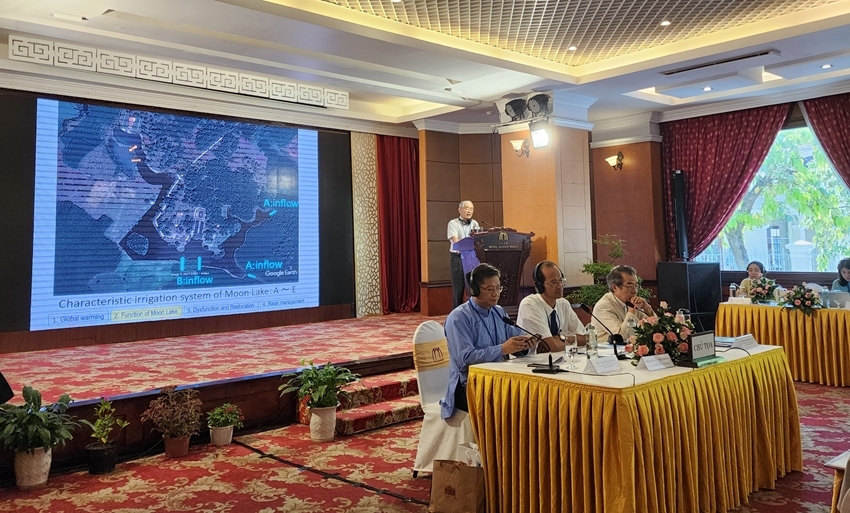 |
| Japanese experts addressed at the seminar |
According to the Director of Hue Monuments Conservation Center, Mr. Hoang Viet Trung, for many previous years, Hue Monuments Conservation Center and the Institute of Urban and Regional Studies at Japan’s Waseda University have coordinated and intensively researched the cultural landscape and historical ecological environment at the royal mausoleums of the Nguyen Dynasty, associated with the landscape of the Huong River area. This seminar aims to report and evaluate the results of the research cooperation program in the period of 2019 - 2023 by the two sides.
At the seminar, experts and researchers shared their experiences and research results on the values, characteristics and potentials of the cultural landscape, historical environment and landscape of relics situated along the Huong River basin, including clarifying, defining and adjusting the protected area 1 (the core zone), the protected area 2 (the buffer zone), and the transition zones connecting important monuments to create areas to protect the cultural landscapes and the outstanding global values of the Complex of Hue Monuments, ensuring the conservation in harmony with the province's socio-economic development goals and orientations.
The proposal to support the development of local tourism around Hue relic area is aimed to encourage the locals, who are living in the heritages to join hands to protect the environmental landscape and heritages; at the same time, to create livelihoods for the locals. In addition, providing orientations and proposals to expand the community-based eco-research tourism programs around the relic area, in order to contribute to the preservation and promotion of the values of the Complex of Hue Monuments.
|
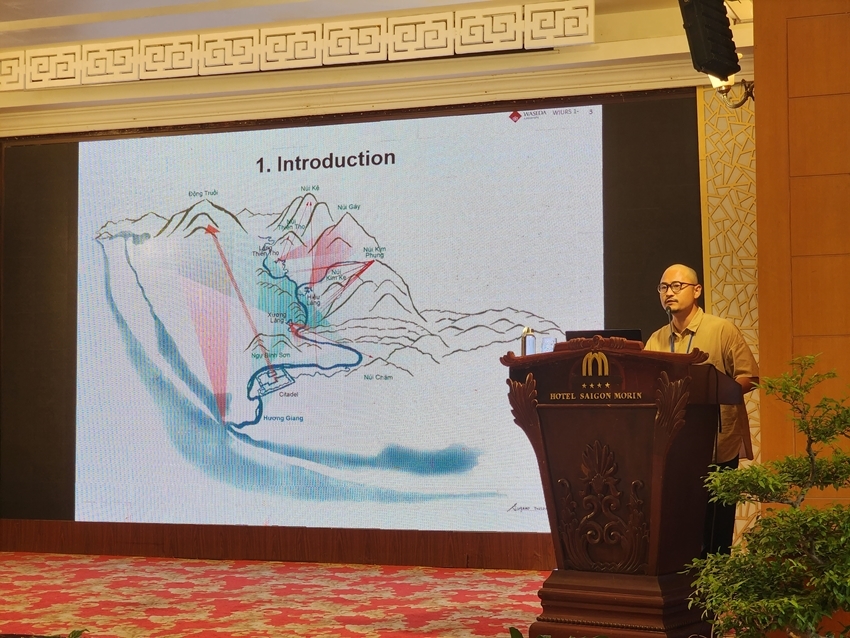 |
| A sharing about the environmental planning of the Emperors' mausoleums |
Besides, experts, managers, academics and researchers also exchanged their views on protecting the cultural landscape buffer zone for the purposes of protecting the integrity, maintaining and developing sustainably the values of culture, history, landscapes, and the environment; as well as developing plans for zoning the heritage protection zone for area II appropriately; and establishing an eco-tourism model at the mausoleums of the Nguyen Emperors.
The results of the seminar will complement the study of the project of planning, preserving, and restoring the Complex of Hue Monuments by 2030, with a vision to 2050. In addition, they will be considered to be added to the dossier for re-nomination of the Complex of Hue Monuments, with the criteria of Cultural Landscape, so as to once again honor the Complex of Hue Monuments as a World Cultural Landscape Heritage as recommended by the UNESCO and the Ministry of Culture, Sports and Tourism in the previous years.