ClockTuesday, 17/12/2024 18:10

Kim Doi dried noodle sheets

HNN.VN - Kim Doi village, Quang Thanh commune, Quang Dien district is known as a bustling place for producing dried noodle sheets during the off-season. Recently, with the support of mechanisms and policies from functional departments and the locality, the people of Kim Doi have invested more in machinery, expanded production with higher productivity and quality, and brought their products to distant markets, creating job opportunities for hundreds of local workers with stable incomes... Notably, dried noodle sheets in Kim Doi have recently been voted as a typical agricultural product of the province.

Luu Bao turmeric rice paperDuc Buu banh beo, banh nam, and banh loc craft village

Mr. Nguyen Van Khoa, Chairman of Quang Thanh Commune People's Committee, said that over the past period, many households producing dried noodle sheets in the locality have not only received support from functional levels and sectors in investing in equipment and machinery to gradually eliminate manual methods, but have also been supported in connecting with the market through fairs, exhibitions, and agricultural product displays... Thanks to that, the dried noodle sheets are now available in more than 20 provinces and cities nationwide, as well as in Laos and Thailand.

The mentioned success of Kim Doi dried noodle sheets, according to the village elders, is a result of the skillful hands and intelligence of the local people. They have been able to combine traditional methods with modern machinery and technology in each step of the production and processing. Through the photos captured by Minh Trung, the photographer, Thua Thien Hue Weekly would like to invite readers to visit Kim Doi dried noodle sheet village.
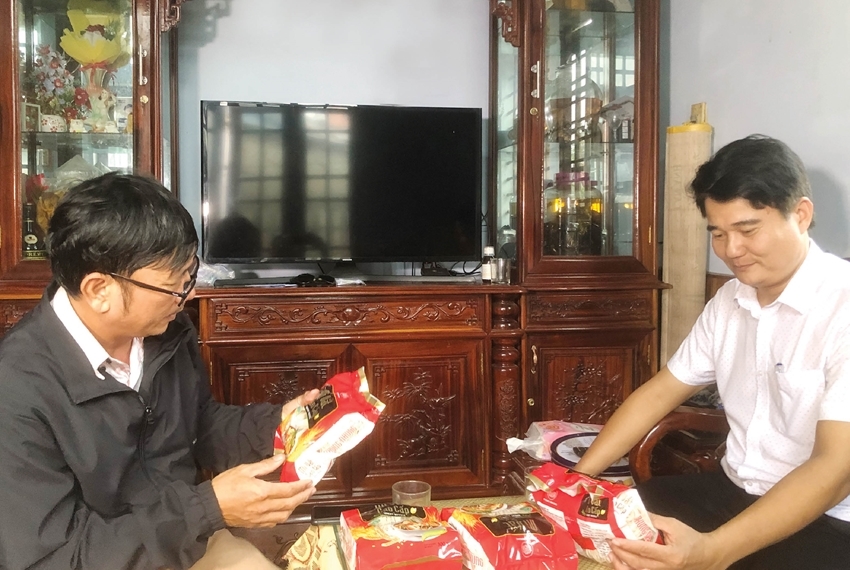
 Business owners were sharing and discussing the product designs
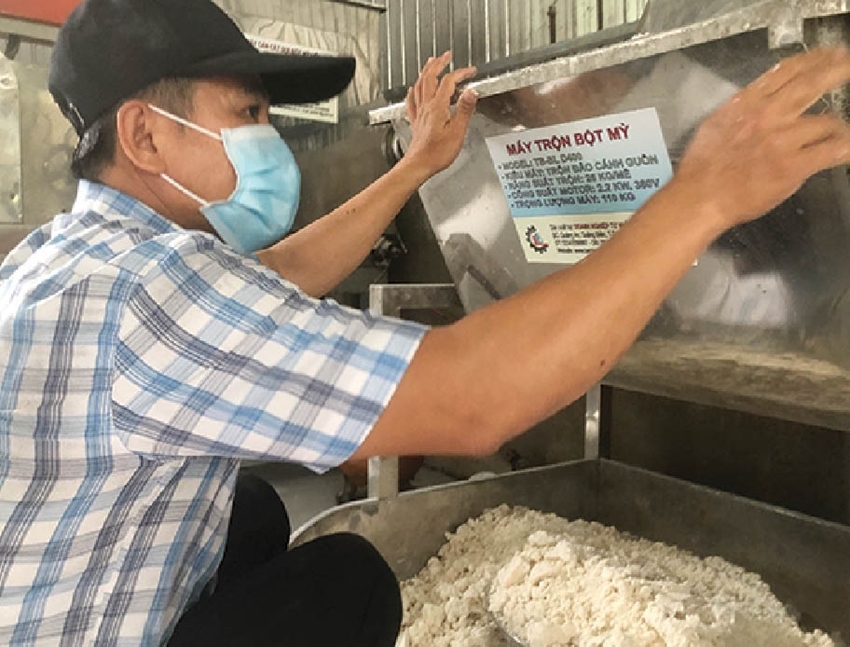
 Dough mixing machine replaces the previous manual method
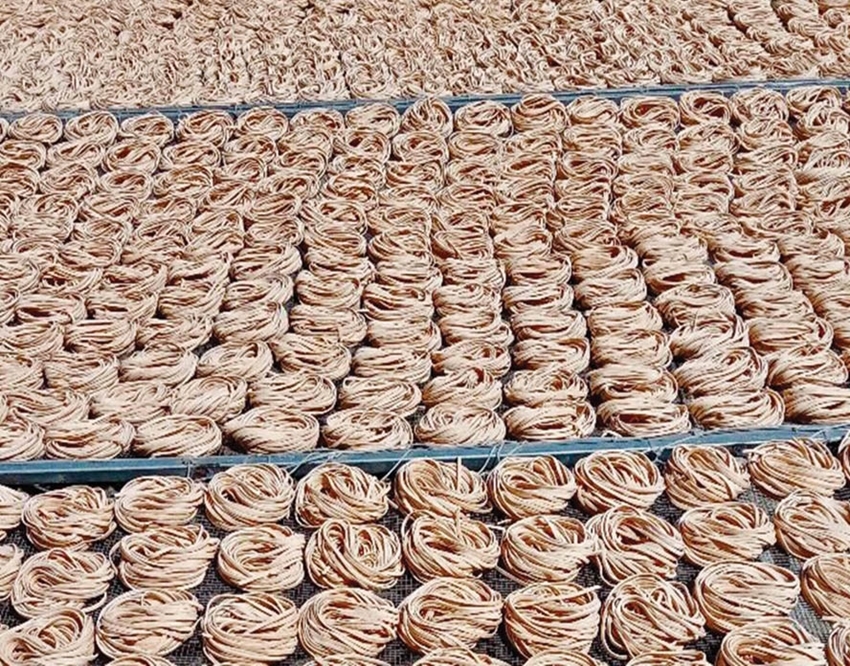
 Fresh noodles before being dried
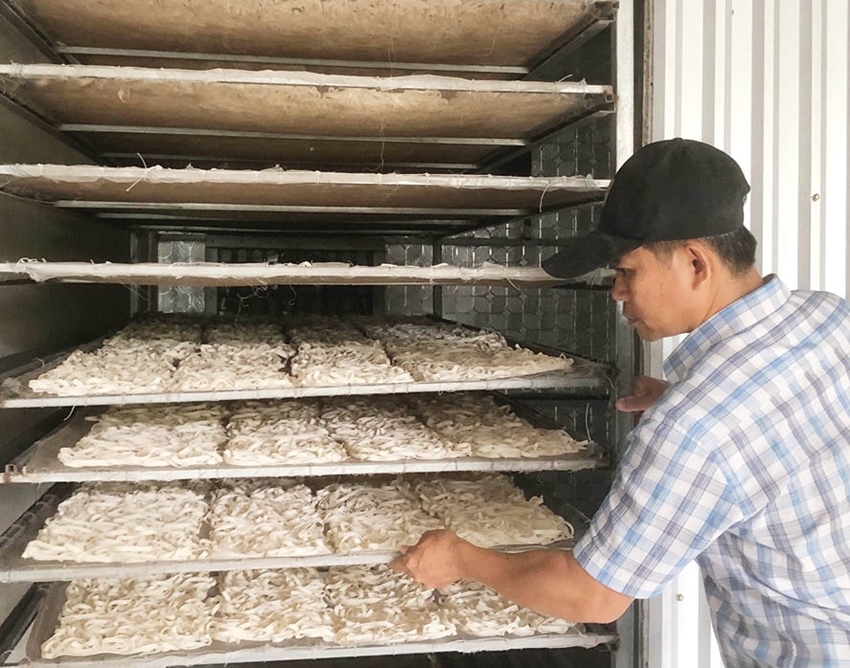
 Putting the noodles into an electric dryer
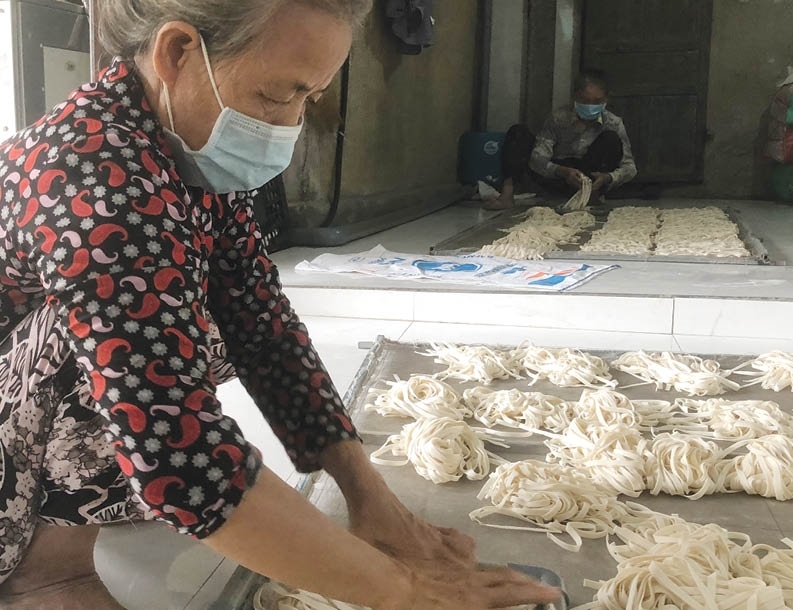
 Idle workers have jobs at the noodle sheet factory
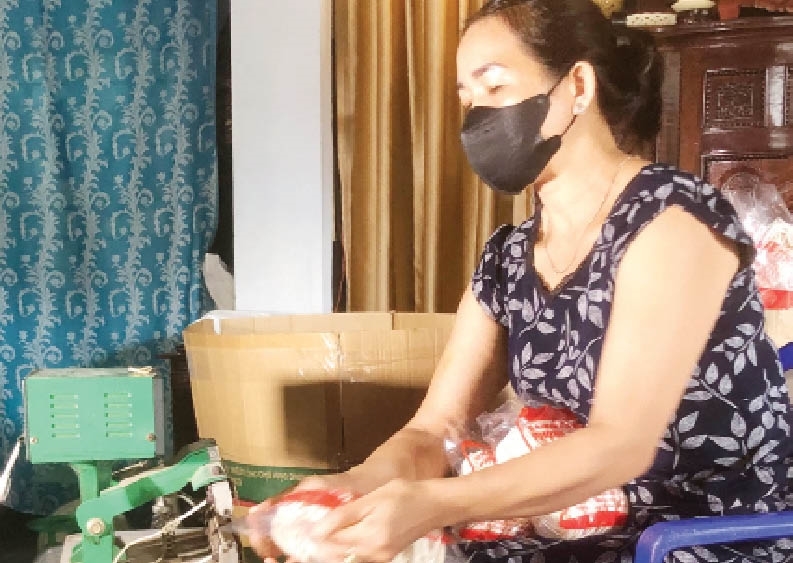
 Machinery assists in product packaging
By Thua Thien Hue Weekly
RATING
Be the first to review this post!
  Comment

YOU MAY CARE ABOUT

The artisan of the village

Born in 1987, Pa Co man Nguyen Xuan Bay from Ra Looc village - A Soc hamlet, Hong Bac commune (now A Luoi 2 commune) came to traditional music with a pure, instinctive love. “I learned by myself, I felt for myself, and I listened the rhythms that echoed from village festivals, through the hands and breaths of the elders, then practiced on my own,” Bay shared.

The artisan of the village
Co Tu people preserve the craft of making traditional drums

Going through many generations, the traditional drum-making craft of the Co Tu people has gradually faded, remaining only in the memories of a few elders. In Doi Village, Khe Tre Commune, artisan and village elder Vuong Van Cua is one of the last people still preserving the ancient secrets of making traditional Co Tu drums.

Co Tu people preserve the craft of making traditional drums
Green wall of a coastal village

That is the vast green casuarina forest that the people of Thai Duong Thuong village (formerly Hai Duong Commune, now part of Thuan An Ward, Hue City) planted decades ago to shield them from the winds, stop the sand, and protect the village. Amidst the vast sky and land, the casuarina trees grow lush and strong, becoming a sturdy shield, guarding the village from waves and winds, and the harshness of the sea.

Green wall of a coastal village
Towering tree of the village

For the Pa Co people in Ra Looc – A Soc Hamlet, A Luoi 2 Commune (a merger of Hong Bac, Quang Nham, A Ngo, and A Luoi township), village elder Nguyen Van Trinh is like an ancient tree.

Towering tree of the village
Fabric scraps tell the stories of the village

From scraps of fabric seemingly destined for the trash, two students: Dong Nguyen Nhat Minh (Grade 6) and Lai The Tai (Grade 7) from Khe Tre Town Secondary School (Phu Loc District) have assembled them into vivid collage paintings that tell the story of their village, inspired by a deep love for Co Tu culture.

Fabric scraps tell the stories of the village

LASTEST NEWS

Return to top