Men go fishing, women go to market
Walking through the villages along Tam Giang Lagoon in Hue City early in the morning, it is easy to spot women carrying shrimp and fish for selling. In shoulder poles or on the backs of motorbikes, baskets and containers hold fresh seafood just brought ashore from the lagoon. Following village roads, these women make their way from the countryside into the city to earn a living selling fish. Their daily journeys have become a familiar part of life in the communities along the lagoon.
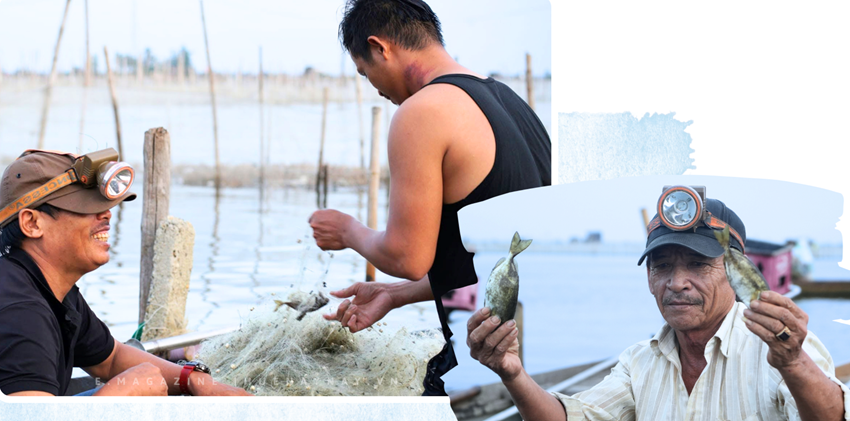 |
| The villagers have a saying: “Men go fishing, women go to market”. In other words, men head out onto the lagoon day and night to catch seafood, while women take the catches to markets to sell and earn money to support their families |
Located beside the lagoon, where shrimp and fish are abundant, Chuon village has many families whose livelihoods depend on fishing and seafood trading. The villagers have a saying: “Men go fishing, women go to market”. In other words, men head out onto the lagoon day and night to catch seafood, while women take the catches to markets to sell and earn money to support their families. Bringing in a net full of shrimp and fish is only part of the job; selling the catch and bringing the money home completes the cycle of making a living.
Having lived alongside the lagoon for generations, local residents have gradually learned to read the tides and understand the habits of different aquatic species. Their experience is summed up in the saying ‘Shrimp at dusk, fish at dawn’, reflecting their knowledge of species-specific behaviour and how aquatic resources change with the tides. Fishing thus became closely linked with trading, giving rise to a shrimp and fish trade that has passed from one generation to the next.
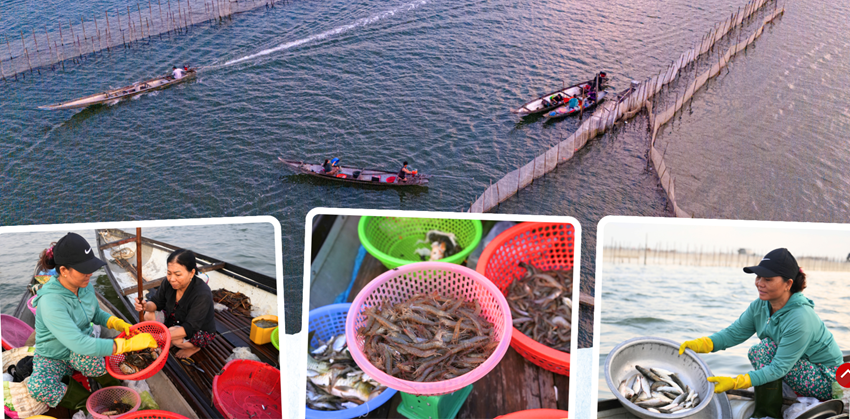 |
| Drawing on the time-honored wisdom that “Shrimp at dusk, fish at dawn,” fishing became closely linked with trading, and the shrimp and fish business developed into a livelihood passed down through generations |
For many women, selling fish began with accompanying their mothers to collect seafood and go to market. There was no specific moment when they officially entered the trade. Through helping their families, the work gradually became familiar and eventually turned into a livelihood. The nickname “the fish-selling village” is therefore more than a playful label. It reflects the local environment and the livelihoods of lagoon-side residents, evoking stories of tides, aquatic produce, and the way of life in these rural communities.
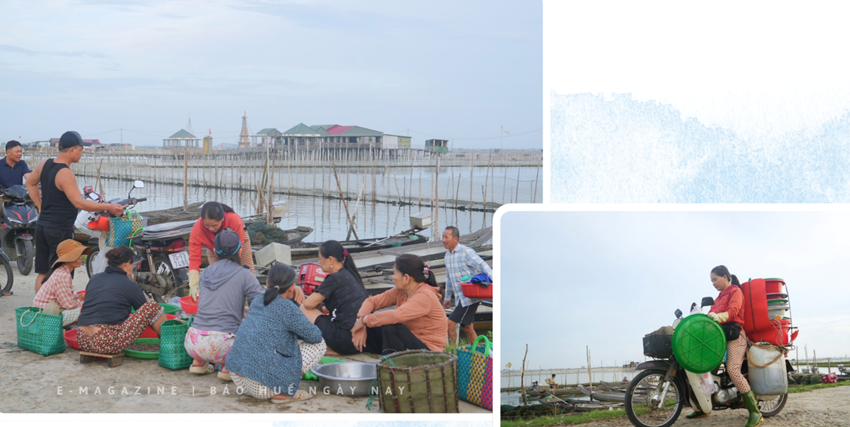 |
| ‘The fish-selling village’ is more than a playful nickname. It reflects the living environment and livelihoods of the communities along the lagoon |
Preserving a rural tradition
In the past, selling fish was the main livelihood for most women living around the lagoon. After a night of fishing, the men returned with fresh shrimp and fish, and the next stage of the work fell to the women in their families. They carried the goods on shoulder poles for shorter distances or loaded them onto vehicles for longer journeys. In this way, the lagoon region’s specialties travelled with them from their villages to the city.
Ms. Nguyen Thi Thau, age 78, from An Truyen residential quarter in My Thuong Ward, continues to work in the trade regularly. She began following her mother when she was just 17 or 18, and the job has now been part of her life for around 60 years. She remembers a time when Chuon Lagoon teemed with shrimp and fish. As early as 4 or 5 a.m., she would row out onto the lagoon to collect seafood for sale. Roads and transportation were far less convenient than they are today. In sunny weather, she transported her goods by bicycle or cyclo; during the rainy and flood seasons, she travelled by boat to take shrimp and fish to markets in the city.
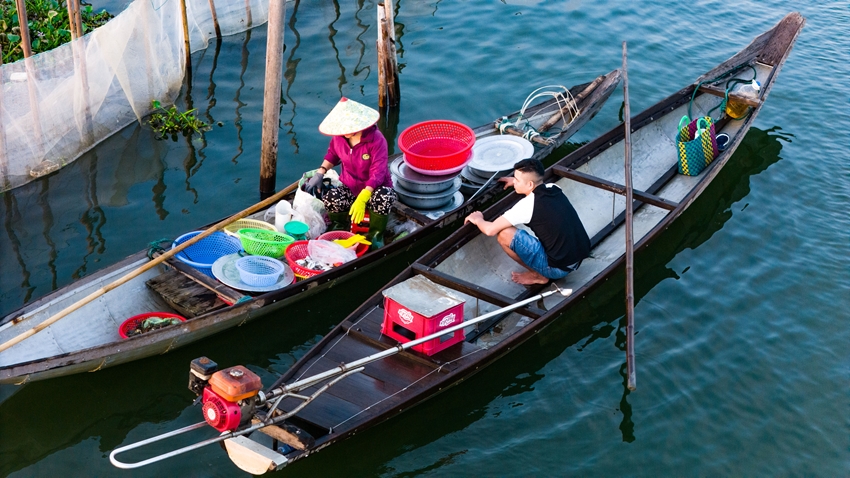 |
| As early as 4 or 5 a.m., women from the lagoon communities would row out to collect seafood for sale |
In her memories, the trade is inseparable from the changes in roads and transportation over the years. The work of collecting shrimp and fish and bringing them to the city has remained much the same, but the means of transport have changed with each era. Trips by boat during the rainy and flood seasons, along with journeys by bicycle or cyclo, recall just how arduous the route from the lagoon to the market once was. Now elderly and unable to ride a motorbike, Ms. Thau still cycles to the embankment at Chuon Lagoon every morning, where she waits for fishermen to return ashore and buys their shrimp and fish. At around 6:30 a.m., her son takes her and the seafood she has collected to the market. Once she has sold everything, he returns to pick her up.
After nearly a lifetime in the trade, Ms. Thau has seen the work change, but she is not ready to retire. She says she works first and foremost to earn a living, but after doing it for so long, it has become a habit. Staying at home would leave her feeling bored. Going to market allows her to meet fellow traders and regular customers, chat, and do business. To her, the market is more than a place to sell goods; it is also an opportunity to meet people she has known for years. Although she now needs her son's help getting around, she still collects the seafood herself and wants to continue working. Perhaps it is this simple pleasure that has kept her in the trade after nearly 60 years.
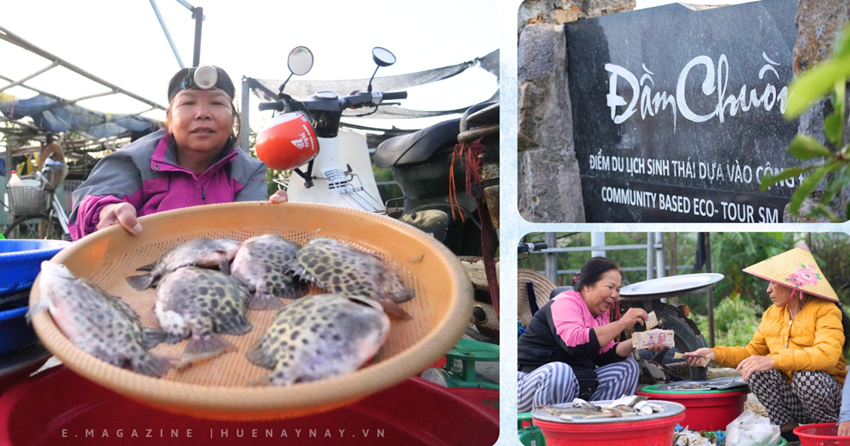 |
| Along with the women who sell them, the lagoon region's renowned specialties make their way into the homes of families and onto the tables of diners |
While Ms. Thau remains attached to the familiar rhythm of traditional markets, 37-year-old Huynh Thi Hoa represents a different face of the shrimp and fish trade today. Born into a fishing family, she grew up helping her parents, and before she knew it, selling seafood had become her livelihood. Hoa has continued her family's trade, but her generation has adopted new ways of doing business. Motorbikes have replaced shoulder poles, while smartphones have made it easier to contact customers and promote products. Fresh catches are no longer sold exclusively at markets; they now reach customers through social media as well.
Early morning, Hoa collects seafood and uses aerators to keep the shrimp and fish alive and fresh. She has set up Facebook and TikTok accounts, where she films videos of fresh, high-quality seafood, introduces her products, and sells directly to customers. The lagoon still supplies her with familiar local specialties such as rabbitfish, tiger prawns, mullet, and spinefoot, but now, customers can view the catch on their phone screens before deciding whether to buy.
The smartphone has opened up a new kind of ‘storefront’ for fish sellers, providing another way to reach customers. Footage filmed at the collection site allows viewers to see where the seafood comes from and confirm that the shrimp and fish are still alive. For Hoa, promoting these products also means introducing people to the place where she lives and where her family has worked for generations. The way she sells has changed, but her seafood still comes from Chuon Lagoon, and her working day still begins with collecting the morning's catch.
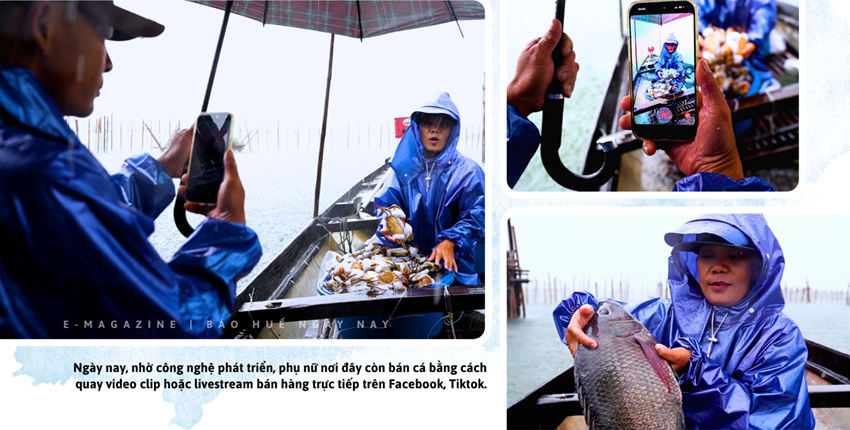 |
| Today, advances in technology have enabled local women to sell fish through video clips and livestreams on Facebook and TikTok |
Hoa shares her thoughts: “It can be pretty smelly as we spend all day handling shrimp and fish, but it is fun. I'm happy because so many customers support me, and because selling seafood is no longer as hard as it used to be. People have known the seafood from Chuon Lagoon for a long time, but when I film videos or livestream directly from the place where I buy it, customers trust me more and are more likely to buy from me”.
Despite having access to new tools and sales methods, those in the trade must still work to keep their products fresh, find buyers, and sell all the shrimp and fish they have collected. Getting around and communicating with customers have become easier, but the challenge of finding buyers still remains. The satisfaction of receiving customers' support is also the reward for the effort they put into each day's work.
Selling fish can be physically demanding, and business does not always go smoothly. Yet the trade continues to draw people in through its simple, everyday pleasures. The lagoon region's renowned specialties travel with these women into homes and onto dining tables across the area. Whether carried in baskets, transported on motorbikes, or promoted in online videos, the seafood allows these women not only to earn a living but also to bring the products of their homeland beyond their villages and to a wider audience.
From Thau's bicycle to Hoa's online sales videos, the fish trade in Chuon Village is changing the way it operates while preserving its familiar traditions. Every morning, fresh catches from the lagoon once again accompany local women to markets and customers. Amid the changes of modern life, the tradition of passing the trade from one generation to the next continues with each early-morning journey.
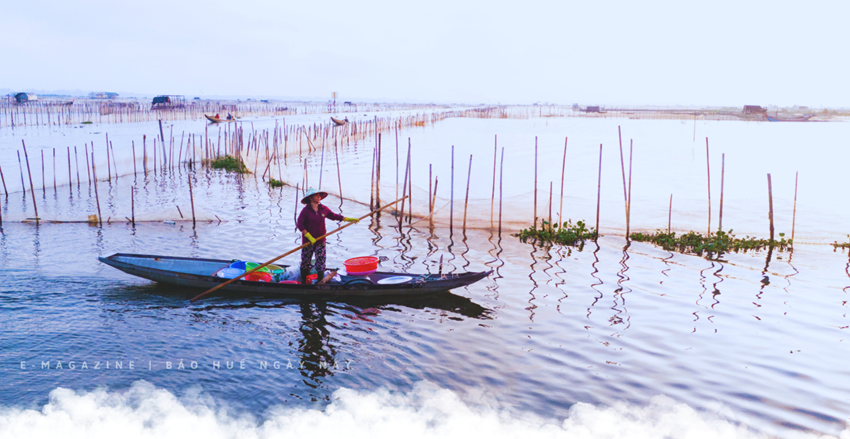 |
| Amid the changes of modern life, the tradition of passing the trade from one generation to the next continues with each early-morning journey |