 |
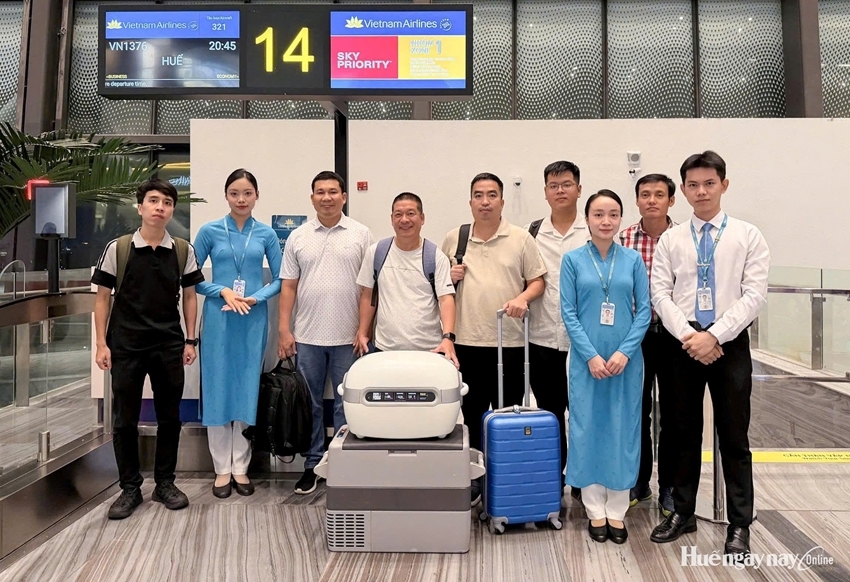
| The donor kidney was transported by air along Pleiku - Tan Son Nhat - Hue route, with two flight legs |
The two successful kidney transplants were performed at Hue Central Hospital on October 4th and 15th, 2026. These procedures further demonstrate the expertise of the hospital's medical team in organ transplantation and highlight the effectiveness of modern organ preservation technology in the retrieval, transportation and transplantation of kidneys from distant locations.
In the fourth kidney transplant performed using this technology, the recipient was a 12-year-old boy who received a kidney from a 26-year-old brain-dead donor in Hanoi. Following surgery, the transplanted kidney began functioning immediately, producing urine while the patient was still in the operating room. The boy produced approximately 3.000 ml of urine during the first 24 hours, with daily output subsequently remaining stable at 2.000 - 2.500 ml. He continues to receive postoperative monitoring, care and treatment.
Building on this success, the fifth kidney transplant marked a challenging cross-country organ transportation journey involving considerable distances and time constraints. The donated kidney came from a 22-year-old brain-dead donor at Hung Vuong Gia Lai Hospital.
To retrieve the precious donor organ promptly, Hue Central Hospital team traveled by car from Hue to Gia Lai overnight, a journey lasting nine hours. Immediately after the kidney was removed from the donor's body, it was placed in a LifePort machine for preservation before being transported by air along Pleiku - Tan Son Nhat - Hue route, involving two flight legs.
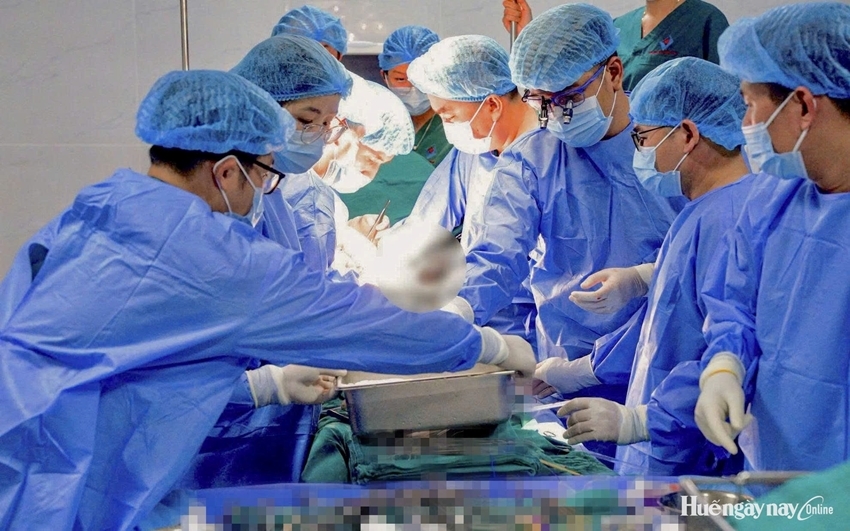 |
| Hue Central Hospital medical team performs an organ transplant |
The entire journey took approximately 35 hours and 30 minutes, covering more than 1.800 km. Given the interprovincial journey and the use of multiple modes of transportation, the transplanted kidney's cold ischemia time reached approximately 18 hours, marking a notable milestone in organ preservation and transportation in Vietnam.
Despite the lengthy journey, the transplanted kidney appeared pink and firm after blood flow was restored during surgery and began producing urine while the patient was still in the operating room. The recipient's kidney function is recovering well, and the patient's health remains stable. According to an update as of October 26th, both patients have shown positive progress and continue to receive monitoring and treatment at the hospital.
The success of these two kidney transplants demonstrates the important role of LifePort technology in organ preservation, particularly when donor organs must be transported from locations far from transplant centers. The technology helps maintain appropriate preservation conditions during transportation, facilitating transplant procedures and improving the chance for the transplanted organ to recover its function.