



 |
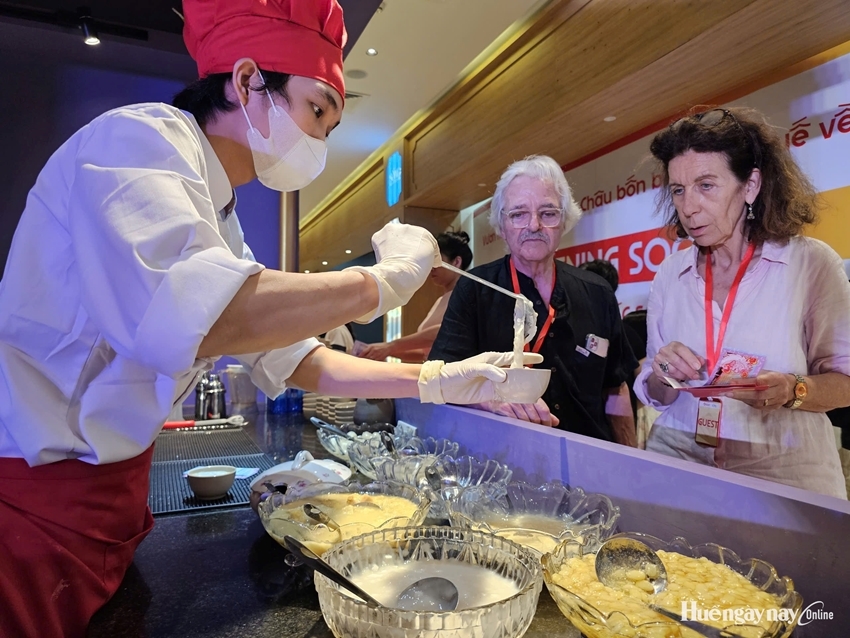
| Hue cuisine is regarded as a highly promising ‘creative industry’ |
On July 23rd, Hue City Historical Science Association held the seminar "Identifying Cultural Heritage in Hue Region".
Attending the event was Mr. Nguyen Quang Tuan, Member of the Standing Committee of Hue City Party Committee and Standing Vice Chairman of Hue City People's Council, along with representatives of government departments and agencies, researchers, scholars, and experts from universities, research institutes, management agencies, and organizations working in the fields of history and culture.
Featuring more than 30 presentations, the seminar focused on four main themes: Identifying the cultural heritage landscape, history, and identity of Hue; Tangible cultural heritage and cultural institutions; Intangible cultural heritage and Hue's spiritual life; and the preservation and promotion of Hue's cultural heritage in the context of new development.
Using Hue cuisine as a case study, Dr. Le Anh Tuan from the Central Institute of Culture, Arts, Sports and Tourism reaffirmed that it is an element of intangible cultural heritage that should not merely be preserved, but developed into a highly promising creative industry within the city's cultural development strategy.
Looking further ahead, he noted that Hue's participation in the UNESCO Creative Cities Network (UCCN) in the field of gastronomy would offer an effective balance between preservation and economic growth, as well as between creativity and development through international collaboration. According to Dr. Tuan, the value of Hue cuisine lies not only in its dishes but also in a ‘creative ecosystem’ encompassing ingredients, culinary knowledge, presentation, dining spaces, and artistic expression.
"At a time when connectivity has become an inevitable trend and a powerful driver of development, Hue should join the UNESCO Creative Cities Network in the field of gastronomy to create sustainable growth based on its culinary heritage - a unique cultural strength and resource. This would also represent a concrete step toward realizing Hue City's goal of developing cultural industries driven by tourism," Dr. Tuan said.
Drawing on the experience of cities that have already joined the UCCN, Dr. Le Anh Tuan added that, to ensure the network's objectives are effectively adapted to local conditions, Hue's Creative City of Gastronomy model should be built upon four key mechanisms: community-based preservation, creativity rooted in local traditions, education and knowledge transfer, and international cooperation.
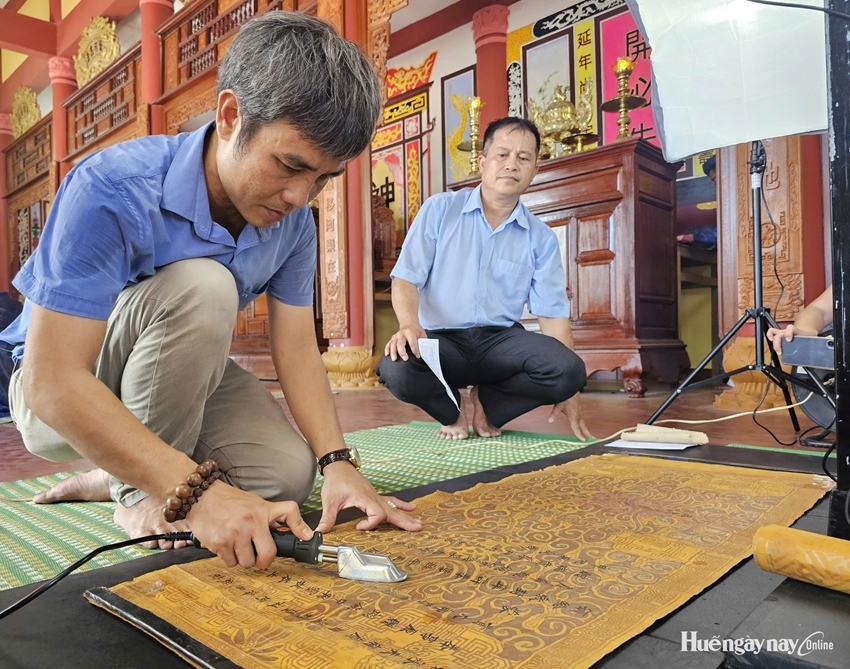 |
| Staff of Hue City Library conduct an inventory and digitization of Han-Nom documents |
In another presentation on digital transformation, Associate Professor Dr. Nguyen Tat Thang of the Faculty of History, Hue University of Education praised Hue City's efforts to digitize cultural heritage, libraries, museums, and sports resources.
According to Dr. Thang, Hue has made remarkable progress in heritage digitization in recent years. Notable achievements include the creation of digital databases for intangible cultural heritage and the integration of smart interactive technologies at heritage sites, museums, and collections of historical artifacts and documents… These initiatives have established comprehensive databases of information, images, and digital records to ensure the long-term preservation and promotion of cultural heritage.
However, the existing data remain fragmented, lack interoperability, and have yet to be integrated into a centralized database capable of supporting management, analysis, and decision-making.
"To maximize the effectiveness of digital transformation in cultural heritage preservation, digitized data must be connected with a variety of practical applications. This requires close collaboration between technology specialists and heritage conservation experts, along with coordinated training, implementation, and technology transfer," Associate Professor Dr. Nguyen Tat Thang shared.