



 |
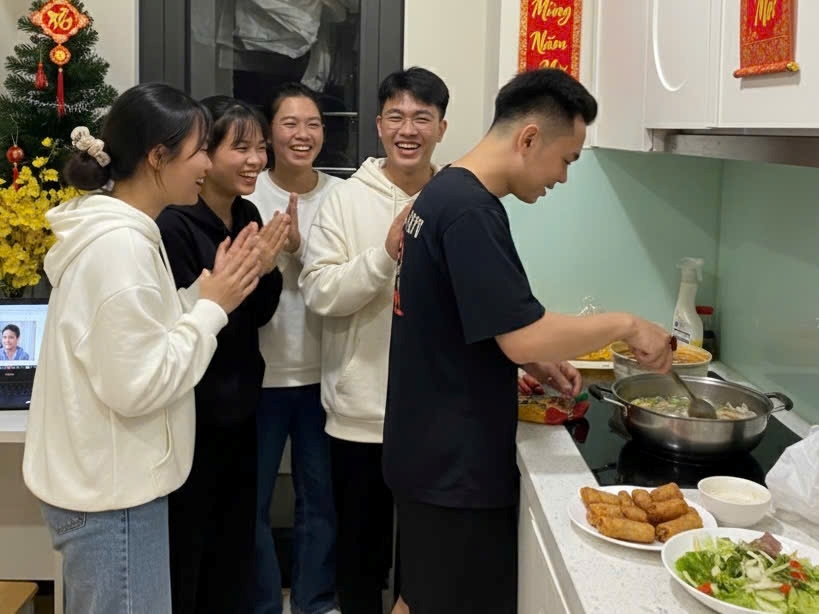
| Many students choosing to stay in Hue during Tet days |
At a boarding house on Ho Dac Di Street, the days leading up to Tet are notably subdued quiet and peaceful. Now and then, the faint click of a door unlocking or the soft scrape of a chair across the floor breaks the silence. Those who stay make use of the time to tidy their rooms, wash blankets, and sort their clothes. After a busy semester, wiping down a study desk or changing the bed sheets feels like a simple way to refresh the space ahead of the New Year.
Minh Tri, a sophomore from Quang Tri, has decided to stay in Hue through Tet. He said he registered for several holiday shifts at a cafe shop near the dormitory. “My hometown isn’t very far - I could return if I wanted to. But I’d like to stay and experience it. The café shop is also short-staffed, so working means earning some extra income,” Tri said with a smile.
Sharing the same boarding house row as Tri is Nguyen Thi Ngoc Han, a junior of the Faculty of Tourism from Gia Lai. Unlike Tri, Han chose to stay in Hue for Tet largely due to her circumstances. In previous years, despite difficulties, she always tried to return home. This year, she has chosen to remain, working part-time while taking time to rest after a stressful exam period.
“Tidying my room at night, the quiet make me feel a little lonely,” Han said. Still, she reassures herself. In Hue during Tet, life goes slow, the streets are peaceful, and the atmosphere is far less stifling than she once expected. Her mother at home offered few reminders, simply urging her to take care of her health and to call if anything comes up.
A group of students staying on at the boarding house gathered to cook a small year-end meal, a simple get-together before Tet. There were no elaborate dishes, just a few bowls of vegetable soup and a plate of fried eggs. “We all stood in the kitchen together, cooking and chatting, and it somehow felt warm”, Tri said. For him, staying is not because he cannot return home, but because he wants to experience a clearer sense of independence during a special time of the year.
However, as friends head home one by one and social media fills with images of family reunions, the sense of emptiness may become more pronounced. Both Tri and Han said they had anticipated that. Staying was a considered choice, and they were prepared to accept the quiet moments that came with it. “The most important thing is staying in touch with family,” Tri said. Han believes that sometimes a single timely phone call is enough to remind her she is not truly alone.
Hue is never a noisy city. In the days leading up to Tet, it slows even further. In the afternoon, sunlight stretches across tree-lined streets, and a gentle breeze drifts in from the river. A few students stroll around, taking end-of-year photos in ao-dai. Some stop by their familiar cafés, lingering longer than usual, watching the streets during a rare stretch of time free from classes or exams. The rhythm of life seems to soften, allowing each person to feel more clearly the place they are living in.
Staying in Hue for Tet can be seen as an experience in independence for students: planning their own holiday schedule, managing expenses, and facing their emotions on their own. In student groups online, posts have begun to appear inviting others to join early-year volunteer activities, visit pagodas to pray for peace, or simply cook and talk together. These small acts may not make Tet as lively as it is back home, but they are enough to keep the final days of the year from passing in silence.
Later, when university life comes to an end, many may no longer have the chance to stay in Hue for Tet in this way. Yet the memories of a spring in a small boarding room, of a simple New Year’s Eve meal with friends, or of Tet greetings exchanged through a phone screen will likely linger for a long time. For many students, these imperfect Tets become milestones marking their first steps into adulthood.