



During his lifetime, President Ho Chi Minh spent nearly 10 years living, studying, and experiencing in Hue (from 1895 to 1901, and from 1906 to 1909). It was this period that left deep memories, contributing to shaping the ideology, character, and aspiration for national liberation of the beloved leader.
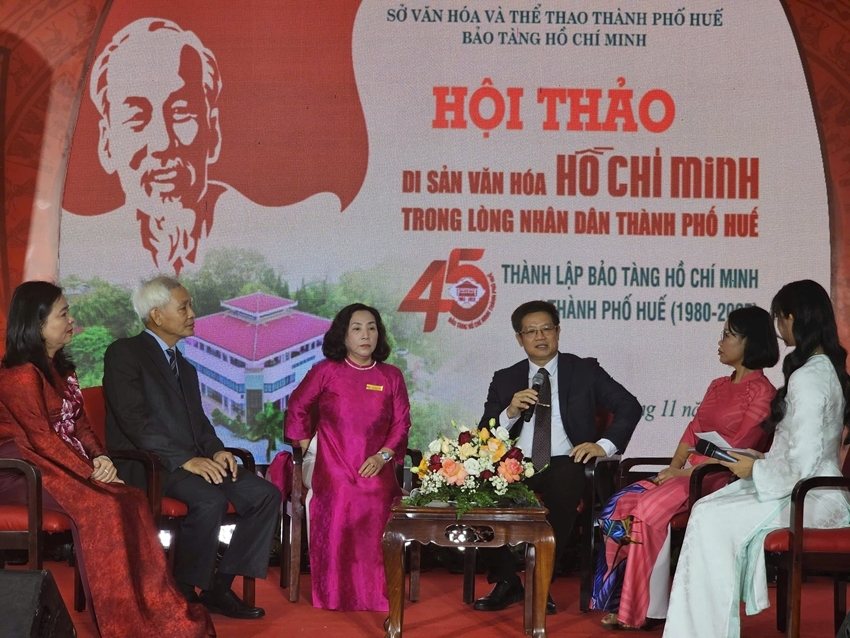 |
| Delegates shared their views at the seminar |
Today, the “red addresses” associated with Him are carefully preserved in Hue City. On December 31, 2020, the Prime Minister signed Decision No. 2280/QD-TTg recognising the System of Relics commemorating President Ho Chi Minh in Thua Thien Hue (now Hue City) as a Special National Relic site.
According to Dr. Pham Thi Thanh Mai, Deputy Director of the Ho Chi Minh Museum, in the 45 years since its establishment, the Ho Chi Minh Museum in Hue City has excelled in professional tasks, ranging from collecting to promoting the value of Uncle Ho's heritage in Hue. Notably, the Museum is one of the highlights within the system of Ho Chi Minh Museums nationwide, with many outstanding and impressive exhibitions.
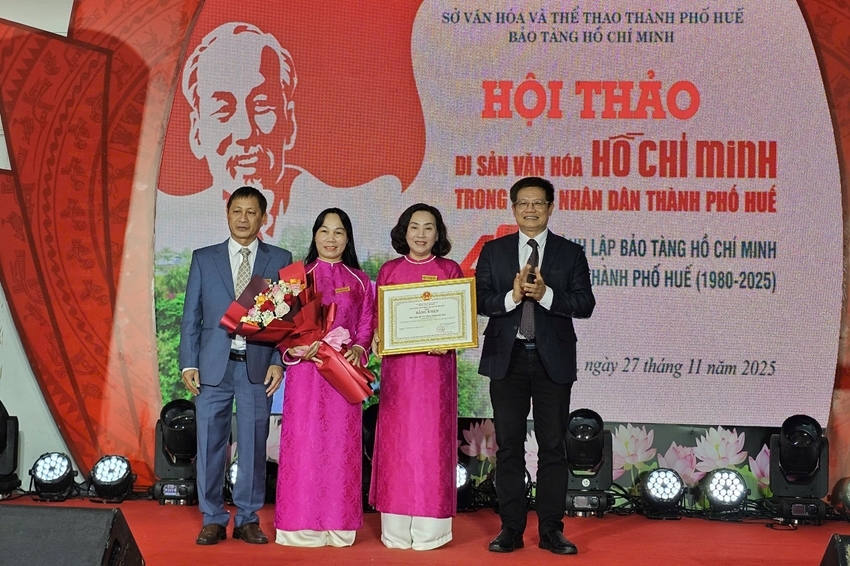 |
| The Board of Directors of the Ho Chi Minh Museum received a Certificate of Merit from the Chairman of Hue City People's Committee at the seminar |
Over the past 45 years, the Ho Chi Minh Museum in Hue City has continuously innovated its content and display methods. From a simple and small exhibition house on the bank of the Huong River, it has now become an attractive cultural and historical destination. The Museum is visited by generations of Party members, students, and domestic and international visitors as a “red address” for education on Ho Chi Minh's ideals and morality.
The Ho Chi Minh Museum in Hue City is not only a cultural institution, but also a comprehensive management model - connecting the conservation of tangible objects (relics, and artifacts) with intangible heritage (memories, ideology, and moral value of Ho Chi Minh). Heritage management in the Museum follows a direction of “vitalization”, meaning not only preserving, but also “activating” heritage value through propaganda, education, experience, tourism, and community interaction activities.