



 |
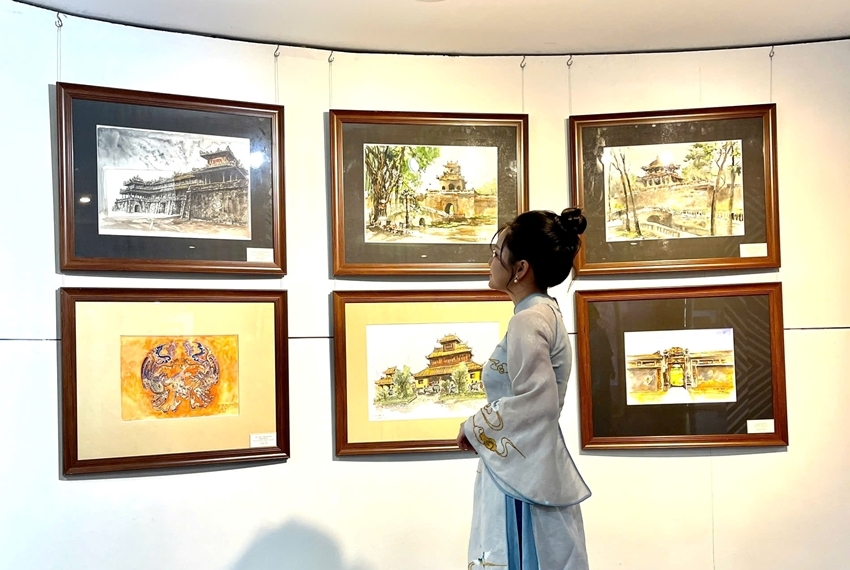
| A corner of the exhibition space showcasing sketches about Hue. Photo: H. Y |
More than 150 selected art works from a collection of nearly 1,500 sketches about Hue, owned by Hue Museum of Fine Arts, are on display at Da Nang Museum of Fine Arts (78 Le Duan, Hai Chau District, Da Nang). This is the result of years of dedicated work by many architects, artists, and art lovers from the Hanoi Urban Sketching Group, as well as visual artists from Hue.
The program also features an exhibition and performance of Hue traditional ao dai with the theme “Ao dai and heritage”, and an activity to learn about and experience woodblock printing of patterns from the Nine Dynastic Urns of Hue, and Sinh village paintings.
 |
| A corner of ao dai exhibition |
Ms. Dinh Thi Hoai Trai, Director of the Hue Museum of Fine Arts, hopes that these events will provide Da Nang residents and visitors with an emotional experience and a colorful picture of the culture, history, artistic architecture, natural landscapes, and people, etc., of Hue Ancient Capital. At the same time, they will create an interesting and meaningful “gathering place” for people who share a passion for art and a deep respect for heritage. “The exhibition not only helps to strengthen the cultural connection between Hue and Da Nang, but also opens up a new, approachable, and creative way to preserve and promote the cultural heritage values of Hue Ancient Capital through visual arts,” shared Ms. Trai.
The exhibition runs until August 22.
On the same morning, representatives from the Hue Museum of Fine Arts also attended a seminar on “Innovating and improving the quality of thematic exhibitions at Fine Arts Museums in Vietnam”. The seminar was held in Da Nang, and included representatives from four public fine arts museums across the country, including the Vietnam Museum of Fine Arts, the Hue Museum of Fine Arts, the Da Nang Museum of Fine Arts, and the Ho Chi Minh City Museum of Fine Arts. At the event, representatives from the museums shared their experiences, exchanged professional knowledge, and sought practical solutions to improve the quality of thematic exhibitions to better meet the public's cultural needs, and contribute to the development of the cultural industry in the current period.