That row of trees together with the villagers overcame countless storms and floods, from the 1999 historic flood to the 2020 stormy days. The row of trees is seen as the "shirt" of the village, protecting the village for years.
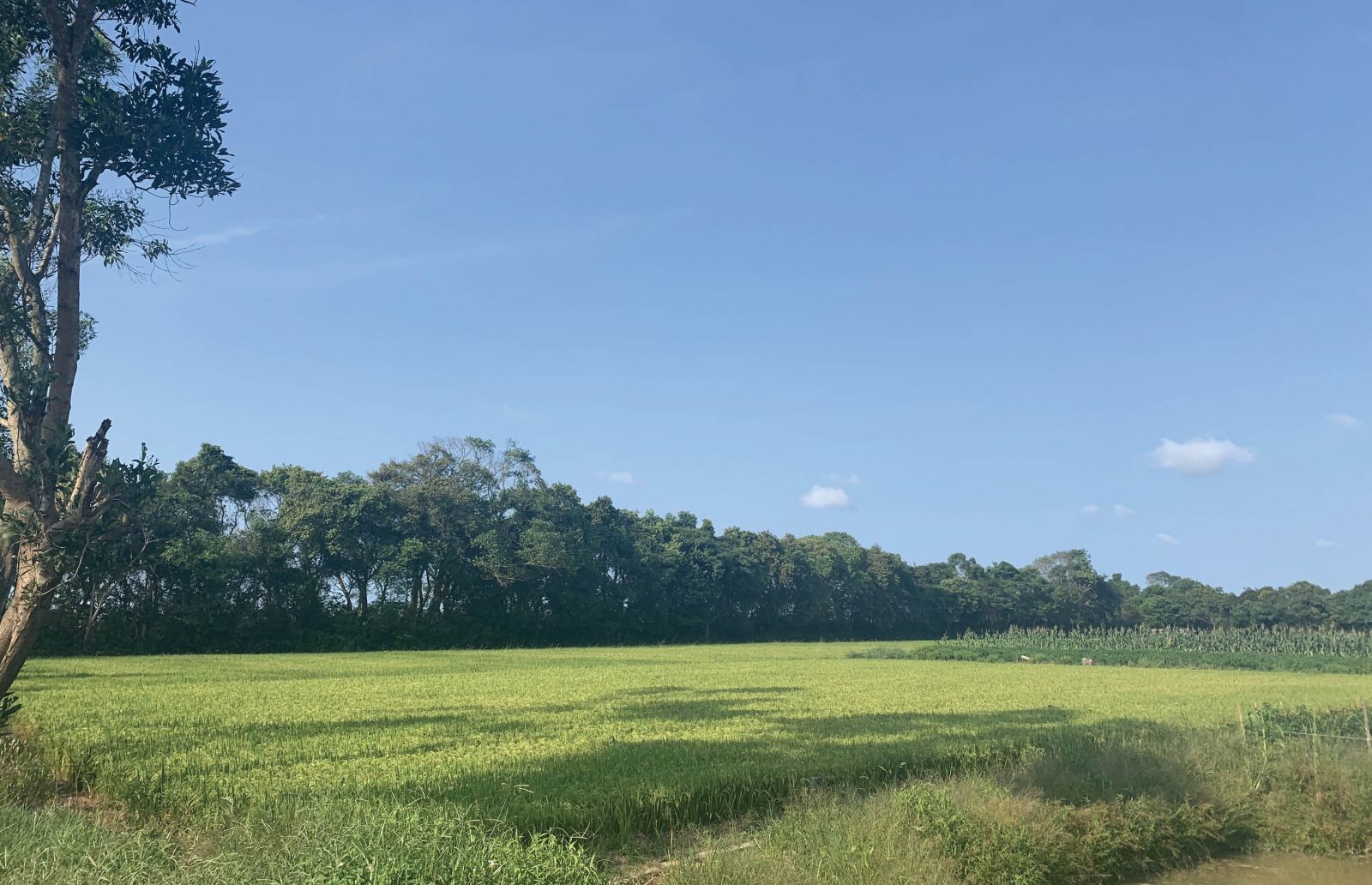
From afar, the row of trees looks like a solid wall
"The shirt" keeps the village
About 50km north of Hue City, Pho Trach Village, Phong Binh Commune, Phong Dien District stands out from afar with thousands of ancient trees surrounding the village from west to east with a length of over 3km. The tree row includes many varieties of trees such as banyan, stream barringtonia (also known as mưng), ficus benjamina l…The trunks which are tens of meters high take two or three people to hug.
The tree fence stands like a "rampart", preventing water from flowing into the village every rainy season, preventing wind from bringing sand from the sea every summer. Therefore, the people's buffaloes and cows also partly avoid chill and wind in the face of extreme cold, harmful cold. That "shirt" plays a big role in regulating the temperature of the village, so it is cool in summer and warm in winter.
Mr. Tran Van Chuc, former Deputy Secretary of Phong Binh Commune, is the son of Pho Trach Village. Sticking with the village, with the thick tree fence for nearly 70 years, he has witnessed the ups and downs of this village.
He recalled, “In the last flood, the water rose quickly and flowed swiftly. Pho Trach Village is located in a low-lying area; apparently, more than 500 households had no time to manage. However, thanks to the ancient tree fence acting as a dyke to block water, the people were promptly evacuated to the high area. Even a few villagers were swept away by the flood, but thanks to the tree fence blocking the swiftly-flowing water current, they opportunely clung to the tree trunk, so they were unharmed.
After the flood, the villagers flocked to the tree fence and saw that the tables, chairs, roof tiles, books, notebooks were swept away by the flood water and stuck at the trees along the village.
.jpg)
Mr. Tran Van Chuc beside the village's precious row of trees
I don't know when Pho Trach Village’s image has been associated with its ancient trees. The legend has it that in 1365, during King Le’s reign, the mandarin, who gave birth to the village when accompanying the influx of people to Thuan Quang area for reclamation, planned to turn the islet encircled by swamps into a settlement.
After that, he entered the imperial court as a medical mandarin. Every time he visited the village, he encouraged his descendants to plant trees and offered a reward: "Whoever plants a lot of trees will be rewarded with rice and clothes."
The villagers acted upon, embanked, planted trees on a dyke surrounding the village and received a huge amount of rice, but no shirt was seen. A few years later, when the tree row had grown, the medical officer chose the frosty time to revisit the village. He rode a horse to inspect along the dyke, from the start to the end of the village. From the outside of the village, the wind was blowing very hard, but when he entered the village, it got warm.
At that time, the villagers suddenly realized that the "shirt" he had promised to reward was the row of thick trees he encouraged the villagers to plant. So from then on, the villagers called the road along the forest of trees the "mandarin road" or the "mandarin-offered shirt."
It's been more than 600 years, but the villagers have set up the temple in gratitude to the royal medical mandarin who gave birth to the land and especially helped the people "make a shirt" for protecting the village.
Another legend says that, in 1789, the mandarin of Tay Son Dynasty Tran Van Ky was originally a son from Van Trinh Village (Phong Binh Commune) adjacent to Pho Trach Village. After returning from the battle and witnessing the destruction of the village due to rain and storm, he instructed the two villages’ people to build a high dike and plant stream barringtonia trees to block the wind.
“Stream barringtonia trees are inherently resilient, unbroken to strong winds. The canopy which is wide with layer after layer creates a solid barrier to wind and water," said Mr. Chuc.
Gradually, the tree row became green; more and more birds came to nest so they accidentally brought more varieties of plants to enrich the village's tree fence. Since the birth of the tree row, the climate in the village has become fresher. The village has no longer been threatened by storms, floods and sand encroachment from the sea. The villagers were grateful to the famous general Tran Van Ky, so they built the temple to worship the son who had contributed to the village.
The “shirt” preserved
“The villagers make much of the row of trees that keeps the village. As a child, my friends and I, who passed the road, in no way dared to injure trees or branches. The village had the regulation on tree destruction prohibition. If anyone accidentally violates it, he will be considered to be guilty to the village. His family will be fined 30 lashes and have to offer a pig at the village communal house,” recalled Mr. Chuc.
Cutting down trees has so far been a taboo; the village custom has been preserved until now and included in the village's regulation: “No one is allowed to cut down the village's trees. If caught red-handed, he will be fined from two to five million dongs. The fined person must carry a tray of betel and areca, wine on his head to the village communal house to make an apology.
More interestingly, not only the elderly in the village but also the young people are anxious to preserve and develop the "shirt" of the village.
Ms. Nguyen Thi Xuan Huong, from Pho Trach Village, said that nearly 15 years ago, the village lacked fund to repair and renew the village communal house. at that time, the price of stream barringtonia trees was exorbitant. If the trees were cut down and sold, hundreds of millions or even billions of dongs could be earned.
However, the villagers were almost not unanimous. Some small traders, carpenters, builders tried to work a little more, save every penny for the fund of building the village communal house. Some people doing business far away, upon hearing of the news, quickly returned to the native village to contribute fund to repairing the village communal house together with their relatives, and resolved not to sell the tree on the road.
Every year, the village also often organizes the festival in the village communal house for the purpose of reiterating the tradition and retelling the legend of the village's "shirt" formation to children and grandchildren.
Aware of the importance of the tree row, a self-management team, mainly young men in the commune, was established by Phong Binh Commune for many years. Rain or shine, they regularly patrol around the village to keep the precious tree row and prevent theft.
“In recent years, there have been constant rain and storm, so the villagers are very afraid. They have neither destroyed trees nor cut down precious trees for sale despite the great value of these trees. For people, the value they get back from these trees is far more than the money value,” said Mr. Chuc.
Story and photos: Dang Trinh