 |
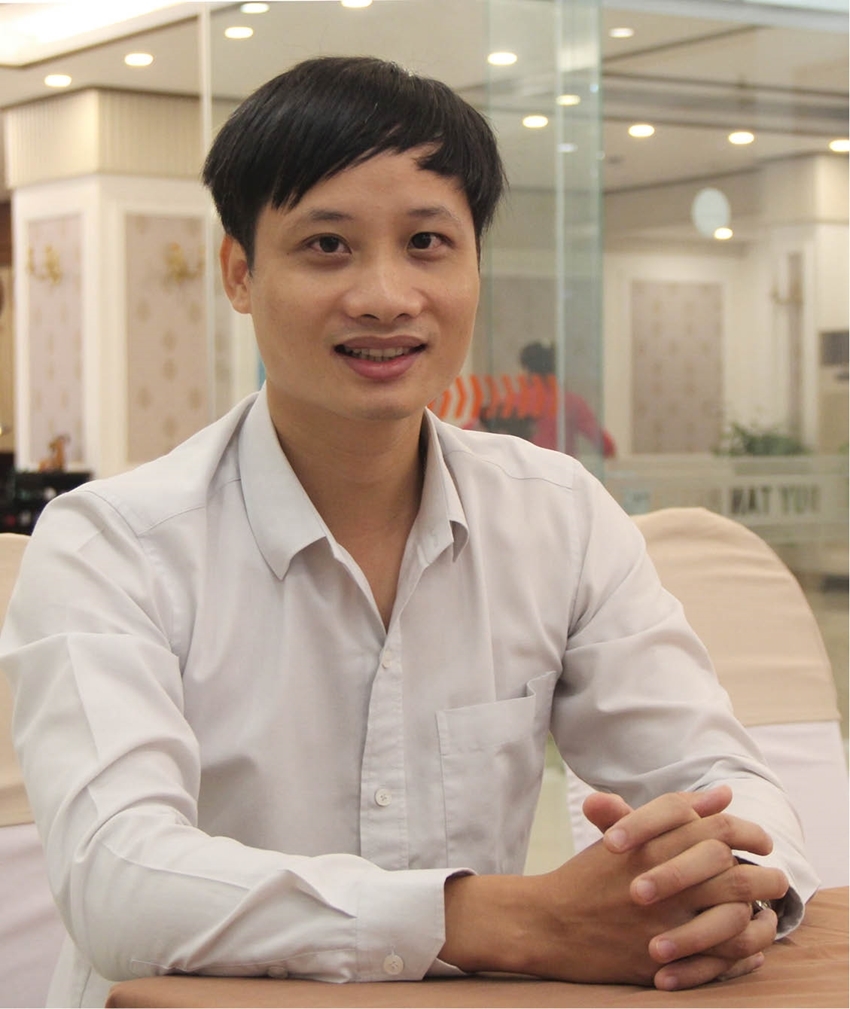
| Dr. Tran Van Dung |
That is the suggestion by Dr. Tran Van Dung (Vice-Chairman of Thua Thien Hue Folk Arts Association,) who has spent many years researching Phu De in Hue. The database will serve as the foundation for the relic management, categorization and protection. It is also the legislative basis for restoration, embellishment and promotion of their values in the contemporary context.
In a talk with Thua Thien Hue Weekly, Dr. Dung talked about what had led him to studying Phu De in Hue:
My house is on the slope of Nam Giao. At the time when I was a student, I went on Phan Dinh Phung Street along An Cuu River every day. Residences of princes and princesses of the Nguyen dynasty with mossy gates and beam houses behind on that street deeply impressed me.
“That impression was the impetus that urged me to spend time researching and publishing many articles about Phu De. In 2020 I successfully defended my doctoral thesis entitled “The Heritage of Phu De of the Nguyen Dynasty in the Present Urbanization Context in Hue.” Gradually, it has become a passion in me without knowing.”
What difficulty did you meet with when you researched Phu De?
Today under the influence of urbanization and the weather as well as restrictions in protection and management, many Phu De have been changed away from the pattern of traditional beam houses.
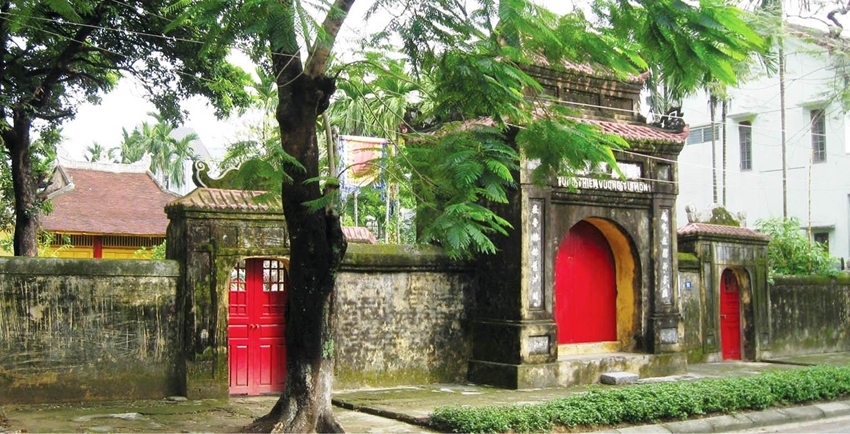 |
| Phu Tung Thien Vuong (Tung Thien Vuong’s Residence) on Phan Dinh Phung Street, Hue City |
Studying about Phu De is therefore not easy. Most of them no longer keep their documents and artifacts. Many precious documents in different historical periods have even left Vietnam for all around the globe. Many seniors knowledgeable about Phu De have passed away.
As a member of the younger generation, how did you approach information and materials of the previous generations? And what is the direction for your studies?
It is true that I am a descendant who pursues studying Hue culture in general and Phu De in particular. Those who have studied Phu De before me are Phan Thuan An, Le Quang Thai, Le Duy Son, Assoc. Prof. Dr. Nguyen Van Manh, Dr. Tran Duc Anh Son, Dr. Phan Thanh Hai, etc. They have written many valuable articles about Phu De which I regard as a useful source of documents for me to inherit and to develop.
At this point what do you think about the value and role of Phu De as part of the whole heritage city of Hue?
In the early 19th century, after the unification of the country and the establishment of the Nguyen dynasty, emperor Gia Long chose Hue to be the imperial capital, giving rise to a variety of typical citadels, palaces, tombs, shrines, palaces, esplanades, residences, etc. There were hundreds of Phu De in Gia Hoi-Cho Dinh, Vy Da, Kim Long, Phu Cam, etc.
Today in Vietnam Phu De can be found only in Hue. They are regarded as lively cultural heritage and really become an exclusive specialty in Hue architecture.
Phu De are categorized into 3 types of heritage: tangible, intangible and documentary. Phu De are also where the court culture and the folk culture meet, thereby contributing to the formation of the personality of Hue people including their elegance and delicateness. Although the appearance of Phu De has changed due to the urbanization process, there remains some with many historical, architectural and artistic values which need studying, conserving and promoting.
Among the Phu De which you have studied, which one attracted you most and which one made you worried most? Why?
The well-known Tuyen Hoa Vuong’s Residence located at 31 Tran Hung Dao Street (Dong Ba Ward, Hue City) both fascinated me most and made me worried most.
In 2016, I saw a documentary photo taken by the French of a beautiful construction which combined the two architectural styles, Western and Eastern, accompanied by a note saying “1077. AN NAM - Hué - Palais du Prince Tuyen-Hoa, frère du Roi” (Prince Tuyen Hoa’s residence, the king's brother) posted on a social network. That photo made me and many others very surprised, and we were impressed with a construction which had never been mentioned before in any documents.
After that, there appeared many conflicting ideas about its owner and history. Many people thought it was the photo of Phung Hoa Cong’s residence, which later became Cung An Dinh belonging to Prince Buu Dao (i.e., Emperor Khai Dinh later.) The two residences had many features in common in architecture. They added that maybe the French photographer made a mistake when he wrote Tuyen Hoa instead of Phung Hoa on the picture.
After researching, I published an article on Song Huong Magazine (Special Issue 22 in September 2016) identifying it was the photo of Tuyen Hoa Vuong’s residence belonging to prince Buu Tan (i.e., the 9th prince of emperor Duc Duc), not Cung An Dinh. The article was later awarded by Song Huong Magazine in 2016.
At that time Tuyen Hoa Vuong’s residence had changed a lot in appearance. What left were just the main house and the gate which were both in very bad conditions.
What do you think if Phu De will be regarded as a potential tourist product?
According to the Resolution of the Politburo to 2030, with a vision to 2045, Thua Thien Hue will be built and developed into a centrally-governed municipality on the basis of preserving and promoting the value of the heritage of the ancient imperial capital and the Hue cultural identity with special cultural characteristics, heritage, ecology, landscape and environmental friendliness with tourism as a key economic sector.
In my opinion, in order to develop tourism in the province, it is necessary to have typical original products based on the potential cultural strengths which Hue possesses. And Phu De of the Nguyen dynasty deserve to be a potential tourist product which attracts visitors both domestic and foreign.
There, visitors will have interesting experiences through stories about the history, culture, architecture and everyday life of princes’ and princesses’ descendants who are residing in Phu De.
In order to do this, it is necessary to have an effective combination between conservation and value promotion and the heritage tourist model introducing Phu De in Hue. This will contribute to the growth of economy and society in the province and introducing and promoting Hue culture and tourism.
However, the exploitation of Phu De for tourism potentially exerts negative effects on Phu De themselves. It thus requires great effort and close cooperation between the authorities and tourist companies, especially the consent of the people who are directly managing and keeping Phu De.
Thank you, sir.