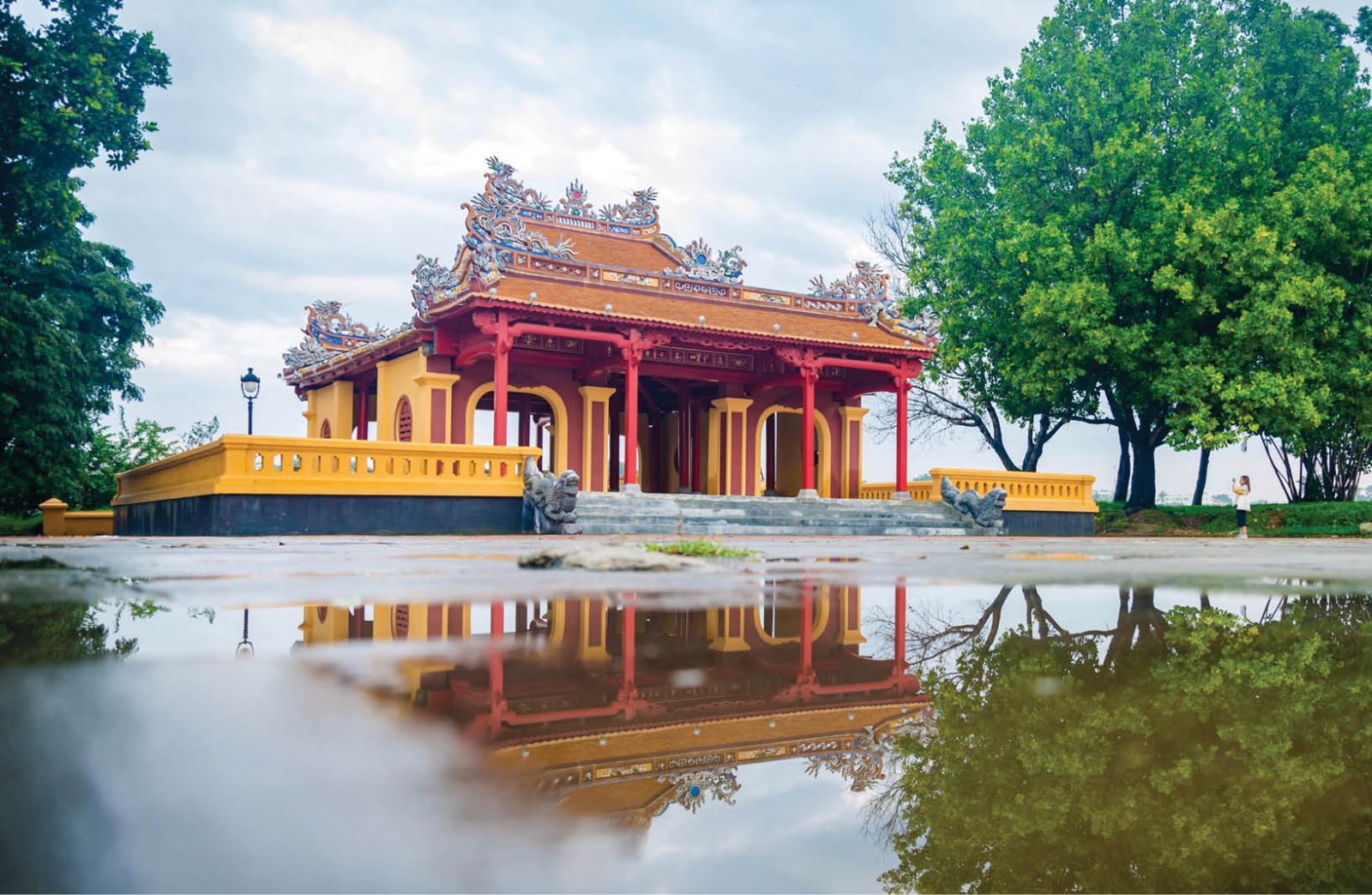
Nghinh Luong Dinh after being repaired. Photo: Dang Tuyen
With his solid, intensive and well-trained knowledge and rich practical experience, Prof. Hoang Dao Kinh turns his seemingly dry studies into lively and attractive ones which give readers a nice surprise. As for him, “monuments must be treated in a cultural manner." It is his human and consistent view that runs through the book.
“In my years of working in conservation, I have some understanding of the Hue architectural heritage. But it has never been sufficient,” confided he. It is the modest way of expression of a mature researcher who has been accompanying for more than 40 years (since 1978) the conservation and restoration of Hue cultural heritage (from surveying and preparing projects to restoring, developing and flourishing today).
He has therefore a profound and well-rounded understanding of Hue architectural urban heritage. The evidence is that up to 6 out of 46 articles in the book are exclusively about Hue, all of which were written with his care, concerns and heart.
Although the articles were written more than ten years ago, their content is still fresh and suggestive in accordance with the Politburo's Resolution No 54-NQ / TW about building and developing Thua Thien Hue into a municipality on the basis of preserving and promoting the value of the heritage of the former imperial capital and the Hue cultural identity.
With his access to the architectural heritage, Prof. Hoang Dao Kinh argues: “Identity is not a formal concept. It has no purpose in itself. Identity in architecture can only be created when we master the real quintessence of our culture, when we fully understand and meet the needs of the contemporary society and people, when we equip ourselves with knowledge of the world architecture, when we are constantly creative and go from the "I" in creativity.”
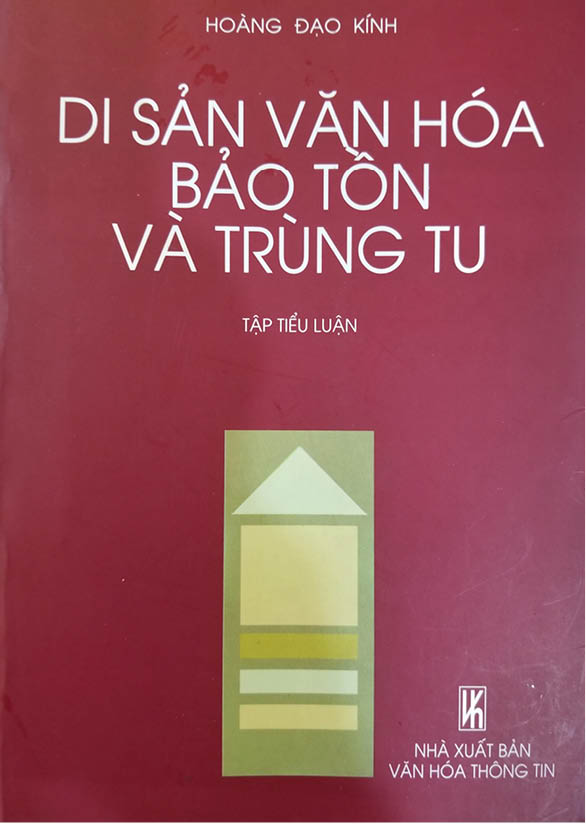
Photo: LVX
He reflects and highlights the values of Hue architectural heritage " Hue architectural heritage is a unique collection of typical architectural structures of a historical period including ramparts, palaces, temples, tombs, pagodas, houses, streets, etc. In order to study and understand thoroughly the architectural types in feudal Vietnam, one must study Hue architectural heritage. Hue is the only architectural urban monument that remains almost intact in our country. As the imperial capital of Vietnam over a century and a half, in Hue there has formed an architecture with its own identity unlike any other places and in any time. Architectural structures are richly and sophisticatedly decorated. Techniques in carving, lacquering and gilding, mother-of-pearl mosaics, ceramic mosaics, masonry embossment, etc., have reached a high degree of perfection”.
The conservation and restoration of monuments with a view to protecting and promoting the value of Hue cultural heritage during the past decades has gained many important achievements, contributing significantly to the stability and socio-economic development of the city, raising the value of the national cultural heritage (up to now Hue has 7 cultural sites and traditions honored by UNESCO).
However, according to Prof. Hoang Dao Kinh, this is the work of "keeping gold and gems.” It is more than restoration. Conservation needs time, persistence, continuity, knowledge and experience. “It also need science, care and maturity.”
There should be “more comprehensive recognition and evaluation of Hue cultural heritage based on surveys, inventories and analysis.” We need to fully evaluate the effectiveness of the conservation of Hue monuments over the past time, update the conservation and restoration projects in accordance with finance to consider and choose appropriate ways of restoration and conservation.
And "the most important thing of all is man. There should be a separate and clear-cut policy implementing at the same time the three important functions: protection, restoration, and exploitation.”
Those are extremely necessary issues by Prof. Hoang Dao Kinh about relic conservation that need to be listened to, considered and applied properly and creatively by the authorities and also the owner of Hue cultural heritage.
By Le Viet Xuan