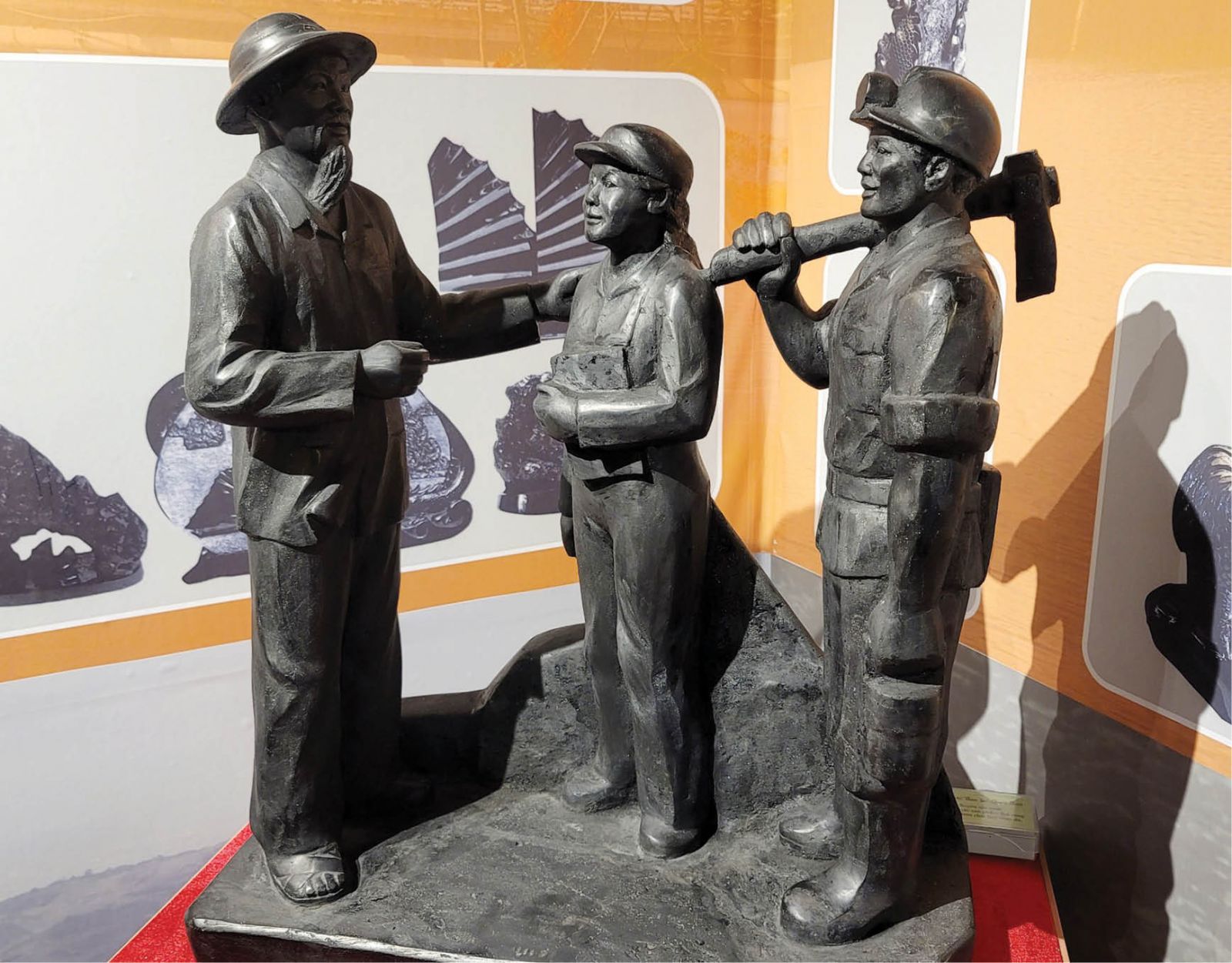
The art piece "Uncle Ho and the miners"
Intricate
At the exhibition space "Quang Ninh Coal Sculpture Profession" at Di Luan Duong in Quoc Tu Giam (Hue), many visitors were impressed by the sophistication and uniqueness of more than 100 handicraft products from coal.
Statues of Buddha Maitreya, Bodhisattva, Quan Cong; busts and statues; small and pretty souvenirs of animals, sailing boats, buffalo child-herders playing the flute; symbols of Quang Ninh: Ha Long Bay, Fighting Cock Islet, Luon Cave... to practical products such as ashtrays, flower vases, pen holders and even jewelry are all intricately carved.
To turn rough coals into a product with a soul is a meticulous and skillful creative process of the craftsman. Each piece of art showcases the union of wisdom, creativity, skillfulness and tireless passion of the artisans from the land of mines.
The most impressive is the piece "Uncle Ho and the miners" which was sculpted vividly from the eyes to the smile. Quang Ninh artisans also gifted Hue the sculptures of the Citadel, Phu Van Lau, Truong Tien Bridge, Thien Mu Pagoda...
Mr. Nguyen Duc Loc, Director of the History Museum said: "It is the diligence and meticulousness of the artisans that create the beauty and attractiveness of coal art products. The art pieces hold many artistic and cultural values and have gradually become a unique cultural beauty of Quang Ninh.
In addition to coal handicraft products, the exhibition also introduces documents and images on the history of the formation and development of the coal industry. One notable document is the 1840 edict of Emperor Minh Mang which marks the birth of the coal mining industry in Vietnam. It also introduces the relic of the first coal mining site in Vietnam at Yen Lang mountain as well as the forms of coal mining from its inception to the present day.
Elaborate
Many products on display in Hue come from Quyet Binh Coal Fine Arts Facility (Ha Long, Quang Ninh). Originally a family profession passed down through 3 generations, Nguyen Van Quyet and his wife Nguyen Thi Thanh Binh have been working for 36 years.
Ms. Binh shared: "Pure coal has hard and brittle characteristics, so carving on coal requires ingenuity, meticulousness and high precision. The coal used must be shiny and smooth pure coal or old coal. Each product is made from monolithic coal according to the correct size and proportion. If shattered, it must be discarded. Therefore, the craftsman has to carve by hand nearly 100% of the time.”
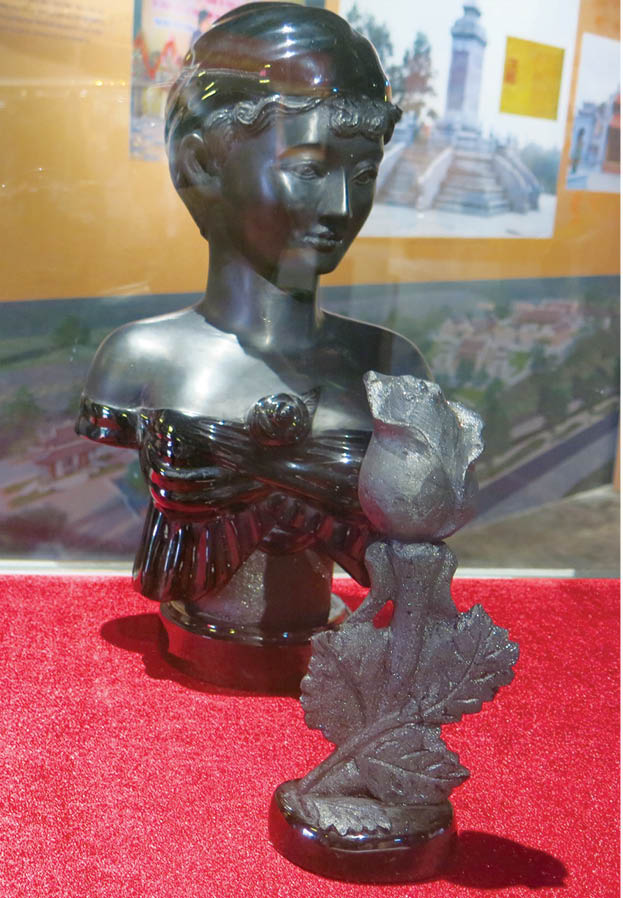
Through the skillful hands of the craftsman, the black coal becomes soulful and lively works of art
Coal sculpture is a special profession, unique to Quang Ninh mining region. Not many people can carve coal sculptures. The work is also hard and dusty. Each work of art requires many stages and many specialized artisans.
After selecting the block of monolithic coal suitable for the sculpted work, an artisan would saw, cut, chisel, sharpen, refine, polish for a smooth texture, then edit and perfect the product. Depending on the size and the amount of details, it takes from 5 to 12 people to complete one product. Therefore, it is the result of many people's efforts.
Not all types of coal are used to make art. The raw materials used to carve and manufacture coal handicraft products must be the best coal available only in Quang Ninh. With specific requirements of color, hardness, brittleness and processing ability, altracite coal is preferred.
Mr. Kieu Dinh Son, Director of Quang Ninh Museum, said: “According to seasoned artisans, raw material for making coal art is often selected by artisans at open-cast coal seams (Deo Nai, Coc 6 mine) to ensure that it is of adequate fossil age, of standard size, old and solid. After mining, each block of coal is carefully selected and cut only for the intact solid. The coal must not contain impurities and cracks as they will affect the aesthetic and quality of the finished product.
Through the skillful hands of the craftsman, the black coal becomes soulful and lively works of art. Each coal art piece conveys the skillful level of fine carving and sculpting as well as the talent of each artisan in the mining region.
Story and photos: MINH HIEN