



 |
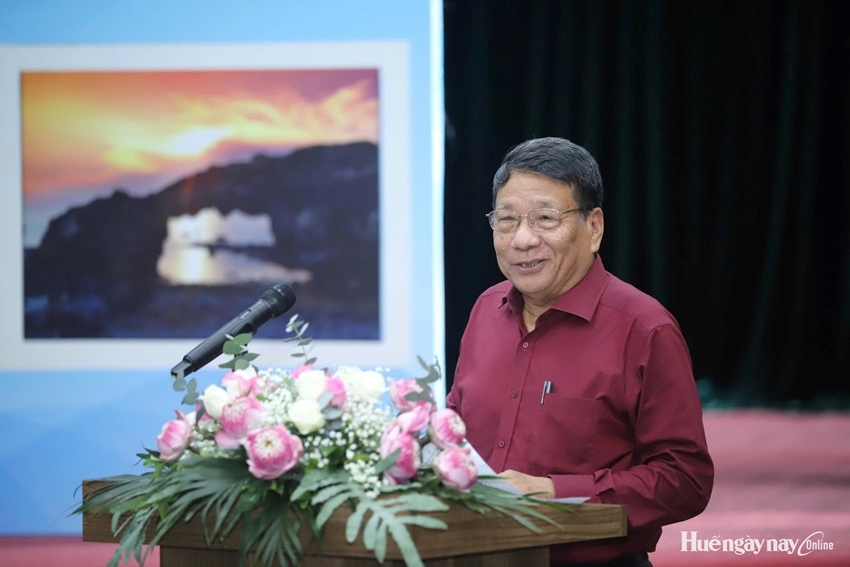
| Assoc. Prof. Dr. Dang Van Bai, Vice Chairman of the National Cultural Heritage Council. Photo: Ha An |
Currently, many heritage cities worldwide have found ways to balance conservation and development. In your opinion, what can Hue learn from such models?
Conservation and sustainable tourism development represent a state of dynamic equilibrium, in which conservation creates core value for tourism products, while tourism generates financial resources and social motivation to nurture heritage.
Hue can draw on several international experiences. In Kyoto (Japan), traditional wooden houses are repurposed into accommodations and teahouses while strictly adhering to requirements regarding architecture, materials, and density. This approach both preserves the value of the structures and generates revenue for their owners.
Luang Prabang (Laos) focuses on controlling commercial activities within its heritage zone, preserving local customs and community life. Meanwhile, European cities such as Venice and Bruges have mechanisms to use tourism revenues to support conservation, building maintenance, and residents' livelihoods.
The key lesson is to avoid two extremes: "museumification," which deprives heritage of its vitality, and over-commercialization, which distorts core values. Hue needs to shift from a mindset of managing heritage primarily through administrative measures to governing a heritage ecosystem with community participation.
Heritage truly lives only when residents continue their daily lives, practice their culture, and build their livelihoods within that space. Only when people can make a living from heritage and take pride in their role as cultural subjects will conservation have a sustainable foundation.
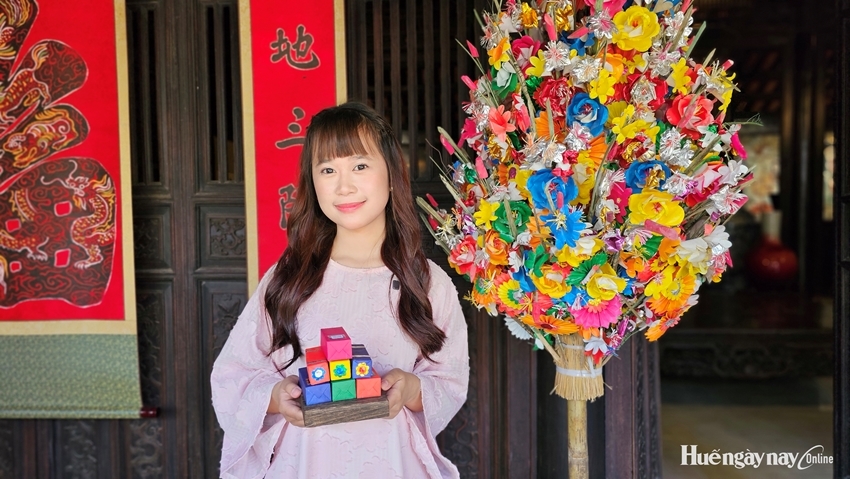 |
| Hue cultural experience space on Xuan 68 Street |
Some opinions have proposed that Hue transition from a "compact city" model to a "heritage urban cluster," protecting the core zone and shifting development pressure to satellite cities. In your opinion, what are the issues to address?
I believe the appropriate direction is to develop a multi-center heritage urban cluster. In this model, the core zone of the Ancient Capital and the spaces along both banks of the Perfume River serve as the cultural and heritage center, featuring low construction density and strict building height controls. Satellite towns take on functions for developing industry, services, logistics, finance, specialized healthcare, and creative industries.
Between these areas, there needs to be connecting infrastructure and ecological corridors to prevent uncontrolled urban sprawl. In particular, the landscape axis of the Imperial Citadel - Perfume River - Ngu Binh Mountain must be protected.
There are four issues requiring attention: pressure from urban development demands on conservation; inadequate connecting infrastructure between centers; ineffective exploitation and distribution of economic benefits from landscapes and heritage; and limited resources allocated for restoring garden houses and privately owned heritage.
Multi-center development does not mean separating heritage from modern life. On the contrary, it is a way to create space for new economic activities without placing all the pressure on the historic core zone.
You have repeatedly emphasized the philosophy of "turning heritage into assets." In your opinion, what additional mechanisms does Hue need to generate development resources and reinvest in conservation?
First, it is necessary to understand that "turning heritage into assets" does not mean selling heritage or exploiting it at all costs. Rather, it is a shift from viewing heritage as a conservation expense to regarding it as a special form of capital capable of generating products, services, and added value. The ultimate goal is to establish sustainable revenue streams-part of which is reinvested into conservation-while improving the community's quality of life.
Special financial and budgetary mechanisms have created a certain foundation for Hue. However, to more strongly mobilize social resources and develop the heritage economy, I propose studying and piloting four groups of mechanisms.
First is Transfer of Development Rights (TDR). Owners of garden houses and traditional mansions within conservation zones-who face restrictions on building height and construction density-could be considered for a mechanism to transfer a portion of their unused development rights to new urban areas, in accordance with appropriate regulations. Through this, heritage custodians gain additional financial resources instead of bearing the entire cost of conservation.
Third is a mechanism for credit and investment funds to support enterprises in cultural creativity, heritage technology, design, fashion, cuisine, and digital content production.
Fourth is a mechanism for brand, copyright, and intellectual property management. Hue needs to study appropriate methods for protecting and licensing the exploitation of heritage-related images, patterns, and intellectual assets, creating conditions for businesses to develop value-added products.
Among these proposals, I pay particular attention to PPP due to its ability to mobilize capital, technology, and operational experience from the private sector. Hue needs to gradually shift from the role of merely managing and protecting heritage to proactively creating conditions for the market and the community to jointly participate in promoting its values.
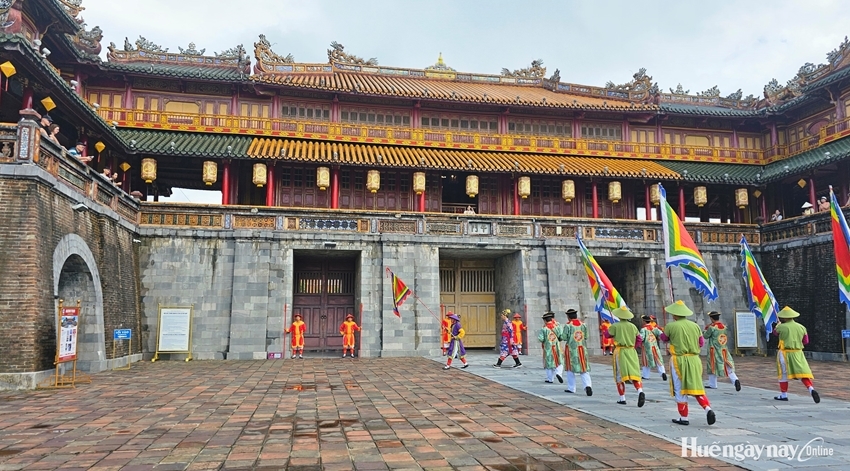 |
| According to Assoc. Prof. Dr. Dang Van Bai, heritage must be viewed from the perspective of creating products, services, and added value |
Developing heritage, tourism, cultural industries, and digital transformation involves multiple sectors and stakeholders. From your perspective, does Hue need a "conductor" to coordinate these resources?
In my opinion, a sufficiently effective coordination mechanism is essential. The key point of a new-generation special mechanism is not merely how much funding the Central Government provides to the locality, but what legal tools and autonomy are granted so the locality can generate its own resources.
I propose studying an inter-sectoral coordination mechanism for heritage and cultural industries, involving city leaders, specialized agencies, and relevant stakeholders. This could serve as a connecting focal point without replacing the legal authority already assigned to each agency.
That mechanism needs to carry out three main tasks.
First, it must unify the review of projects impacting heritage zones and key landscape axes, ensuring that economic development does not harm core values. Next, it needs to connect the value chain from heritage to creative products and the market. Heritage provides historical and cultural materials; designers, artists, businesses, and technology units transform those materials into products; and tourism along with other distribution channels bring those products to the public. Finally, it must coordinate resources and benefits, creating mechanisms for a portion of economic value to be reinvested into conservation, craft villages, garden houses, traditional mansions, and heritage-practicing communities.
To develop cultural industries, Hue cannot leave each stakeholder to fend for themselves. There must be mechanisms helping researchers, artisans, businesses, investors, and creatives find one another, jointly build products, and share responsibilities.
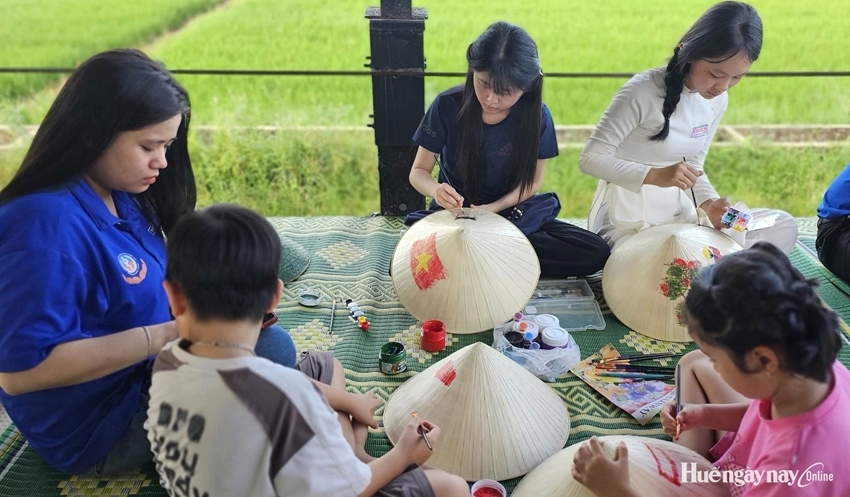 |
| The love of culture passed on through educational and tourism activities |
From your perspective, what is the vital thing Hue must preserve at all costs, and what must be changed to enter a new development phase under Resolution No. 80-NQ/TW?
What must be preserved is the irreplaceable soul of the Ancient Capital. First, it is the mountain-and-water landscape structure featuring the Imperial Citadel - Perfume River - Ngu Binh Mountain axis, the system of greenery, water surfaces, and open spaces. Alongside this is the integrity of the heritage ecosystem, from garden house and traditional mansion architecture to rituals, handicrafts, and cultural lifestyles.
No less important is transforming the manner in which residents participate. They ought not merely stand on the sidelines observing restoration projects, but must become the primary agents preserving, innovating, and benefiting from the heritage of their own families and villages.
Hue needs to cherish the past without closing itself off in the past. Preserving irreplaceable values while innovating how development is organized is the path for heritage to continue living and creating value for the future.
Thank you, sir!