



 |
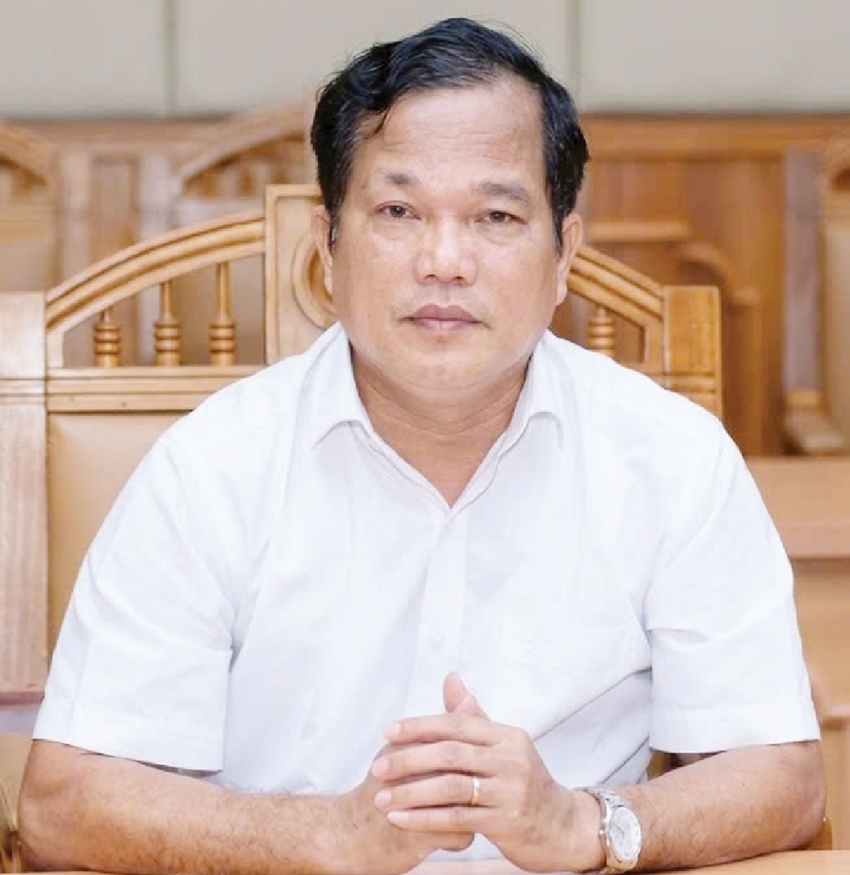
| Mr. Le Minh Nhan, Director of the Department of Culture, Sports and Tourism and member of the Hue City Cultural Development Steering Committee |
Speaking to Thua Thien Hue Weekend, Mr. Le Minh Nhan - Director of the Department of Culture, Sports and Tourism and a member of the Hue City Cultural Development Steering Committee - viewed Res 80 as the strongest "lever" at this time. "Therefore, the city's culture, sports, and tourism sector is ready in mind and muscle to turn these visions into breakthrough thrusts, helping elevate Hue to be worthy of its status as a national heritage city," Mr. Nhan said.
One of the new points of Resolution 80 is emphasizing the improvement of institutions, unblocking resources, and regarding culture as an endogenous resource for development. Given Hue’s practical reality, what are currently the biggest 'bottlenecks' in the management, preservation, and promotion of heritage values, sir?
I believe that the system of mechanisms and policies related to heritage is still not truly synchronized. In practice, conservation activities are often governed by multiple sectors such as cultural heritage, land, investment, construction, planning, finance, and public asset management. Some regulations still overlap, and the coordination process across multiple agencies leads to prolonged project preparation and implementation times. New issues, such as public-private partnerships, adaptive reuse of valuable structures, exploitation of public assets associated with monuments, or the organization of services within heritage spaces, still require more specific guidance.
The second bottleneck is that investment resources remain disproportionate to the scale and diversity of Hue's heritage system. Beyond the Complex of Hue Monuments, the city also possesses hundreds of historical sites, garden houses, aristocratic mansions, ancient villages, intangible cultural heritage elements, and a rich collection of Han-Nom archives. Many monuments owned by communities, clans, religious organizations, or individuals are deteriorating, while their capacity for self-investment remains limited. Mechanisms to attract socialized resources are not attractive enough and have not yet created long-term stability.
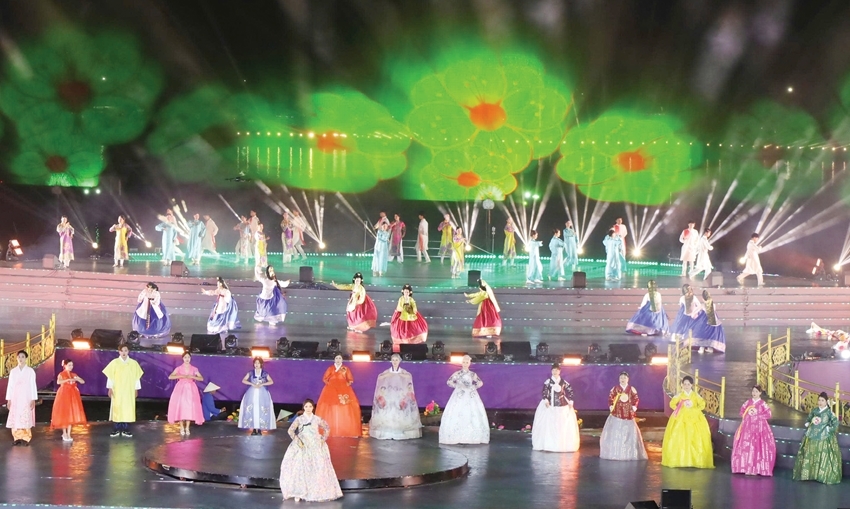 |
| Art spaces along the Perfume River bank emerge as a highlight of Hue |
Furthermore, the linkages between conservation and urban planning, tourism development, cultural industries, and community livelihoods remain insufficiently integrated. Heritage data is currently fragmented, while specialized personnel in conservation, heritage management, digitization, and cultural product development remain in short supply.
To resolve these bottlenecks, the Department will advise the city to review and perfect management mechanisms, enhance decentralization, clearly define the responsibilities of each agency, and integrate preservation requirements right from the planning and project preparation stages. At the same time, we will study support policies for non-public monument owners and encourage businesses to participate through suitable incentive mechanisms regarding credit, tax, training, and promotion.
Resolution 80 designates cultural industry as a new growth engine for the nation. Accordingly, which cultural industry sectors will Hue select as key spearheads, and what key projects or programs will be undertaken to convert potential into tangible economic value?
At present, the Department is actively coordinating with various sectors to draft the Project for Cultural Industries Development in Hue City until 2030, Vision 2045. Hue has designated six spearhead cultural industry groups: cultural tourism, performing arts, creative design, digital cultural products, handicrafts, and broadcasting, publishing, and advertising. In this structure, cultural tourism acts as the flagship group, whereas the other five groups generate direct products while simultaneously facilitating the promotion, distribution, and value elevation of Hue’s heritage.
In order to convert potential into economic value, the city is concentrating on key flagship programs and projects. Primary among these is the heritage economy development scheme linked to the conservation of the Complex of Hue Monuments, the construction of the National Museum of Hue Royal Antiquities, the nighttime development of the Imperial City, artistic riverbank lighting for the Perfume River, along with electronic ticketing, smart interpretations, and digital experiences. The objective is to boost non-ticket revenues, prolong visitor stays, and generate supplemental livelihoods for local communities.
Accompanying this is the Four Seasons Festival Project alongside a sequence of national and international cultural and artistic events, targeted at operating year-round while elevating the share of private-sector financing, ticket revenues, corporate sponsorships, advertising, broadcast rights, and live-streaming. Concurrently, the city is establishing the Cultural Industry and Innovation Center; advancing the identity brands "Hue - Capital of Ao Dai (traditional Vietnamese tunic) and 'Hue - Culinary Capital'; designating Hue as a heritage film location and Vietnam’s Photography City, applying to the UNESCO Creative Cities Network in the field of gastronomy, and formulating the scientific heritage dossier for “Ca Hue” (Hue folk singing) for UNESCO nomination to the Representative List of the Intangible Cultural Heritage of Humanity.
Another vital pillar involves the digitization and commercialization of cultural assets: Establishing a shared database, digitizing historical sites and antiquities, alongside supporting craft villages with design innovation, intellectual property protection, product traceability, and market expansion.
In your view, how should Hue innovate public-private partnership mechanisms, resource socialization, and benefit-sharing to attract strategic investors while still ensuring the preservation of heritage values?
In my view, strict preservation and investment attraction are not two opposing goals. The key issue is to clearly identify the values that need protection, the scope permitted for exploitation, limits of intervention, and the responsibilities of each entity. When these principles are made public from the outset, businesses will have a basis to develop suitable plans, while regulatory agencies will have the tools to monitor and prevent the risks of commercialization or distortion of heritage.
First and foremost, Hue must transition from a socialization framework primarily dependent on fundraising mobilization to long-term public-private partnership models, wherein the State, businesses, and local communities jointly share responsibilities, resources, risks, and benefits.
Partnership models ought to be tailored appropriately for individual zones. In strictly protected core areas, investment operations must prioritize preservation and the enhancement of visitor experiences, avoiding purely commercial objectives. Within buffer zones and auxiliary facilities, encouragement can be extended to investments in green transport infrastructure, parking areas, information centers, cultural services, tailored hospitality, performing arts, artisanal goods, culinary offerings, and digital platforms.
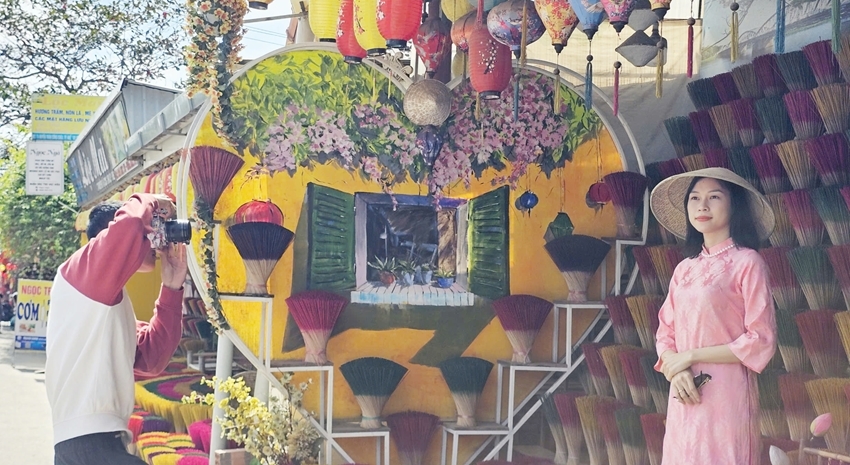 |
| Taking souvenir photos at Thuy Xuan incense-making village |
Benefit-sharing mechanisms need to be specifically regulated. Local people must be prioritized to participate in service provision, product manufacturing, performances, and tour guiding. Artisans and communities holding intangible cultural heritage must be guaranteed the right to practice, material benefits, and intellectual property rights.
So in your view, how will Resolution 80 help Hue transition from a mindset of “preserving heritage” to “creating new value from heritage”?
Creating new value entails ensuring that historical, cultural, artistic, and traditional knowledge values remain present in contemporary life through appropriate and compelling modes capable of driving new knowledge, employment, livelihoods, products, and services.
The ultimate aim is a sustainable cycle: Well-preserved heritage produces quality products; products drive revenues and jobs; and resources feed back into heritage and local communities. Culture will then not only shape identity, but also boost Hue City's competitiveness, charm, and standing.
Thank you for the conversation!