



Ms. Dinh Thi Hoai Trai, Director of the Ho Chi Minh Museum in Hue City, shared her perspectives on this matter with Hue Today Weekly.
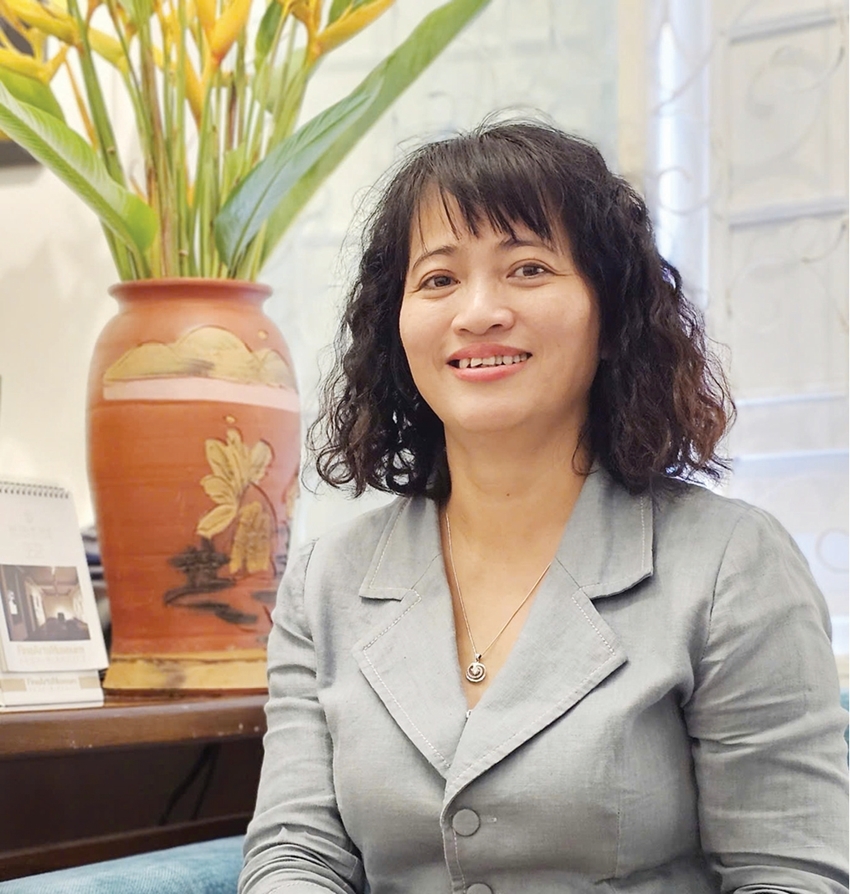 |
| Ms. Dinh Thi Hoai Trai, Director of the Ho Chi Minh Museum in Hue City |
Could you elaborate on the key highlights targeted by the Project?
In my view, the crucial highlight is establishing a cultural heritage ecosystem of President Ho Chi Minh in Hue, with the Ho Chi Minh Museum and the monument network at its core, thereby forging connections with education, culture, tourism, and the local community.
The project focuses on investing in digital museum exhibition spaces; planning the conservation, restoration, and completion of sites dedicated to President Ho Chi Minh in Hue; designing specialized tour routes; and developing experiential spaces with digital applications to meet the cultural needs of the public, tourists, and especially the younger generation.
A shift in heritage approach is also set forth, from visiting individual sites to experiencing comprehensive, interconnected cultural spaces.
We focus on the depth of experience, ensuring that each monument becomes a storytelling point for history, culture, and people. This allows visitors to gain a deeper understanding of the years President Ho Chi Minh and his family spent in Hue, as well as the local traditional cultural identity.
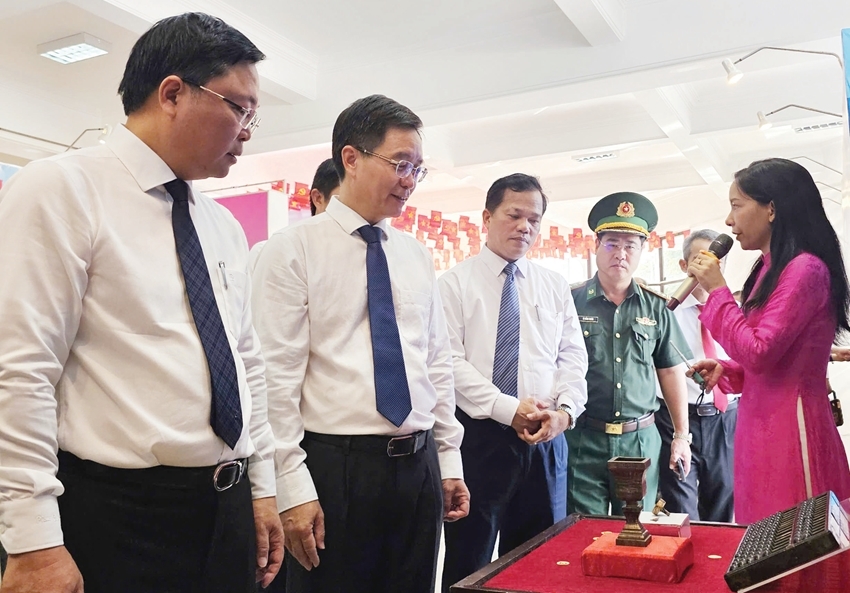 |
| City leaders visiting the exhibition space at the Ho Chi Minh Museum of Hue City |
The project highlights research, planning, and linking heritage with tourism. In your view, how crucial is this for Hue as it strives to build a heritage city focused on preserving and promoting its unique values?
For Hue, a heritage city cannot develop by divorcing heritage from daily life, nor can it develop tourism at all costs if it compromises the authenticity and space of its monuments.
Therefore, researching, planning, and linking the heritage-tourism system requires treating the Ho Chi Minh Museum and its network of sites as a living heritage ecosystem. Planning must strike a balance between conservation, the heritage urban space, and tourism development-establishing President Ho Chi Minh memorial sites as spaces for community cultural activities and traditional education, combined with promoting reading culture and interactive experiential spaces.
The project outlines a roadmap to connect the network of sites dedicated to President Ho Chi Minh with local historical and cultural landmarks, craft villages, and regional tourism products, gradually creating tour routes that retrace Uncle Ho's footsteps alongside visits to local scenic spots. It also calls for stronger collaboration among the cultural, tourism, and educational sectors, as well as travel enterprises, to build a heritage value chain that extends visitor stays and enhances the tourist experience.
The project also targets the creation of a “Ho Chi Minh Cultural Space.” How can this space be visualized, Madam?
First and foremost, the ‘Ho Chi Minh Cultural Space’ should not be conceived merely as a single structure or display site. It is an interconnected space where historical sites, the Ho Chi Minh Museum, schools, cultural institutions, craft villages, local communities, and tourism spots jointly form a heritage experience network.
Within this space, the Ho Chi Minh Museum will serve as the central hub for research, documentation, exhibition, and education; the memorial sites act as direct historical landmarks; schools integrate heritage into experiential learning; while tourism spots, craft villages, and local communities contribute to creating diverse cultural offerings.
We are elevating our programs and focusing on initiatives such as ‘Tracing Uncle Ho’s Youth in Hue’ and ‘Ho Chi Minh Heritage in Hue,’ alongside heritage classes, student tour guide experiences, and tours combining the museum with historical sites.
Regarding digital transformation, how has it been implemented recently, and what specific changes can we expect in the upcoming execution of this Project, Madam?
Digital transformation has been actively implemented by the museum in recent times, and the new Project will elevate this work to a higher level: shifting from digitizing individual documents and artifacts to building an interconnected digital heritage database that directly serves the public.
According to the roadmap, 2028 will see an accelerated push in 3D scanning, document and artifact digitization, and digital database construction. By 2029, the goal is to achieve 100% data digitization, fully integrating it into the city’s unified management system, while rolling out 3D/VR virtual tours, a digital heritage map, and multilingual auto-guides for public use.
Our perspective is that technology does not replace historical sites; rather, it allows them to be accessed more broadly, deeply, and vividly.
Thank you, Madam, for this conversation!