



 |
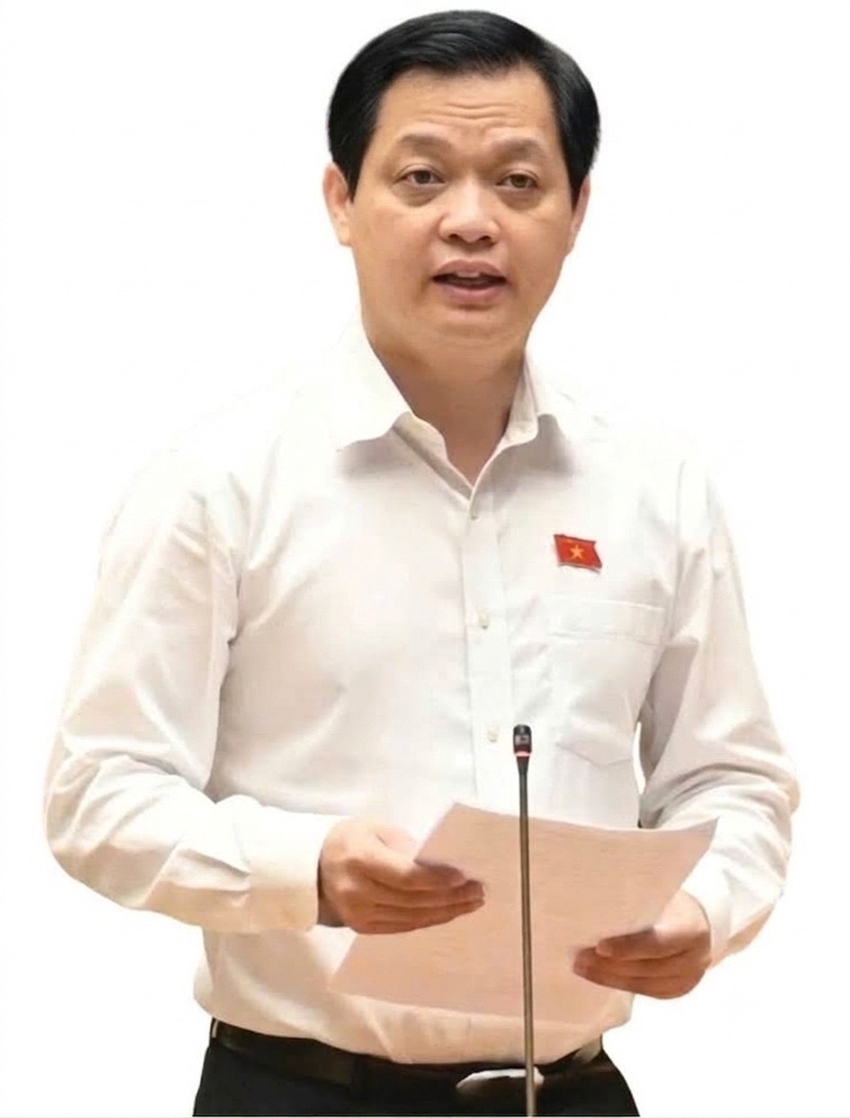
| Dr. Nguyen Hai Nam, Standing Member of the National Assembly’s Committee on Economic and Financial Affairs, member of Hue City National Assembly Delegation. Photo: Provided by Hue City National Assembly Delegation |
To discuss this issue, Hue Today Weekly had a conversation with Dr. Nguyen Hai Nam, Standing Member of the National Assembly’s Committee on Economic and Financial Affairs, member of Hue City National Assembly Delegation
According to Dr. Nguyen Hai Nam, the challenge is not only to mobilize more resources, but also to build institutions that direct capital into the real economy and create room for new growth drivers, including AI, semiconductors, blockchain, and digital assets.
Sir, amid the ongoing shift in the growth model, what is the biggest challenge facing development resources and the private sector?
The major challenge today is that if Vietnam wants to sustain high growth over the long term, a growth model heavily reliant on capital and low-cost labor is no longer suitable. Therefore, the country needs to shift strongly toward a model driven by science and technology, innovation, and higher productivity, with total factor productivity (TFP), a measure of how efficiently resources are used, becoming a key growth driver.
For the 2026-2030 period, Viet Nam’s total capital demand is estimated at around VND 38.5 quadrillion, equivalent to approximately USD 1.47 trillion. The private sector is expected to account for around 65.5% of this total, or VND 25.5 quadrillion. This highlights the need to attend the private sector’s capacity to mobilize and absorb resources to support Viet Nam’s high-growth ambitions.
However, the issue is not simply whether there is enough capital. What matters is developing high-quality, transparent projects that can attract investment, while establishing appropriate risk-sharing mechanisms for large-scale projects with long payback periods.
What are the biggest bottlenecks to bringing private capital into the economy, sir?
I believe there are three key gaps that need to be addressed, including capital mobilization channels, project absorption capacity, and risk-sharing mechanisms.
For private businesses, it is necessary to expand capital-raising channels, while supporting project standardization and improving information transparency, so that projects can meet the requirements and gain the credibility needed for financial institutions to consider providing funding. Independent credit ratings are also crucial to help the market distinguish the risk levels of individual businesses, restore discipline in the bond market, and reduce capital costs for capable businesses.
Another challenge is the economy’s heavy reliance on bank credit. With a high credit/GDP ratio and long-term, high-tech, and innovation projects requiring long-term financing, we need to further develop the capital market, including bonds, equities, long-term investment funds, green finance, the carbon market, and new forms of financing.
The ultimate goal is to build a more diversified capital allocation system, ensuring that money does not simply circulate within the financial system but actually flows into the economy.
 |
| Workers at Kim Long Motor Hue JSC operate equipment during the vehicle assembly process. Photo: Kim Long Motor |
You have repeatedly emphasized the need to shift from the mindset of “ban what cannot be managed” to “manage to develop.” How should this mindset be reflected in institution-building?
In my point of view, this is a critical issue. As new business models, technologies, and assets emerge, the law cannot simply follow behind and address problems after they arise. We need a new approach to institution-building, where the law ensures state management while creating room for innovation and development.
I believe we need to shift from the mindset of ‘ban what cannot be managed’ to ‘manage to develop’. At the same time, it is necessary to ensure that management goes hand in hand with risk control. Regulatory authorities should work alongside businesses to improve the institutional framework, rather than simply taking a controlling role.
This is particularly important for emerging fields such as AI, semiconductors, blockchain, and digital assets. Once the law defines, classifies, and establishes principles for these new assets and models, we will have a basis for developing policies on taxation, licensing, markets, and risk management.
For digital assets, for example, a sandbox (a controlled testing environment) could be applied. Testing should be limited in scope, duration, and participants, while strengthening oversight of technology, data security, anti-money laundering measures, and the detection of suspicious transactions. A sandbox does not mean relaxing management; rather, it is a more appropriate approach to managing models for which there is not yet sufficient real-world data.
Drawing on international experience and domestic strengths, what can Vietnam in general and Hue City in particular, do to turn emerging sectors into drivers of growth, sir?
Experience from Singapore, Dubai, and many other countries shows a common logic: institutions must lead the way, transparency must be the foundation, and policies must be attractive enough to draw in capital, technology, and talent. However, Vietnam should not simply copy these models, but select those that best suit its own conditions.
Vietnam has strong advantages in its digital workforce, technology capabilities, and business community in blockchain, AI, and fintech. These strengths provide an important foundation for developing new areas of the economy. However, turning this potential into economic value requires appropriate institutions and the capacity to govern these emerging sectors effectively.
One area worth exploring is the tokenization of real-world assets (RWA - Real-World Asset tokenization), which could provide an additional way to raise capital, including international funding. However, all such trials must operate within a clear risk-control framework, ensuring cybersecurity, personal data protection, anti-money laundering measures, and capital-flow management.
We also need to continue developing the capital market, diversify capital channels, and gradually build a financial ecosystem capable of connecting domestic resources with international capital flows.
 |
| Workers at Hue Textile-Garment JSC inspect products. Photo: Minh Nghia |
If you had to highlight one key message on development policies and institutions for the new period, what would it be?
I believe the most important thing is to build enabling laws and development-oriented institutions.
Vietnam is at a time of significant opportunity, as international capital flows are being reallocated while its business community, technology workforce, and new sources of resources continue to emerge. However, these opportunities will not automatically become drivers of growth. We must create a transparent, secure, and flexible institutional environment to ensure that resources flow into the real economy.
When regulatory authorities work alongside businesses to improve the institutional framework, we can not only effectively regulate emerging sectors but also turn them into new drivers of growth, helping Vietnam become a leading regional hub for technology and digital finance.
Thank you for your sharing!