



 |
| Doctors at Hue Central Hospital perform a bone marrow transplant for the pediatric patient. Photo: Provided by the hospital |
The patient is Hoang T.M. (7 years old, from Lao Cai Province), who was diagnosed with beta-thalassemia at just 8 months of age. For many years, the child required regular blood transfusions every 3–4 weeks to survive and has been receiving iron chelation therapy since the age of 3. MRI results showed a moderate to severe iron overload in the liver, a common complication in patients who undergo long-term blood transfusions.
After learning about successful bone marrow transplants for thalassemia performed at Hue Central Hospital, the family decided to bring the child to Hue for treatment. Testing showed that the patient had complete HLA compatibility (12/12) with his 11-year-old sister - a critical requirement for proceeding with an allogeneic hematopoietic stem cell transplant. The hospital’s multidisciplinary expert board then conducted a hospital-wide consultation and developed an optimal treatment protocol for the patient.
During the transplant process, the patient experienced several complications, including infection, hemorrhagic cystitis, and reactivation of CMV (cytomegalovirus). However, thanks to close monitoring and timely management by an experienced medical team, the child’s condition gradually stabilized. To date, the blood cell counts have recovered well, the child’s health has improved significantly, and the patient has met the criteria for hospital discharge.
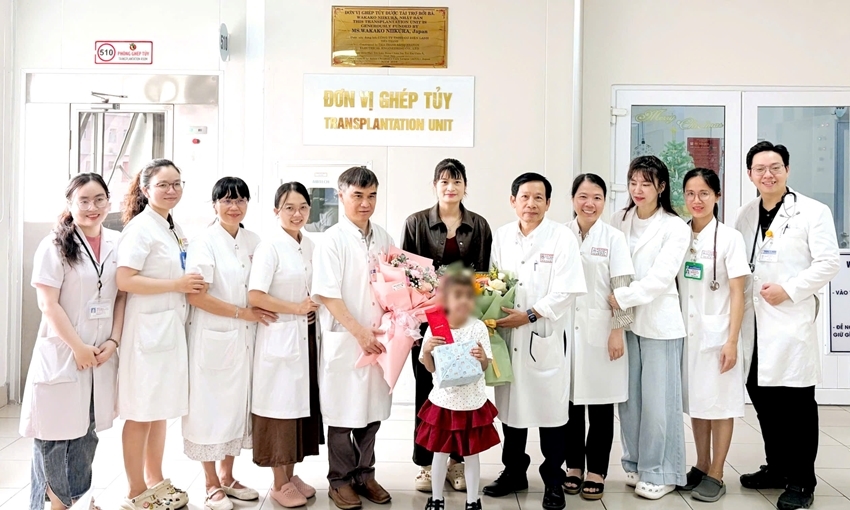 |
| The great joy to both the medical team and the patient’s family on the day of hospital discharge |
According to experts, thalassemia is a common inherited disorder in Vietnam, with approximately 2,000–2,500 children diagnosed with severe forms each year. Patients typically require lifelong treatment with regular blood transfusions and iron chelation therapy, which can lead to serious complications affecting the heart, liver, kidneys, endocrine system, as well as physical and mental development. Hematopoietic stem cell transplantation is currently the only curative treatment that can completely eliminate the disease and end the dependence on regular blood transfusions.
As a special-class hospital under the Ministry of Health, Hue Central Hospital has, for many years, played a leading role in implementing advanced medical techniques, particularly in the fields of organ transplantation and hematopoietic stem cell transplantation. Since 2019, the hospital has performed stem cell transplants in pediatric patients with conditions such as high-risk neuroblastoma, metastatic retinoblastoma, and relapsed lymphoma, before later expanding the program to include treatment for thalassemia.
Since September 2024, the hospital has officially implemented hematopoietic stem cell transplantation for the treatment of thalassemia, becoming the first center in the Central and Central Highlands region of Vietnam and the second nationwide to perform this technique. To date, the hospital has completed a total of 67 pediatric stem cell transplants, including 15 allogeneic transplants for children with thalassemia within just 1.5 years - the highest number in the country during the same period.
The success of this bone marrow transplant not only provides the child with the opportunity for a healthy life, but also demonstrates the growing medical expertise of Vietnam’s healthcare system in mastering complex treatment techniques, bringing hope to many patients with serious illnesses.