



The “dragon-horse" accent for Tet
Linda Hoang shares that she spent considerable time researching horse imagery in traditional art, especially details appearing at royal tombs and ancient architectural works in Hue. The horse and dragon-horse images appear in many ancient architectural works, particularly during the Nguyen Dynasty.
“I saw the dragon-horse image in carved panels at royal tombs, on reliefs and decorative details at pagodas. That image carries auspicious meaning, evoking strength and prosperity, and fitting the new year atmosphere,” said Linda Hoang.
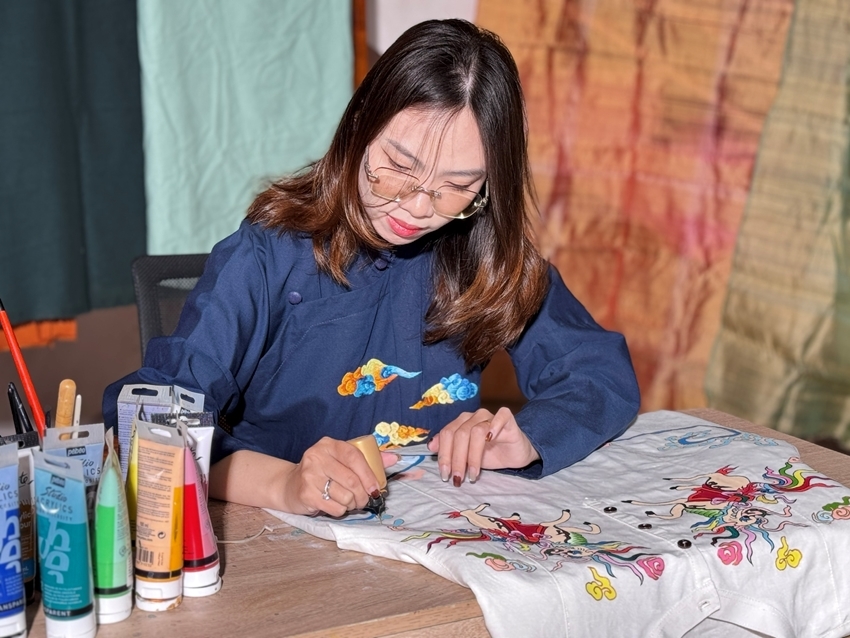 |
| Linda Hoang paints “dragon-horse” motifs using specialized fabric paint, hand-finishing every detail for modern garments |
The ao-dai silhouette designed by Linda Hoang has a moderate width, creating a comfortable wearing experience. She considers the linen fabric woven from natural flax fibers the “soul” of the outfit. The fabric is breathable, lightweight, holds its shape well, and is suitable for many year-round seasons. When combined with vibrant Tet colors, the overall effect creates a fresh and energetic feeling.
“Each ao dai is a ‘unique version’. I don't want customers to wear an outfit identical to anyone else’s,” expressed Linda Hoang. She painted these motifs herself using acrylic and specialized fabric paints, or hand-embroidered them upon request. Due to the intricacy of the lines and patterns, each ao-dai typically takes about 7 to 10 days to complete.
As Binh Ngo Tet approaches, ao-dai designs featuring horses and dragon-horses are chosen by many young people. For them, this image evokes associations with breakthrough and luck at the start of the year. Each outfit ranges from about VND 500,000 to VND 700,000, and is suitable for young customers who love unique designs.
Linda Hoang confided: “I see ao dai as a long-term passion. Each Tet season, I set myself a new ‘challenge’ to create, ensuring the garments I design always create highlights and distinctive features for customers.”
“Awakening” ancient motifs
Nguyen Ngoc Quang, her husband, accompanies Linda Hoang and also shares her passion for patterns and colors on modern garments. He handles finding materials, taking photos, and documenting during field trips.
Hue is considered a “treasure trove” of royal court motifs with its deep history tied to the Nguyen Dynasty. The couple has visited Minh Mang Tomb, Tu Duc Tomb, and the Imperial City many times to observe and carefully study decorative details.
“We go many times. Each time we discover a new detail. There are small patterns that contain an entire story,” shared Quang.
After collecting images, Quang uses AI to digitize the motifs, arrange colors, and experiment with placement on the ao dai canvas. Once a suitable design is chosen, Linda Hoang begins painting or hand-embroidering.
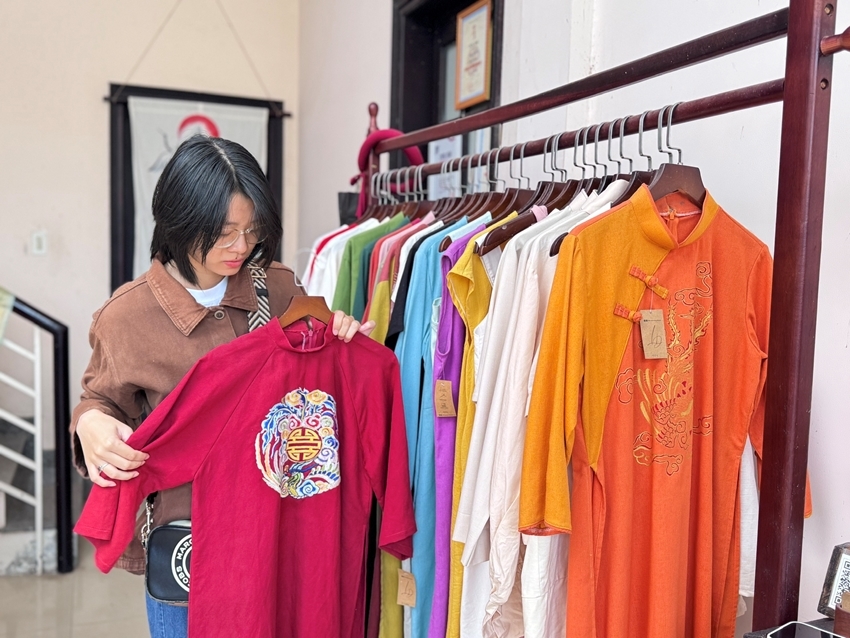 |
| Linen ao dai designs with royal court motifs attract customer attention during the Tet period |
“Hue has so many values lying within each carved panel and each decorative pattern. When placing those details on ao dai, I want the wearer to feel a part of their cultural roots. I see it as a process of ‘decoding’ and ‘awakening’ ancient motifs,” explained Linda Hoang.
Besides design work, Linda Hoang also participates in many cultural events about ao-dai throughout the country, appearing at markets and exhibition spaces to spread the value of traditional clothing. For her, each trip is an opportunity to “enrich” her knowledge about architectural patterns and culture from many regions across the country.
As Tet approaches and her dragon-horse designs take to the streets, Linda Hoang weaves her love for Hue into every garment. In every stitch, in every hand-painted color patch, lies the dedication of her craft and the desire to bring heritage into contemporary life through the laps of ao dai Vietnam.